Cashew Price Per Kg in India: W320 Kernels & Raw Nut Guide
Key takeaways
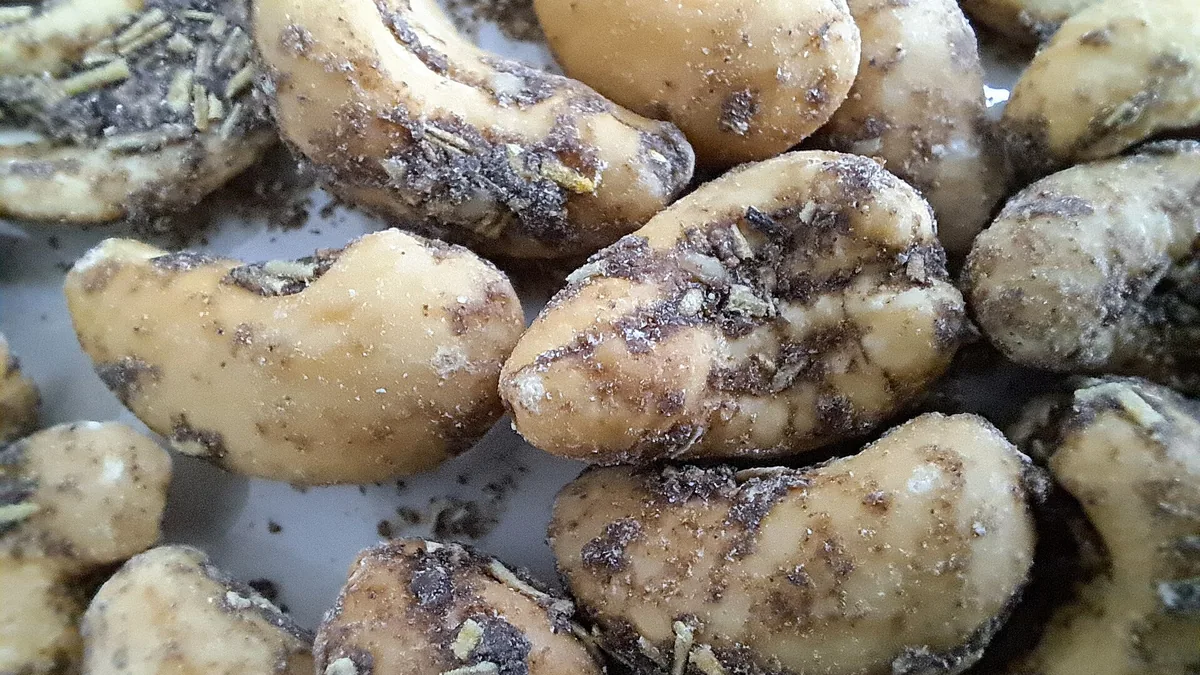
- Domestic wholesale market prices for popular W320 Grade White Whole cashew kernels (Kaju) across Kollam, Panruti, Mangaluru, Palasa, and Vengurla commonly trade between Rs 750 and Rs 950+ per kg depending on vacuum tin/carton packing and moisture.
- Raw Cashew Nuts (RCN) sold in-shell at coastal farm gates and imported CIF port docks benchmark broadly around Rs 115 to Rs 165 per kg domestically (and $1,070–$1,280/MT imported West/East African RCN norms depending on Kernel Outturn Ratio — KOR).
- Per Directorate of Cashewnut and Cocoa Development (DCCD) & ICAR-DCR Puttur guidelines, high-density grafted Vengurla-4/7 and Ullal orchards recover 25%–28% edible kernel outturn (~1 ton dry raw nuts yields ~240–265 kg mixed whole/split kernels) plus valuable cashew nut shell liquid (CNSL).
Evaluating the exact cashew price per kg across Indian coastal mandis, urban wholesale dry-fruit alleys like Khari Baoli (Delhi) and APMC Vashi (Mumbai), and processing hubs like Kollam (Kerala), Panruti (Tamil Nadu), Mangaluru (Karnataka), Palasa (Andhra Pradesh), and Vengurla (Maharashtra) requires splitting two very different commodities: in-shell Raw Cashew Nuts (RCN) sold by orchard farmers versus decorticated peeled edible Cashew Kernels (Kaju) sold by count grade! While household buyers shop by spotless big W180/W240/W320 whole kernels priced around Rs 750 to Rs 1,250+/kg, coastal growers sell freshly sun-cured whole grey-brown in-shell nuts around Rs 115 to Rs 165/kg backed by DCCD (Directorate of Cashewnut and Cocoa Development) market data and APEDA trade reports.
Because converting 4 kg of thick fibrous raw nuts inside tough caustic shells yields barely ~1 kg of snowy white edible Kaju kernels alongside intense hand/automated shelling labor, international West African RCN import auctions, Kernel Outturn Ratio (KOR lbs per 80 kg bag), and festive Diwali/wedding wholesale demand steer prices nationwide. Let us break down accurate 2026–27 kernel grades, raw nut valuation math, and profitable grafted orchard management with ICAR-Directorate of Cashew Research (Puttur) benchmarks!
1. Cashew Price Per Kg Today: Kernels (W180–W320) vs Raw Nut (RCN) Table
Export and wholesale Indian Kaju grades strictly follow global CEPCI (Cashew Export Promotion Council of India) / UNECE kernel size counts—representing how many intact white whole kernels weigh one exact pound (454 grams):
| Cashew Grade / Commodity Type | Count / Origin Norm | Indicative Wholesale Price Band | Quality & Commercial Use |
|---|---|---|---|
| W180 ("King of Cashew" Jumbo) | 170 – 180 kernels / lb (~380/kg) | Rs 1,020 – Rs 1,350 / kg | Giant spotless snowy luxury gift-pack & five-star gifting grade |
| W240 Whole White Large | 220 – 240 kernels / lb (~500/kg) | Rs 860 – Rs 1,080 / kg | Premium festival sweet shops, retail pouches & roasted snack brands |
| W320 Whole White Standard | 300 – 320 kernels / lb (~680/kg) | Rs 750 – Rs 950 / kg | Global benchmark trade standard balancing plump look & fair cost |
| SW / Scorched Wholes (W240/W320) | Light golden-ivory slightly toasted | Rs 670 – Rs 830 / kg | Nutritionally identical slightly darker steam-peeled wholes for dry masala snacks |
| Splits (S) / LWP (Large White Pieces) | 2-half splits & clean big chunks | Rs 580 – Rs 740 / kg | Indian Kaju Katli barfi pastes, rich restaurant gravies & bakery mixes |
| Domestic Dry Raw Cashew Nuts (RCN) | Coastal Farm Gate (48–54 lbs KOR) | Rs 115 – Rs 165 / kg (In-Shell) | Sun-dried (<9% water) Konkan, Odisha, Palasa & TN raw nuts sold to mills |
2. Understanding RCN Math: Why 1 Kg Raw Cashew Costs Rs 130 While W320 Hits Rs 850+
Farmers selling dry raw nuts around Rs 135/kg often wonder why polished white Kaju retails 6× higher in Delhi or Bengaluru supermarkets! Cracking raw nuts proves why:
- 24%–26% Edible Shelling Yield (The 4:1 Rule): Out of every 100 kg of clean dry Raw Cashew Nuts, hard toxic outer shells make up ~70 kg! Actual recovered mixed kernels weigh merely 24 to 26 kg total—and only ~55%–60% stay spotless unbroken White Wholes while remaining pieces drop to cheaper Splits, Butts, and LWP fragments!
- Kernel Outturn Ratio (KOR) Pricing Formula: Coastal buyers inspect raw sacks by cutting 1 kg random nuts open: high 52–54 lbs KOR Konkan/Goa/Kerala nuts pay strong orchard premiums (~Rs 145–Rs 165/kg), whereas hollow shrunken wet nuts scoring <46 lbs KOR face sharp buyer haircuts!
- Import Currency & Port Logistics: Because Indian processors pack huge capacity needing supplementary raw imports between June and December from Côte d’Ivoire, Tanzania, Ghana, and Benin (APEDA trade data), sudden global RCN vessel prices ($1,070–$1,280/MT CIF) immediately shift domestic Konkan & Palasa farm-gate rates!
3. High-Yield Grafted Cashew Farming: ICAR-DCR Varieties, Tea Mosquito Bug & Spacing
Wait-and-see wild seedling trees produce miserable 2–3 kg raw nuts sporadically every few years. Replacing stray wild plots with certified softwood-grafted clones verified by ICAR-Directorate of Cashew Research (Puttur) & DCCD Kochi lifts mature annual harvests dramatically:
- Star Commercial Graft Clones: Vengurla-4 & Vengurla-7 (Maharashtra Konkan stars delivering heavy bold 8–10 g raw nuts hitting 28%–30% shelling recovery!), Bhaskara & Ullal-3 (Karnataka coastal leaders), Madakkathara-2, and BPP-8 (H-2/16) thriving smoothly across Palasa & Odisha red-laterite soils! Mature well-fed trees yield 10 to 16 kg raw dry nuts per tree/year (~7 to 10+ quintals/acre on standard 7m × 7m spacing, or even faster early cash on high-density 5m × 4m pruned hedgerows!).
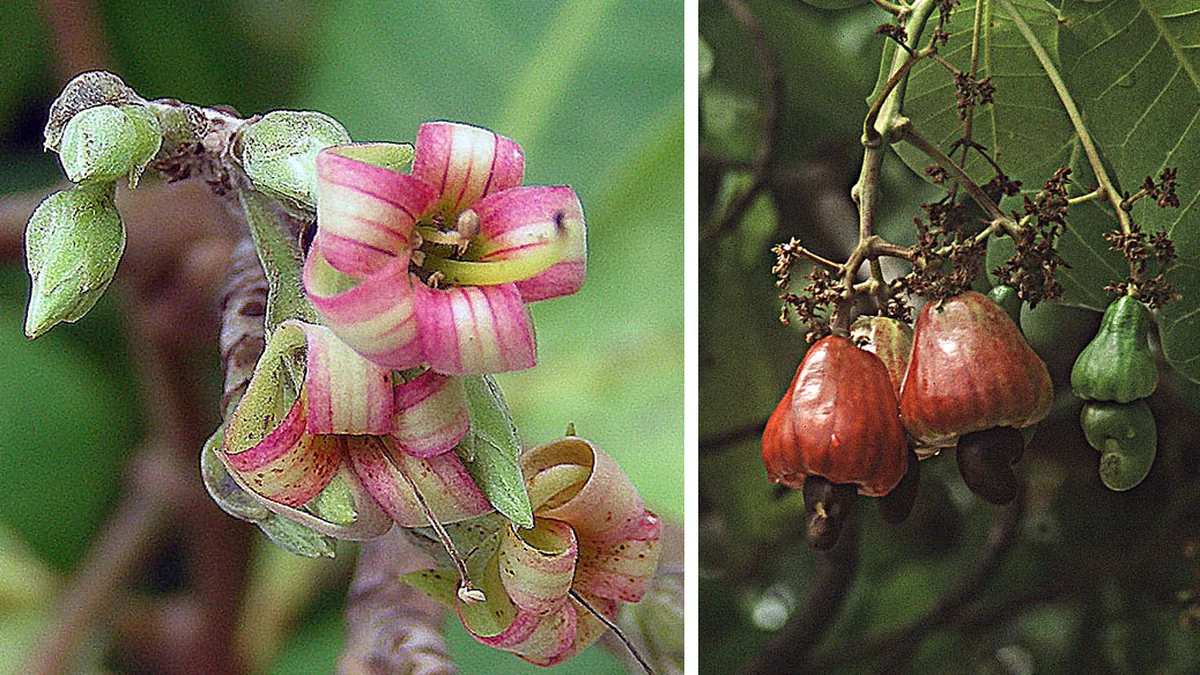
- Stopping Fatal Tea Mosquito Bug (TMB): Tiny slender sucking bugs (Helopeltis antonii) puncture tender flushing shoots and tiny flowers just when pink panicles flush across November–January—blackening blooms (blossom blight) before nuts ever set! Two targeted CIB&RC recommended preventative sprays cleanly calibrated with our pesticide calculator (strictly timed before/after heavy bee pollination!) protect full nut setting.
- Cashew Stem & Root Borer (CSRB) Vigilance: Inspect dark gum exudation and wet reddish fibrous sawdust oozing around trunk bases once every quarter; early scraping of pale larvae beneath bark keeps 25-year producing trees alive cleanly for decades.
4. Orchard Setup Subsidies, Micro-Processing & Zero-Waste By-Products
Wait 3–4 years cleanly for new grafts to reach commercial canopy fruiting while intercropping short-duration pineapple, turmeric (turmeric rate guide), ginger (ginger prices), or black-gram pulses across open sunlit 7-meter alleys—paying annual weeding and nutrition effortlessly! Calculate long-term plantation cashflows via our farm ROI calculator and crop profit calculator, tap 40%–50% MIDH / NHB / DCCD high-density cashew planting & drip irrigation grants via our subsidy calculator & central schemes hub, borrow affordable working capital on our KCC loan calculator, insure orchard yields via PMFBY / RWBCIS weather cover (claim checker), schedule dry-month watering cleanly on our irrigation planner, balance NPK nutrition using our fertilizer dosage tool & Soil Health Card guidelines, explore coconut intercropping & prices, and confirm Farmer ID enrollment cleanly.
5. Sun-Curing RCN Below 9% Moisture & Smallholder PMFME Processing Loops
Selling ungraded damp raw nuts soaked during unseasonal March coastal squalls destroys KOR firmness cleanly—spread daily picked fallen nuts evenly on paved floors or woven mats for 3 full sunny days, shaking until dried kernels rattle sharply inside clean crisp grey-brown shells (<9% water). Meanwhile, energetic FPOs and village entrepreneur women groups increasingly access 35% PMFME credit-linked subsidies (agro-processing guides) to operate mini steam boilers, semi-automatic pedal/motorized cutters, Borma drying ovens, and nitrogen-flushed vacuum packing lines—converting local RCN straight into roasted salted W240/W320 gift packs plus pressing industrial CNSL (Cashew Nut Shell Liquid) brake-lining/resin oil from discarded empty shells!
6. Cashew Apple Value & Clean Post-Harvest Market Storage Tips
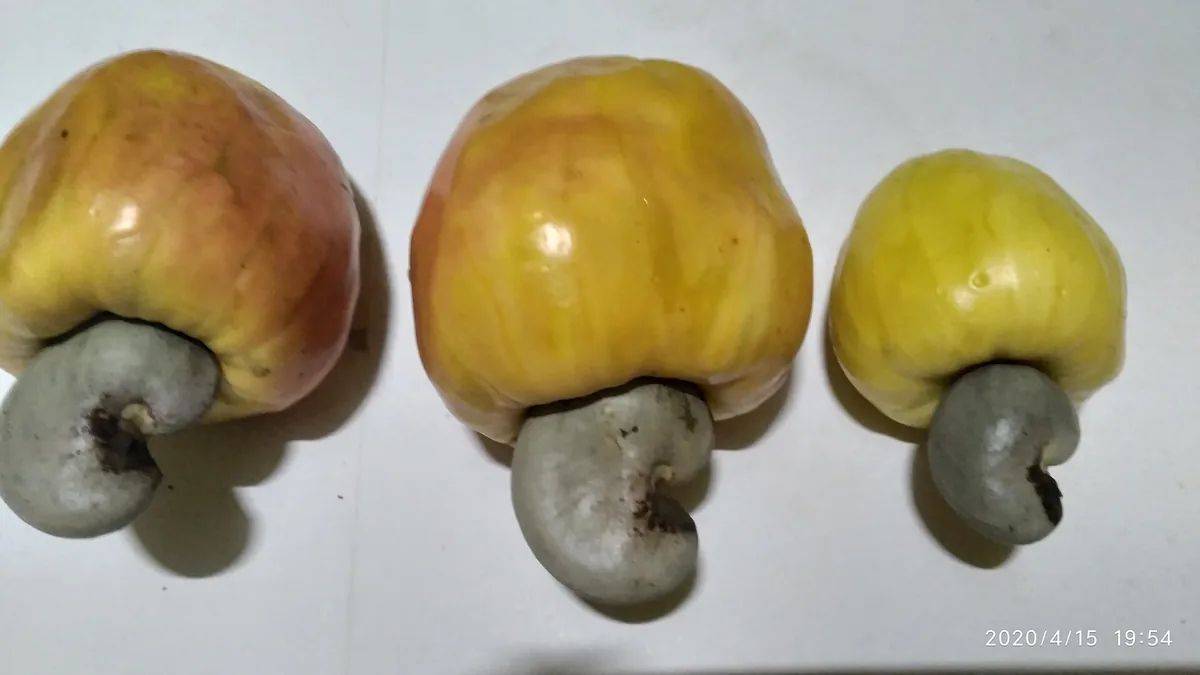
In Goa and Konkan valleys, juicy yellow-crimson Cashew Apples (rich in 5× Vitamin C over oranges!) are cleanly crushed into regional GI-tagged Feni or healthful non-alcoholic blended fruit nectar squashes—while coastal orchardists outside Goa increasingly compost fresh apples or shred juicy fibrous pulp safely into balanced dairy silage supplements tracked via our dairy calculator! Keep raw cured RCN gunny bags stacked cleanly onto raised wooden pallets away from damp monsoon walls, and remember never to crush raw fresh caustic shells bare-handed due to skin-blistering cardol/anacardic resin oils!
Look closely also at how annual cashew tree canopy pruning right after late-May harvest transforms old dense low-yielding gardens across Maharashtra, Odisha, and Tamil Nadu back into brisk cash-generating orchards: thinning crowded criss-crossing interior shaded limbs opens bright sunlight onto healthy horizontal side shoots where next November’s fruit panicles develop! Applying 50 kg well-rotted FYM alongside balanced NPK + Boron/Zinc micronutrients inside semi-circular orchard drip basins at June monsoon onset lifts kernel firmness cleanly past 52+ lbs KOR, while APEDA hygienic steam-roasting and airtight nitrogen-flushed 10-kg tin packing preserves crisp ivory W240 & W320 crunch through autumn festive weddings without insect weevil damage.
Frequently asked questions
- What is the cashew price per kg for W320 in India today?
- Across wholesale spice and processing clusters tracked alongside DCCD and trade hubs like Kollam, Panruti, and Khari Baoli, standard W320 White Whole cashew kernels indicatively trade around Rs 750 to Rs 950 per kg depending on brand packaging, freshness, and seasonal festive demand.
- What is the difference between W180, W240, and W320 cashew grades?
- Per CEPCI grading norms, the number shows how many whole white kernels weigh 1 pound (454 g): W180 are huge luxury jumbo nuts (~380/kg), W240 are crisp large wholes, and W320 are medium-large standard commercial wholes.
- What is the price per kg of raw cashew nuts (RCN) sold by Indian farmers?
- Sun-dried in-shell Raw Cashew Nuts (RCN) sold at Konkan, Goa, Palasa, and Tamil Nadu orchard gates generally fetch Rs 115 to Rs 165 per kg based directly on cut-test Kernel Outturn Ratio (KOR) and moisture (<9%).
- How many kg of edible white cashew kernels come from 100 kg of raw nuts?
- Out of 100 kg of good dried RCN, tough outer shells represent ~70% by weight, yielding roughly 24 to 27 kg of peeled white cashew kernels across mixed Whole (W180–W320), Split (S), and Broken (LWP) grades.
- Which grafted cashew varieties produce the highest yields in India?
- Approved by ICAR-DCR Puttur and state research stations, high-yielding clones include Vengurla-4 & Vengurla-7 (Maharashtra/Goa), Bhaskara & Ullal-3 (Karnataka), Madakkathara-2 (Kerala), and BPP-8 (Andhra/Odisha), yielding 10–16 kg raw nuts per mature tree.
- Does the government give subsidies for planting new cashew orchards or processing mills?
- Yes! Both orchard expansion (MIDH / DCCD) and mini village shelling/roasting plants (under 35% PMFME micro-food grants) qualify for subsidized central assistance—check estimates using our subsidy calculator.
- What is Kernel Outturn Ratio (KOR) in raw cashew nut trading?
- KOR measures how many exact pounds of usable spotless kernels yield from one standard 80 kg bag of raw nuts; high Konkan/Goa lots scoring 50–54 lbs KOR command steady buyer premiums over low-outturn lots.
- Why must farmers never break fresh raw cashew shells with bare fingers?
- Fresh raw in-shell nuts hold caustic Cashew Nut Shell Liquid (CNSL) containing blistering anacardic acid and cardol; traditional processing first steam-cooks raw nuts in drums so outer shells crack safely cleanly without skin burns.
- How can farmers prevent Tea Mosquito Bug from wiping out cashew flowers?
- Monitor tender red flushes and floral panicles during cool November–January nights and apply targeted CIB&RC recommended sprays timed safely outside morning bee visits using our pesticide calculator.
- Can cashew farmers get Kisan Credit Card (KCC) and weather crop insurance?
- Yes! Plantation orchard growers receive subsidized annual working capital via KCC (calculate interest) and weather-index insurance against unseasonal flowering rains under notified RWBCIS / PMFBY schemes.
- Why do domestic coastal Konkan raw cashew nuts beat imported nuts on taste?
- Fresh single-season sun-cured Konkan, Goa, and Coastal Odisha RCN lots skip months-long humid cargo shipping voyages—preserving crisp nutty sweetness and snow-white kernel color prized by artisan roast houses.
- How long does it take a grafted cashew plant to begin bearing commercial nuts?
- Softwood-grafted high-yielding clones flower lightly by Year 2 (pinch early flowers for sturdy roots) and harvest meaningful commercial raw nut tonnage starting Year 3 to Year 4, reaching full maturity by Years 7–8 cleanly.
This article is for general information only and is not financial advice. Loan and scheme eligibility depends on partner and government criteria.