Bajra in Kannada (Sajje): Meaning, Nutrition & MSP Guide
Key takeaways
- Bajra meaning in Kannada is Sajje (ಸಜ್ಜೆ), while bajra flour is called Sajje Hittu (ಸಜ್ಜೆ ಹಿಟ್ಟು) across Karnataka.
- Botanically known as Pennisetum glaucum (pearl millet), Sajje provides roughly 11.0 g protein, 11.5 g dietary fibre, and 6.4–16.9 mg iron per 100 g per ICAR-Indian Institute of Millets Research (ICAR-IIMR) data.
- The Government of India Minimum Support Price (MSP) for Bajra is ₹2,900 per quintal for the 2026–27 Kharif Marketing Season (up from ₹2,775 per quintal in 2025–26, per PIB releases).
- In Karnataka, Sajje is a resilient dryland Kharif crop led by Ballary, Raichur, Koppal, Vijayapura, Bagalkot, and Chitradurga districts.
The exact meaning of bajra in Kannada is Sajje (ಸಜ್ಜೆ), pronounced Saj-je. Known in English as pearl millet (Pennisetum glaucum), Sajje is one of Karnataka’s oldest drought-tolerant rainfed nutri-cereals (Shree Anna). Across rural and urban households in North Karnataka, bajra flour in Kannada is called Sajje Hittu (ಸಜ್ಜೆ ಹಿಟ್ಟು) and is stone-milled into nutritious flatbreads known as Sajje Rotti. Official nutritional profiling by the ICAR-Indian Institute of Millets Research (ICAR-IIMR) and statutory Kharif Minimum Support Price (MSP) notices published by the Press Information Bureau (PIB) place Bajra / Sajje at ₹2,900 per quintal for the 2026–27 marketing season.
Whether you are searching for the exact bajra meaning in Kannada for home cooking, checking the nutritional profile of bajra millet in Kannada (Sajje Dhaanya), or evaluating Sajje cultivation and APMC marketing prospects across Karnataka agriculture zones, this guide brings together Kannada vocabulary, ICAR nutrition benchmarks, North Karnataka agronomy, and verified market pricing rules.
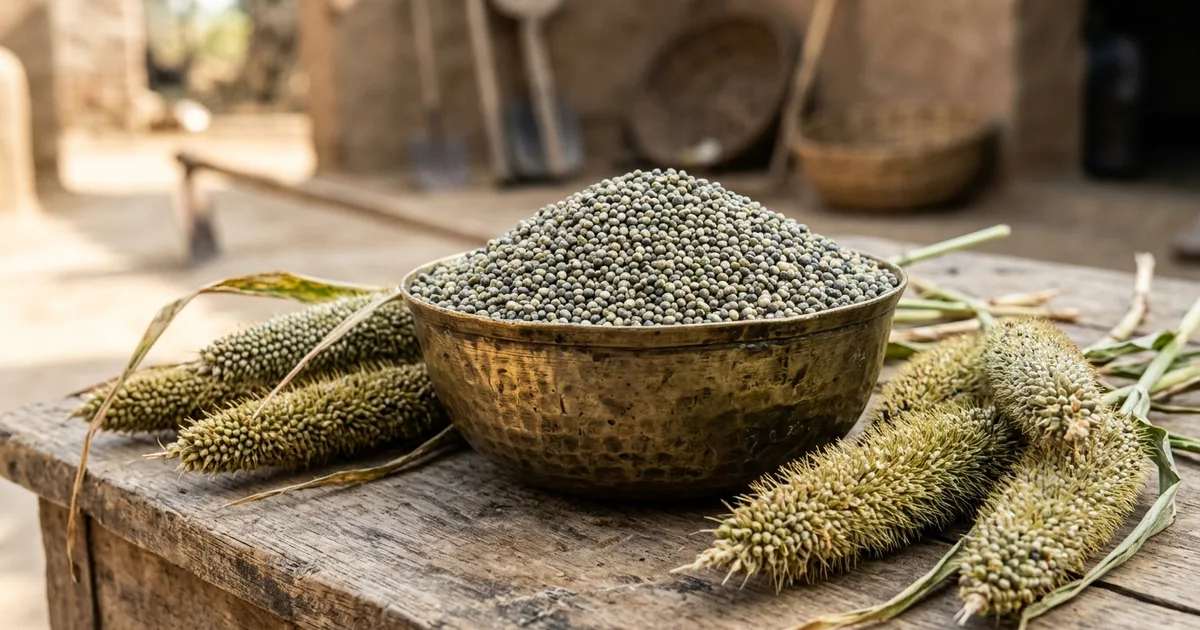
Bajra meaning in Kannada: Sajje, Sajje Hittu & complete millet dictionary
Because Kannada distinguishes every millet species with its own traditional name, shoppers and farmers occasionally confuse bajra (Sajje) with sorghum (Jola) or finger millet (Ragi). Knowing the precise Kannada culinary and market terminology prevents buying the wrong grain or flour at local grocery stores and APMC mandis.
Just as South Indian kitchens use cumin seeds in Kannada (Jeerige) and sesame seeds in Kannada (Ellu) alongside millet staples, pairing Sajje with roasted sesame and spiced chutneys forms a classic North Karnataka meal. Farmers growing dual-purpose cereals can also compare fodder and grain sorghum traits in our jowar grass cultivation guide.
| English / Hindi Term | Kannada Name (ಕನ್ನಡ) | Pronunciation | Botanical Name & Household Form |
|---|---|---|---|
| Bajra / Pearl Millet | ಸಜ್ಜೆ / ಸಜ್ಜೆ ಧಾನ್ಯ | Sajje / Sajje Dhaanya | Pennisetum glaucum — whole grey-green grain |
| Bajra Flour (Atta) | ಸಜ್ಜೆ ಹಿಟ್ಟು | Sajje Hittu | Whole-grain stone-milled flour for Sajje Rotti |
| Bajra Rotti / Bhakri | ಸಜ್ಜೆ ರೊಟ್ಟಿ | Sajje Rotti | Hand-patted toasted dryland flatbread with sesame |
| Bajra Porridge / Gruel | ಸಜ್ಜೆ ಗಂಜಿ / ಅಂಬಲಿ | Sajje Ganji / Ambali | Cooling fermented or boiled millet drink |
| Jowar / Sorghum | ಜೋಳ | Jola | Sorghum bicolor — distinct white/yellow cereal |
| Ragi / Finger Millet | ರಾಗಿ | Ragi | Eleusine coracana — reddish-brown South Karnataka staple |
| Kangni / Foxtail Millet | ನವಣೆ | Navane | Setaria italica — dehusked golden millet rice |
| Kutki / Little Millet | ಸಾಮೆ | Saame | Panicum sumatrense — fine minor millet grain |
Source: Official Shree Anna millet taxonomy published by ICAR-IIMR and Karnataka state agricultural extension nomenclature (raitamitra.karnataka.gov.in).
Bajra flour in Kannada (Sajje Hittu): culinary traditions in Karnataka
Across Vijayapura, Bagalkot, Kalaburagi, Raichur, and Koppal, bajra flour in Kannada is sold at local flour mills (girani) as Sajje Hittu (ಸಜ್ಜೆ ಹಿಟ್ಟು). Unlike wheat flour, pearl millet lacks gluten protein, so Sajje Hittu is kneaded with warm water so starch gelatinizes slightly, letting cooks pat thin rounds by hand onto a hot cast-iron griddle (tawa).
Because whole bajra grains retain their oil-rich germ (~5.4 g fat per 100 g), freshly milled Sajje Hittu develops natural bitterness if stored past 3 to 4 weeks in warm humid weather. Karnataka households therefore store clean whole Sajje grains in dry airtight bins and mill only 2 to 3 kg of Sajje Hittu at a time. When making Ellu Sajje Rotti during winter and Makara Sankranti festivals, dough rounds are pressed directly into white sesame seeds before roasting crisp on an earthen or iron griddle and served with brinjal Ennegayi curry, groundnut chutney powder, and homemade butter.
- Sajje Rotti (ಸಜ್ಜೆ ರೊಟ್ಟಿ): Staple winter flatbread across North Karnataka; warm water kneading replaces gluten elasticity so flatbreads hold without cracking.
- Sajje Kadubu / Mudde: Steamed millet dumplings or balls eaten with spicy lentil saaru in arid rural households.
- Sajje Ambali / Ganji (ಸಜ್ಜೆ ಗಂಜಿ): Fermented millet porridge cooled with buttermilk and chopped onions, prized as an electrolyte-rich summer farm-field drink.
- Sajje Dose & Idli Batter: Replacing 30–50% of parboiled rice in dosa batter with soaked Sajje increases iron and dietary fibre while keeping a crisp texture.
Nutritional value of Bajra (Sajje) per 100g & health benefits
Research published by ICAR-IIMR and the Indian Council of Agricultural Research (ICAR) classifies pearl millet as a high-energy, gluten-free whole grain. Unlike polished white rice, bajra requires minimal mechanical dehusking, so consumers eat the nutrient-dense bran and germ intact.
| Nutrient (per 100 g edible grain) | Pearl Millet / Sajje (Bajra) | Key Health & Metabolic Role |
|---|---|---|
| Energy | ~348 kcal | Sustained slow-release calories for heavy physical farm work |
| Protein | 10.6 – 11.0 g | Plant-based protein higher than polished rice; naturally gluten-free |
| Dietary Fibre | ~11.5 g | Slows post-meal blood sugar spikes and prevents constipation |
| Carbohydrates | 61.8 – 67.0 g | Complex carbohydrates delivering a moderate-to-low glycemic response |
| Total Fat | ~5.4 g | Predominantly unsaturated heart-friendly lipids concentrated in the germ |
| Iron | 6.4 – 16.9 mg (by cultivar) | Exceptionally high non-heme iron supporting hemoglobin synthesis |
| Minerals & Calcium | ~2.3 g ash | ~38 mg Ca | Contains phosphorus, magnesium, and zinc for bone and enzyme health |
Source: Nutrient benchmarks compiled from ICAR-IIMR nutritional bulletins and ICAR nutri-cereal publications.
Bajra MSP 2026-27 & Karnataka APMC market dynamics for Sajje farmers
For cultivators across dryland India, Sajje is not just a subsistence crop—it is an MSP-backed Kharif cereal. Under Cabinet Committee on Economic Affairs (CCEA) approvals released by the Press Information Bureau (PIB), the official Minimum Support Price (MSP) for Bajra was raised to ₹2,900 per quintal for the 2026–27 Kharif Marketing Season (up ₹125 per quintal from ₹2,775 per quintal in 2025–26), delivering an estimated 56% margin above all-India weighted production cost (A2+FL).
In Karnataka, regulated Sajje trading occurs through APMC yards linked to the Unified Market Platform (UMP) and reported daily on Agmarknet. Farmers comparing pearl millet returns against cereal alternatives like wheat or paddy can monitor daily wholesale trends on our live mandi rates dashboard, check winter grain benchmarks on wheat rate today and gehu ka rate, or review procurement guidelines in our paddy cultivation and MSP guide. Overseas Shree Anna demand and millet export grading are tracked by APEDA.
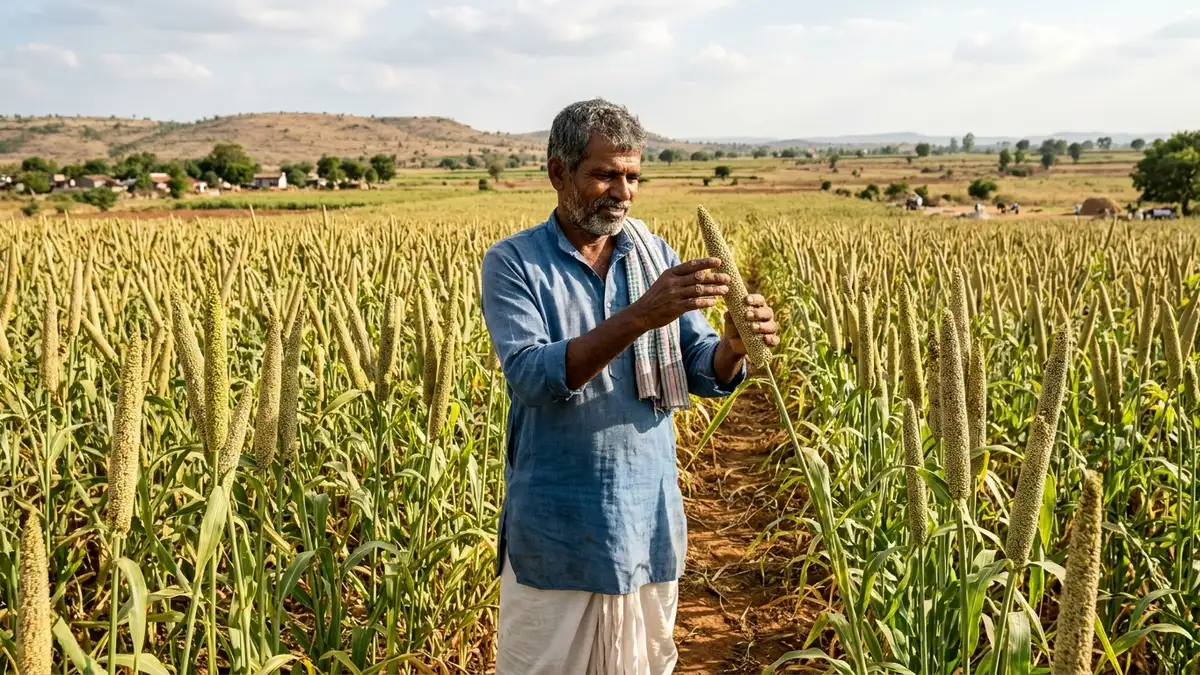
Karnataka Sajje cultivation: major districts, soil fit & farmer tips
According to the Karnataka Department of Agriculture (Raitamitra), pearl millet is uniquely suited to regions receiving 350–650 mm annual rainfall where maize or rice faces frequent moisture stress. Deep taproots and waxy leaves help Sajje recover rapidly after dry spells of 15–20 days, making it a critical climate-resilient insurance crop for North Interior Karnataka.
Major Karnataka districts leading Sajje (Bajra) production and APMC arrivals include:
- Ballary & Koppal: Major Kharif and irrigated summer Sajje pockets supplying Karnataka’s northern grain mandis and cattle/poultry feed mills.
- Raichur & Kalaburagi: Red sandy loams and light black soils support intercropping of Sajje with red gram (tur) in 2:1 or 4:2 strip rows for dual harvest stability.
- Vijayapura & Bagalkot: Traditional rainfed Sajje Rotti belt where households prize sweet-tasting local landraces and biofortified iron-rich varieties.
- Bidar & Chitradurga: Drought-prone taluks leveraging short-duration 75–85 day bajra hybrids ahead of Rabi gram or safflower.
Cultivators planning Kharif sowing should source certified, downy-mildew-resistant hybrid or biofortified seeds via local Raitha Samparka Kendras (RSKs) and verify seed testing rules in our certified seeds quality guide. Balance basal nutrition using our fertilizer NPK dose calculator, check nutrient pricing in our DAP fertilizer subsidy guide, and follow soil test recommendations via the Soil Health Card portal. Growers adopting low-input regenerative practices can explore our natural farming guide, track farmer subsidy schemes, protect rainfed crops under PM Fasal Bima Yojana (PMFBY), calculate short-term cultivation credit via the KCC loan calculator, and get Karnataka weather alerts inside the KisanPe mobile app. If you grow aromatic spice crops alongside millets, check our coriander seeds cultivation guide as well.
Frequently asked questions
- What is bajra called in Kannada?
- Bajra is called Sajje (ಸಜ್ಜೆ) in Kannada. In grocery stores, APMC mandis, and agricultural bulletins from the Karnataka Department of Agriculture (Raitamitra), pearl millet is consistently listed as Sajje, while whole millet grain is referred to as Sajje Dhaanya.
- What is bajra flour called in Kannada?
- Bajra flour is called Sajje Hittu (ಸಜ್ಜೆ ಹಿಟ್ಟು) in Kannada. It is made by grinding whole grey-green pearl millet grains without polishing, retaining dietary fibre (~11.5 g/100 g) and iron, and is widely used across North Karnataka to bake handmade Sajje Rotti.
- What is the difference between Sajje, Jola, and Ragi in Kannada?
- In Kannada, Sajje (ಸಜ್ಜೆ) means pearl millet (bajra), Jola (ಜೋಳ) means sorghum (jowar—also compare jowar fodder varieties), and Ragi (ರಾಗಿ) means finger millet. Each is a distinct species under the national Shree Anna millet classification published by ICAR-IIMR.
- What is the official MSP of bajra (Sajje) in India for 2026-27?
- Per Cabinet approvals published by the Press Information Bureau (PIB), the Minimum Support Price (MSP) for Bajra is ₹2,900 per quintal for the 2026–27 Kharif Marketing Season, an increase of ₹125/qtl over the 2025–26 MSP of ₹2,775/qtl. Check live mandi auction benchmarks on our mandi rates portal.
- Is bajra (Sajje) good for diabetes and weight management?
- Yes. According to ICAR-IIMR nutritional data, 100 g of Sajje delivers roughly 11.5 g dietary fibre and 10.6–11.0 g gluten-free protein with complex carbohydrates. This high fibre matrix slows glucose absorption into the bloodstream, promoting sustained fullness and balanced glycemic control.
- How do you make Sajje Rotti without the dough breaking?
- Because Sajje Hittu contains no gluten, mix freshly milled bajra flour with hot boiling water and a pinch of salt, cover for 5 minutes so starch gelatinizes, then knead smoothly. Dust the rolling board with dry flour, pat gently into thin rounds, press white sesame seeds (Ellu in Kannada) on top, and roast on a hot tawa.
- Which districts in Karnataka grow the most bajra (Sajje)?
- North Interior Karnataka accounts for the bulk of state output, led by Ballary, Koppal, Raichur, Vijayapura, Bagalkot, Kalaburagi, Bidar, and Chitradurga. Explore regional crop advisories, weather alerts, and APMC details on our Karnataka farming hub and Agmarknet.
- Can bajra (Sajje) grow in low-rainfall sandy soils without heavy irrigation?
- Yes. Pearl millet is among the most drought- and heat-tolerant cereal crops in India, thriving in light sandy loams and shallow black soils with 350–650 mm seasonal rainfall. Farmers cultivating rainfed Kharif Sajje can reduce climate risk by enrolling before seasonal deadlines under PM Fasal Bima Yojana (PMFBY) crop insurance.
- How long can freshly milled Sajje Hittu (bajra flour) be stored at home?
- Freshly milled Sajje Hittu stays sweet and aromatic for only 2 to 4 weeks at room temperature because pearl millet contains around 5.4 g natural unsaturated oils per 100 g that oxidize after milling. Store whole Sajje grains dry for months and mill small batches as needed, or refrigerate milled flour in airtight jars.
- Where can Karnataka farmers check daily Sajje mandi bhav online?
- Farmers can view daily APMC arrivals and modal prices for Sajje across Ballary, Koppal, Raichur, and Vijayapura on the central Agmarknet portal and through the KisanPe mobile app.
This article is for general information only and is not financial advice. Loan and scheme eligibility depends on partner and government criteria.