Combine Harvester Price in India 2026: Types & SMAM Subsidy
Key takeaways
- Indicative combine harvester price in India (November 2026) spans ₹5.25–₹15.00 lakh for tractor-mounted harvester attachments (excluding tractor), ₹15.00–₹26.00 lakh with bundled 55+ HP tractors, and ₹20.00–₹35.00+ lakh for standard self-propelled combine machines.
- Track-mounted paddy combine harvesters built for waterlogged clay and delta soils range roughly from ₹24 lakh up to ₹45+ lakh depending on cutter-bar width and engine horsepower.
- Under Central Government SMAM (Sub-Mission on Agricultural Mechanization via agrimachinery.nic.in), SC/ST, Women, Small & Marginal farmers and NE states access up to 50% subsidy (40% for general buyers), capped up to ₹7.68–₹8.00 lakh on self-propelled combines and ₹2.40–₹3.00 lakh (without tractor) / ₹5.80–₹7.25 lakh (with tractor) for tractor-powered models.
- Proper combine calibration—adjusting concave clearance, reel ground speed (~1.1x–1.25x forward travel), and Super SMS straw attachment—keeps shattering grain loss under ~1.5% while allowing zero-burn Happy Seeder wheat sowing directly behind.
- Commercial Custom Hiring Centres (CHCs) typically charge ₹1,200 to ₹2,200 per acre depending on standing vs lodged crops across Punjab, Haryana, MP, and UP.
When acute March–April or October–November farm labour shortages leave ripe wheat and paddy vulnerable to unseasonal hailstorms, a modern combine harvester cuts, threshes, winnows, and cleans acres of grain in hours instead of weeks! Farmers researching the combine harvester price in India or evaluating a combine farm machine for a district Custom Hiring Centre (CHC) must first match machine architecture to soil conditions and seasonal crop volume: smallholders owning a 55+ HP tractor can adopt an affordable tractor-mounted combine (₹5.25–₹15 lakh attachment only), whereas full-season commercial operators harvesting 300–700 acres annually choose high-throughput self-propelled or track-type paddy combines (₹20–₹35+ lakh). Before booking with any showroom, check central SMAM capital subsidy caps on Agrimachinery / Farmech, inspect commercial test evaluations on CFMTTI Budni, and compare companion KisanPe guides including our combine operation manual, Indian harvester model pricing, and SMAM machinery subsidy walkthrough.
1. Combine Harvester Price in India & SMAM Subsidy Caps (Nov 2026)
Understanding the distinction between attachment-only units, bundled tractor combinations, self-propelled wheeled combines, and rubber-track wetland paddy harvesters clarifies wide gaps when comparing combine price quotes across Punjab, Madhya Pradesh, and coastal rice deltas. Under the Ministry of Agriculture's SMAM scheme, eligible individuals, FPOs, and cooperative Custom Hiring Centres can claim 40% (General) to 50% (SC/ST/Women/Small-Marginal/NE) capital subsidies within statutory maximum ceiling caps shown below:
| Combine Harvester Category | Typical Cutter Width & Power | Indicative Price Range (India, Nov 2026) | SMAM Maximum Subsidy Ceiling (40% / 50%) | Ideal Farm & Terrain Fit |
|---|---|---|---|---|
| Tractor-Mounted / Driven (Attachment Only) | ~8–11 ft cutter; needs 50–65 HP tractor | ₹5.25 Lakh – ₹15.00 Lakh | ~₹2.40 Lakh – ₹3.00 Lakh cap | Farms already owning 55–65 HP tractor doing 80–200 acres/year |
| Tractor-Mounted Combine (With Tractor Package) | Complete 55–65 HP tractor + mounted combine | ₹15.00 Lakh – ₹26.00 Lakh | ~₹5.80 Lakh – ₹7.25 Lakh cap | First-time CHC entrepreneurs wanting off-season tractor tillage utility |
| Self-Propelled Combine Harvester (Wheeled) | 12–14 ft cutter; 75–105+ HP dedicated engine | ₹20.00 Lakh – ₹35.00+ Lakh | ~₹7.68 Lakh – ₹8.00 Lakh cap | Custom operators harvesting 300–700+ acres/season (Punjab, Haryana, MP, UP) |
| Self-Propelled Rubber-Track Harvester | ~6.5–8 ft cutter; 60–80 HP tracked undercarriage | ₹24.00 Lakh – ₹45.00+ Lakh | ~₹8.80 Lakh – ₹11.00 Lakh cap | Muddy, bunded, small-plot wetland rice belts (Odisha, WB, AP, TN, Bihar) |
Flagship industry variants span entry-to-commercial budgets across popular Indian manufacturers: for instance, Swaraj 8200 4WD (~₹15–₹19 lakh indicative), Kartar 4000 / Malkit 997 (~₹18–₹26 lakh), Preet 987 multi-crop (~₹23–₹32 lakh), and John Deere W70 (~₹28–₹35 lakh), alongside specialized track units verified via Kubota harvester breakdowns. Note that models funded through SMAM must hold valid CFMTTI / ICAR commercial testing approval listed inside agrimachinery.nic.in—otherwise DBT subsidy claims get declined automatically during dealer verification! Pair equipment selection smoothly with high-torque 48–55 HP tractors, heavy-duty 4x4 utility models, or standalone multi-crop axial threshers for fragmented hillside terraces.
2. Self-Propelled vs Tractor-Mounted vs Track Combines: Buying Decision
Selecting the right combine harvester machine prevents tying up ₹25+ lakh in idle bank EMIs if your district cropping intensity only yields 45 active harvest days yearly. Measure every machine option against three practical operational truths:
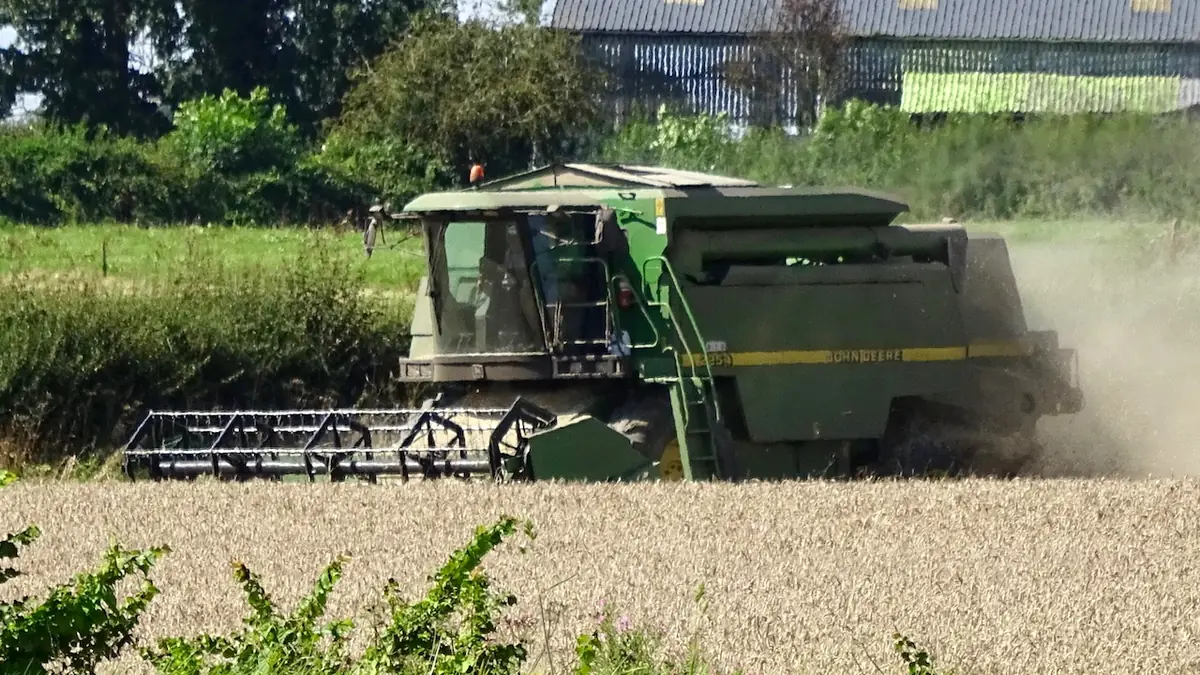
- Wheeled Self-Propelled Combines (High Acreage Speed): Delivering 1.8 to 3.0 acres per hour in standing wheat or dry paddy, dedicated self-propelled harvesters boast superior operator visibility, wide straw walkers, hydrostatic/heavy gearboxes, and smooth multi-state highway travel from Madhya Pradesh harvests up to Punjab/Haryana cycles.
- Tractor-Mounted / Driven Combines (Off-Season Capital Versatility): Once grain harvesting wraps up in late April or late November, detaching the harvester frees your 55–65 HP tractor (comparable utility models or 55 HP field leaders) cleanly for laser land leveling, rotavator puddling, and mandi trailer transport for the other 9 months! Always inspect tractor PTO clutch heat tolerance (compare tractor specs) before coupling.
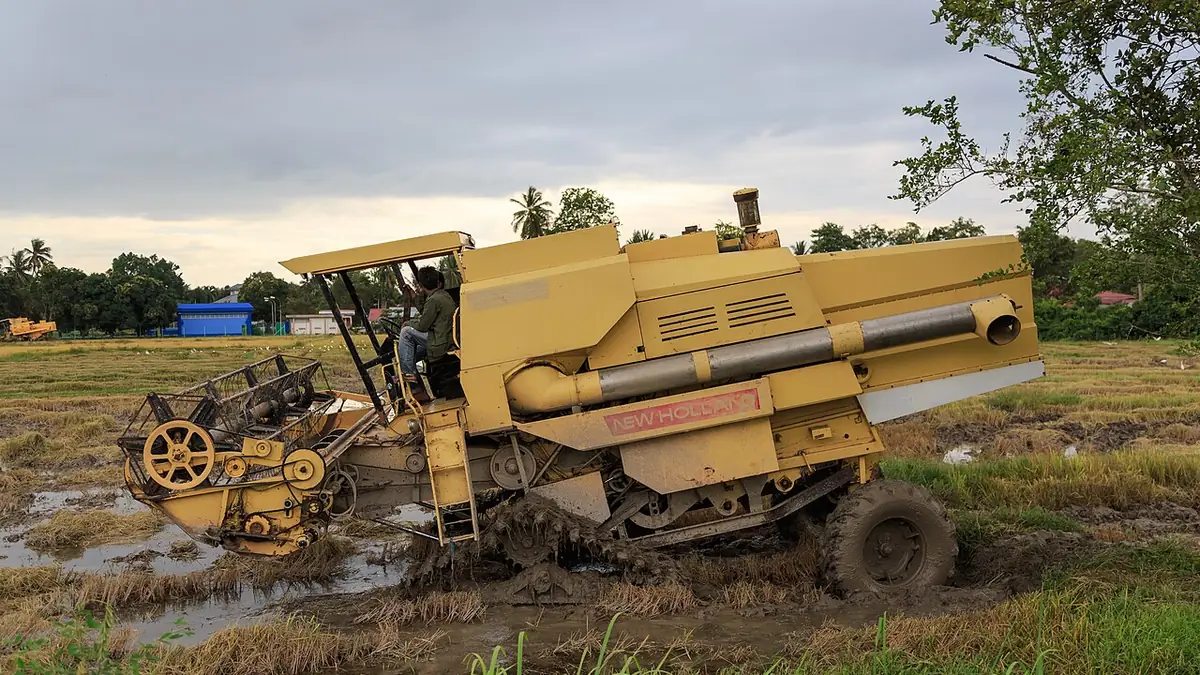
- Rubber-Track Paddy Combines (Eastern & Southern Wetlands): In Odisha, Bihar, Andhra Pradesh, West Bengal, and Tamil Nadu coastal deltas where small bunded fields retain moist puddles right through harvest, wide rubber crawler tracks exert low ground pressure (~20–30 kPa), climbing cross-bunds cleanly with zero soil compaction and minimal lodging loss.
3. Field Calibration Secrets: Cutting Grain Loss Below 1.5% & Super SMS
Even an immaculate ₹30 lakh combine wastes 40 to 90 kg of wheat or paddy per acre—worth ₹1,000–₹2,200 lost every single hour—if hurried custom operators race ground speed or misadjust concave gaps. Insist your operator adjusts four key settings before entering wheat or paddy blocks:
- Reel Speed Ratio (1.1x to 1.25x Travel Speed): If the front pickup reel spins dramatically faster than ground travel, tines smack ripe brittle earheads and shatter grain onto the ground BEFORE the cutter knife slices stalks! Keep tines gentle and slightly tilted in standing crops.
- Drum RPM & Concave Clearance: Tightening concave clearance excessively cracks hard dry pulse or basmati rice grains ('broken percentage' penalties at mills); leaving it too loose leaves unthreshed kernels attached inside straw walkers.
- Cleaning Fan Airflow & Chaffer Opening: Balance blower velocity so lightweight straw blows out cleanly over rear walkers without lifting plump grains right behind the sieve.
- Mandatory Super SMS (Super Straw Management System): In Punjab, Haryana, and NCR zones, state pollution rules require rear-mounted Super SMS choppers on combines harvesting paddy so loose straw shreds and spreads uniformly across the cutter width—enabling direct no-burn zero-till sowing with a Happy Seeder!
4. Step-by-Step Application for SMAM Subsidy on Agrimachinery.nic.in
Follow verified DBT workflow steps on the official agrimachinery.nic.in (Farmech SMAM) portal (plus state parallels like UP Darpan, MP E-Krishi Yantra Anudan, or Haryana Agri portals) before paying dealer booking deposits:
- Step 1 – Complete Farmer Registration: Visit Agrimachinery / State DBT portal, select Registration -> Farmer, link Aadhaar + mobile OTP, and upload active Land Record (RoR/Khatauni), bank passbook front page with IFSC, passport photo, and SC/ST caste proof (if claiming 50% slab).
- Step 2 – Select Approved CFMTTI Tested Machine: Pick Combine Harvester (self-propelled, track, or tractor-mounted) exclusively from the official empanelled manufacturer list tested by CFMTTI or accredited ICAR centers.
- Step 3 – Await Target Allocation / Online Lottery: State agriculture departments issue district-wise annual targets via transparent online lottery or verified queue; confirm your approval token BEFORE purchasing equipment.
- Step 4 – Upload Invoice, Joint Verification Photo & Claim DBT: After sanction, buy from an authorized dealer, upload GST tax invoice, serial plate details, and geotagged joint field photo with block agriculture officials. Subsidies settle directly into your Aadhaar-seeded bank account post-physical check—review complete scheme rules via our agriculture subsidy guide and Subsidy Calculator.
5. CHC Rental Economics, Loans & Moisture Safety Before Mandi Delivery
Smallholders farming 2 to 8 acres rarely recover ₹22+ lakh individually—hiring clean regional CHC harvesters at ₹1,200–₹2,200/acre saves 60%–70% over scarce manual sickle + tractor thresher hiring while finishing harvest ahead of storms! Conversely, entrepreneurs opening Custom Hiring Centres or financing tractors via our Tractor Loan EMI Calculator and loan checklist should target at least 250–350 acres per season across wheat, paddy, soybean, or gram to cover 5-year bank EMIs, diesel (~7–10 L/acre), cutter blades, and concaves comfortably. Remember: because combines harvest standing grain slightly earlier than manual stook-curing, test seed wetness with a moisture meter and sun-dry wheat under 12% moisture (or paddy under 17% statutory FCI norms) before transporting lots via e-NAM / APMC mandis listed on KisanPe Mandi Rates and backed by Kisan Credit Card working credit or rural warehouse schemes.
6. Frequently Asked Questions on Combine Harvester Prices & Subsidies
Review crisp verified answers covering combine harvester costs in India, SMAM 40%–50% subsidy ceilings, custom hiring per-acre rates, Super SMS compliance, and tractor HP requirements.
Frequently asked questions
- What is the price of a combine harvester in India in 2026?
- Indicative combine harvester prices in India stand around ₹5.25–₹15.00 lakh for tractor-mounted attachments (excluding tractor), ₹15.00–₹26.00 lakh with bundled tractors, and ₹20.00–₹35.00+ lakh for full wheeled self-propelled machines (up to ₹24–₹45+ lakh for rubber-track rice units). Compare models via KisanPe harvester price sheets.
- How much SMAM government subsidy is available for a combine harvester?
- Under Central Government SMAM guidelines on Agrimachinery.nic.in, SC/ST, Women, Small & Marginal farmers get up to 50% subsidy (40% for General), subject to benchmark caps (~₹7.68–₹8.00 lakh for self-propelled units, ₹2.40–₹3.00 lakh attachment-only tractor combines, and ₹5.80–₹7.25 lakh bundled)—learn steps in our SMAM subsidy guide.
- Which tractor HP is needed to run a tractor-mounted combine harvester?
- Most 8–10 ft tractor-driven/mounted combine attachments demand a sturdy 50 HP to 65 HP 2WD or 4WD tractor with strong PTO torque, dual clutch/IPTO, and heavy-duty cooling—evaluate heavy tractors cleanly on our KisanPe tractor comparator.
- How much grain can a self-propelled combine harvest per hour and what is the rental rate?
- Standard 12–14 ft self-propelled wheeled combines harvest roughly 1.8 to 3.0 acres per hour depending on crop lodging and field size, with typical Custom Hiring Centre charges ranging from ₹1,200 to ₹2,200 per acre across major wheat and rice states.
- What is the difference between a self-propelled combine and a rubber-track harvester?
- Wheeled self-propelled combines excel on dry large plots (wheat, soybean, dry paddy) with fast inter-village road mobility; compact rubber-track harvesters like tracked paddy combines carry crawler belts that prevent sinking inside wet, bunded clay rice fields.
- Why must combines have Super SMS attached when harvesting paddy in Punjab/Haryana?
- A rear Super Straw Management System (Super SMS) cuts and distributes loose paddy straw evenly across the cutter swath so farmers can sow next-season wheat cleanly using zero-till Happy Seeders without burning stubble.
- Which machines require CFMTTI testing approval before qualifying for subsidy?
- Any combine harvester make or variant subsidized under SMAM or state CHC grants must carry an active commercial test report issued by CFMTTI Budni or designated ICAR/SAU test centers listed on the DBT portal.
- Why does combine-harvested wheat or paddy sometimes need extra sun drying?
- Because combines thresh directly off standing stalks rather than letting cut bundles dry on ground for 3–5 days, grain moisture can sit 1%–3% higher initially; dry harvested loads below 12% (wheat) or 17% (paddy) before weighing at state APMC grain mandis.
This article is for general information only and is not financial advice. Loan and scheme eligibility depends on partner and government criteria.