Cosmos Seeds Cultivation Guide: Sowing, Spacing & Harvest
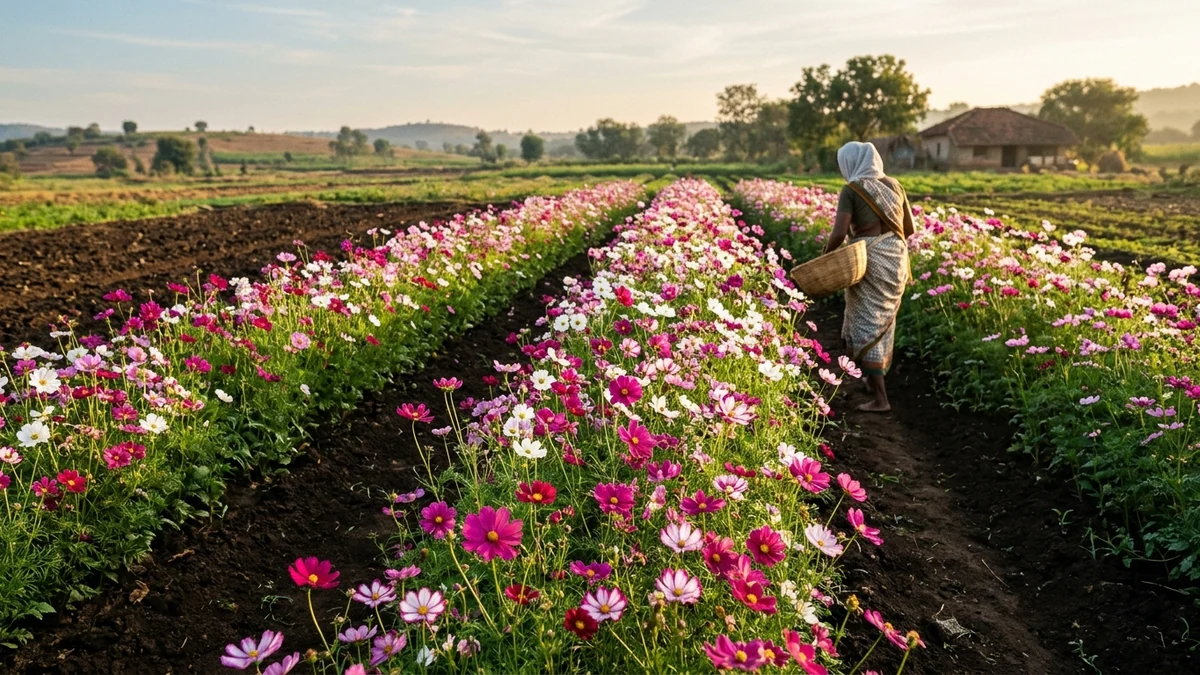
Key takeaways
- Seed Rate & Depth: Sow 1.5–2.5 kg/ha directly in well-drained sandy loam soil at a shallow depth of 1.0–1.5 cm, lightly firmed with fine compost.
- Seasonal Species Match: Choose Cosmos sulphureus for Kharif/summer heat (June–July sowing) and Cosmos bipinnatus for winter/spring cool-night quality (Sept–Oct plains; March–April hills).
- Plant Architecture & Pinching: Maintain 30–45 cm row spacing and pinch primary growing tips once seedlings reach 15–20 cm height to trigger dense lateral flower flushes.
- Fertilizer Discipline: Apply 10–15 tonnes/ha well-rotted FYM during tillage and avoid excess urea, which boosts foliage at the expense of flower buds.
- Harvest & Grading: Cut blooms early morning (60–80 DAS) as outer petals unfurl; stand stems in clean cool buckets before transporting to wholesale mandis like Ghazipur Phool Mandi.
Sowing quality cosmos seeds gives Indian smallholders and terrace growers a reliable, low-input commercial flower crop maturing in just 60 to 80 days after sowing. Across Indian plains and hills, commercial growers select between feathery-leaved Cosmos bipinnatus (white, rose, pink, and crimson petals tailored to cooler Rabi/winter markets) and heat-tolerant Cosmos sulphureus (golden yellow, tangerine, and scarlet blooms thriving right through warm Kharif and summer schedules). Under standard floriculture guidelines published via ICAR and the Ministry of Agriculture & Farmers Welfare, direct field sowing uses 1.5 to 2.5 kg of seed per hectare spaced cleanly at 30–45 cm × 20–30 cm for steady lateral branching and morning bouquet harvesting.
Because heavy nitrogen applications cause lush vegetative stalks that lodge easily before bud initiation, balanced soil organic carbon and controlled early pinching are critical to maximising bloom count per square metre. Check your soil fertility status using our Soil Health Card reader, calculate accurate plot seed quantities on the KisanPe Seed Rate Calculator, and compare wholesale stem turnover against companion annuals on Zinnia seeds and African marigold farming.
Selecting between Cosmos bipinnatus and Cosmos sulphureus for Indian climates
Choosing the right botanical species from trusted horticultural outlets prevents germination failures caused by regional heat and humidity stress. Cosmos bipinnatus produces fine, deeply dissected fern-like leaves crowned by wide white, blush-pink, magenta, and bicolor picotee ray florets on tall 60–120 cm stems. In northern alluvial plains spanning Uttar Pradesh, Haryana, Punjab, Rajasthan, and Bihar, farmers sow C. bipinnatus in September–October so cooler November–February nights strengthen petal colour intensity and stem rigidity for wedding florists.
Conversely, Cosmos sulphureus (commonly sold for festive garland markets and durable urban beds) bears broader lobed foliage and vivid orange, gold, and scarlet blossoms engineered to tolerate intense afternoon sun and monsoon showers. Growers planting for Dussehra, Diwali, and late-monsoon loose-flower baskets sow C. sulphureus between June and July following the onset of monsoon rains, taking full advantage of raised beds to drain flash showers rapidly. Plan seasonal sowing schedules cleanly using the KisanPe crop calendar and compare regional horticulture markets on our horticulture farming hub.
Before ordering bulk seed packets, verify the germination percentage stamped on the physical seed tag under the Seeds Act framework monitored via agriwelfare.gov.in. Fresh seed lots store cool and dry in sealed laminated pouches; old summer-exposed stocks frequently drop below 55% germination, creating patchy stands that force costly gap-filling.
| Agronomic Parameter | Cosmos bipinnatus (Garden Cosmos) | Cosmos sulphureus (Sulphur / Orange Cosmos) |
|---|---|---|
| Primary Petals & Market Type | Pink, white, rose, magenta blooms for bouquets & fillers | Yellow, orange, scarlet loose garlands & hardy beds |
| Best Plains Sowing Window | September – October (Rabi cool season) | June – July (Kharif monsoon) & Feb – March |
| Hills Sowing Window | March – April (Spring / Summer hills) | March – May (Warm hill slopes) |
| Direct Field Seed Rate | 1.5 – 2.5 kg per hectare | 1.5 – 2.5 kg per hectare |
| Recommended Spacing (R × P) | 40–45 cm × 25–30 cm (tall strains) | 30–40 cm × 20–25 cm (bushy cultivars) |
| Days to First Commercial Pick | 65 – 80 days after sowing | 60 – 75 days after sowing |
Soil preparation, seed rate calibration, and shallow sowing technique
Cosmos thrives in light sandy loam to loamy soils with brisk internal drainage and a neutral pH between 6.0 and 7.5. Heavy black clay soils hold excess stagnant water during monsoon downpours, encouraging Pythium damping-off and collar rot at the seedling stem base. Plough the plot two to three times to break hard clods and achieve a crumbly tilth, incorporating 10 to 15 tonnes per hectare of thoroughly decomposed farmyard manure (FYM) during final harrowing.
Unlike deep-sown cereal grains such as wheat or chickpeas, lightweight elongated achenes of cosmos seeds fail to emerge if buried deep under crusted clods. Mark shallow furrows at 30–45 cm spacing, trickle 1.5 to 2.5 kg/ha seed mixed 1:5 with clean dry sand for uniform distribution, and cover no deeper than 1.0 to 1.5 cm using fine screened soil or vermicompost. Light rose-can watering—rather than heavy flood irrigation that washes seed into furrow corners—secures crisp, even emergence within 5 to 8 days.
Fifteen to twenty days post-germination, manually thin crowded clusters to leave one vigorous plant every 20 to 30 cm along the row. Healthy spacing opens airflow around lower leaves, lowers midday canopy humidity, and curbs fungal leaf spot pressure before monsoon showers peak. Check plot pesticide dosage limits early using the KisanPe spray calculator and track local field humidity on our spray weather advisory.
- Raised-Bed Layout for Monsoon Sowing: Shape 15 cm raised beds separated by 30 cm drainage channels during June–July Kharif sowing to eliminate root asphyxiation.
- Line vs Broadcast Sowing: Row-line sowing saves up to 25% seed over random broadcasting and permits brisk hand-hoeing or wheel-hoe weeding between rows.
- Nursery Plug Trays (High-Value F1 Lots): For expensive dwarf hybrid F1 cut-flower strains, raise plugs in coco-peat + vermiculite portray trays under 50% green shade net and transplant at the 4-true-leaf stage.

Nutrition restraint, pinching schedule, and pest protection in flower plots
A common beginner error with cosmos is heavy top-dressing of urea or DAP thinking extra nitrogen yields larger flowers. In practice, lush nitrogen triggers weak, brittle hollow stems over 1.4 metres tall that topple during evening breezes while delaying flowering by two weeks. Stick to basal 10–15 tonnes/ha FYM supplemented only by modest balanced NPK (such as 20:20:20 starter support or minimal muriate of potash at bud initiation) guided by your soil test on the Soil Health Card programme.
Once seedlings establish firm roots and reach 15 to 20 cm tall (roughly 25–30 days after sowing), perform gentle manual pinching by nipping off the terminal 2 cm apical growing shoot with clean fingernails. Removing apical dominance redirects plant energy into four to six secondary lateral branches, doubling marketable stem count per plant and stiffening flower necks cleanly for bundling.
Field scouting focuses on aphids, thrips curling young buds, leaf-eating caterpillars, and late-season powdery mildew on dense lower foliage. Avoid spraying harsh broad-spectrum chemicals during active bee pollination hours (08:00 AM–03:00 PM); apply approved gentle controls strictly in late evening after bees return to hives. Verify legal label clearances via our AI Pesticide Label Reader and district guidance at your nearby Krishi Vigyan Kendra (KVK).
Harvest timing, post-harvest vase life, and mandi bundling economics
First commercial blooms open around 60 to 80 days after sowing depending on daytime warmth and variety stature. Harvest stems with sharp secateurs strictly between 05:00 AM and 07:30 AM while stem turgor is highest and nectar sugar reserves peak. Cut stems destined for long-distance florists when outer florets are 75% unfurled (central disc tight) rather than fully blown, then immediately stand bunched stems in 5 cm clean cold water shaded from direct sun.
Continuous picking and deadheading spent blooms stops seed-pod formation, keeping plants productive for 45 to 60 additional days of sequential harvests. Market fresh stems in standardised 20-stem newspaper-wrapped sleeves lined in ventilated plastic crates for Ghazipur Phool Mandi Delhi or regional urban flower auctions tracked on KisanPe mandi rates. Farmers estimating per-acre gross returns versus marigold and zinnia beds should compare net input costs through our crop income calculator and sustainable horticulture guides.
| Stage / Task | Recommended Operational Standard | Quality & Cost Impact |
|---|---|---|
| Land Preparation & FYM | 2–3 ploughings + 10–15 tonnes/ha FYM | Improves drainage and root aeration without nitrogen lushness |
| Pinching Height | Terminal bud nip at 15–20 cm plant height | Produces 4–6 sturdy flowering laterals per plant |
| Morning Harvest Window | 05:00 AM – 07:30 AM at 60–80 DAS | Maximises cut-stem hydration and reduces transit wilt |
| Transit Hydration | Clean shaded water + perforated sleeve crates | Prevents petal bruising before early morning wholesale auctions |
Seed saving, open-pollinated isolation, and companion flower planning
Smallholders cultivating open-pollinated varieties often save dry brown needle-like seed heads from healthy early-blooming disease-free plants at the end of the harvest window. Wait until petals drop and achenes turn crisp dark brown to black on sunny dry afternoons, shake heads gently into cloth bags, sun-cure 2 days in light shade, and store with silica desiccant inside airtight jars away from kitchen moisture. Keep at least 200 metres separation between distinct flower colours if trying to maintain pure rose or pure white lines.
To stabilise year-round weekly cash flow across urban flower hubs, stagger cosmos sowings every 20 days in quarters alongside Zinnia beds, African marigold, and cool-season annuals listed on KisanPe Certified Seeds. Check seasonal credit facilities on our Kisan Credit Card hub and explore state floriculture cluster assistance via government farming schemes and Scheme Finder.
Commercial floriculture economics, irrigation discipline & KisanPe market planning
Calculating per-acre flower profitability before buying bulk cosmos seeds separates casual backyard sowing from dependable smallholder cash returns. Direct seed outlay remains modest at 1.5–2.5 kg/ha compared to vegetative bulb crops like tuberose or gladiolus, allowing rapid field turnover between sequential Kharif maize, soybean, or vegetable rotations. Installing inline 16 mm drip emitters spaced every 30 cm paired with raised beds keeps root moisture uniform without splashing mud onto delicate lower petals during unexpected September showers.
Track festive demand waves across Delhi NCR, West Bengal, Maharashtra, and Karnataka via our Mandi Rates Hub, model drip hardware financing on the KisanPe Irrigation Calculator, and weigh capital expenditure alongside companion crops inside our Crop Income Calculator. Small and marginal growers seeking cluster horticulture assistance or nursery polyhouse subsidies can also filter active schemes on the AI Scheme Finder.
- Avoid Evening Overhead Sprinklers: Watering via drip or morning furrow channels keeps petal surfaces dry past sunset, sharply reducing grey mould (Botrytis) spotting.
- Soil pH & Compost Balance: Maintain soil organic carbon with 10–15 t/ha well-cured vermicompost or FYM rather than acidic ammonium sulphate bursts.
- Crop Residue Recycling: Incorporate clipped spent stalks cleanly post-harvest using a mini rotavator to return potassium and organic biomass ahead of wheat or pulses.
Frequently asked questions
- How many kg of cosmos seeds are required for 1 hectare or 1 acre in India?
- Standard ICAR cultivation guidelines recommend 1.5 to 2.5 kg of cosmos seeds per hectare (roughly 600 grams to 1 kg per acre) for direct line sowing. Verify exact seed requirements adjusted for germination percent using our KisanPe Seed Rate Calculator and official horticultural standards at ICAR (icar.org.in).
- What is the best month to sow cosmos seeds across North and South India?
- Sow heat-hardy Cosmos sulphureus during June–July (Kharif) or February–March, while cool-loving Cosmos bipinnatus performs best when sown in September–October (Rabi plains) or March–April in hills. Coordinate sowing windows across vegetables and flowers on our crop sowing calendar.
- Should I pinch young cosmos plants for higher flower yields?
- Yes. Pinching the top growing tip once seedlings reach 15–20 cm height pauses upward single-stem growth and forces four to six strong side branches loaded with flower buds. Follow similar branching rules detailed in our zinnia flower farming guide.
- Why are my cosmos plants growing very tall with almost no flowers?
- Excess nitrogen fertiliser (heavy urea or fresh raw manure) combined with dense shade pushes vegetative leaf and stem height at the expense of blossoms. Keep nitrogen low, apply balanced FYM per your Soil Health Card report, and follow balanced crop nutrition principles.
- How many days do cosmos seeds take to germinate and bloom?
- At 20–28°C with moist light soil and shallow 1–1.5 cm planting depth, cosmos seeds germinate quickly in 5 to 8 days and enter full commercial harvest between 60 and 80 days after sowing. Monitor local rain windows on KisanPe weather tracking.
- Which Delhi wholesale flower market handles commercial cosmos stems?
- Commercial growers across NCR, western UP, and Haryana sell morning cut bouquets and marigold fillers at Ghazipur Phool Mandi (operated under DAMB, peak wholesale trading 03:00–06:00 AM). Review agricultural marketing schemes on agriwelfare.gov.in.
- Does cosmos survive low rainfall and limited irrigation better than marigold?
- Once deeply rooted past 25 days after sowing, both C. bipinnatus and especially C. sulphureus tolerate dry spells significantly better than shallow-rooted bedding annuals, though evenly spaced drip irrigation maximises stem length and bloom size.
- How deep should cosmos seeds be covered during sowing?
- Sow seeds only 1.0 to 1.5 cm deep and cover gently with sieved soil or dry leaf compost. Deep burial beyond 3 cm exhausts tiny seed energy reserves before seedlings break surface crust.
- What soil pH range suits commercial cosmos flower farming best?
- Well-drained sandy loam to neutral loam soils resting between pH 6.0 and 7.5 deliver brisk seedling root growth and clean nutrient availability. Check your district Soil Health Card scores via KisanPe SHC Reader.
- Can cosmos be intercropped profitably with orchard saplings or border rows?
- Yes. Many citrus, mango, and pomegranate orchards sow single strip borders of orange Cosmos sulphureus to attract wild honeybees and hoverflies that improve fruit pollination and devour aphids naturally.
This article is for general information only and is not financial advice. Loan and scheme eligibility depends on partner and government criteria.