Most Rice Producing State in India: Top 10 States & Yield
Key takeaways
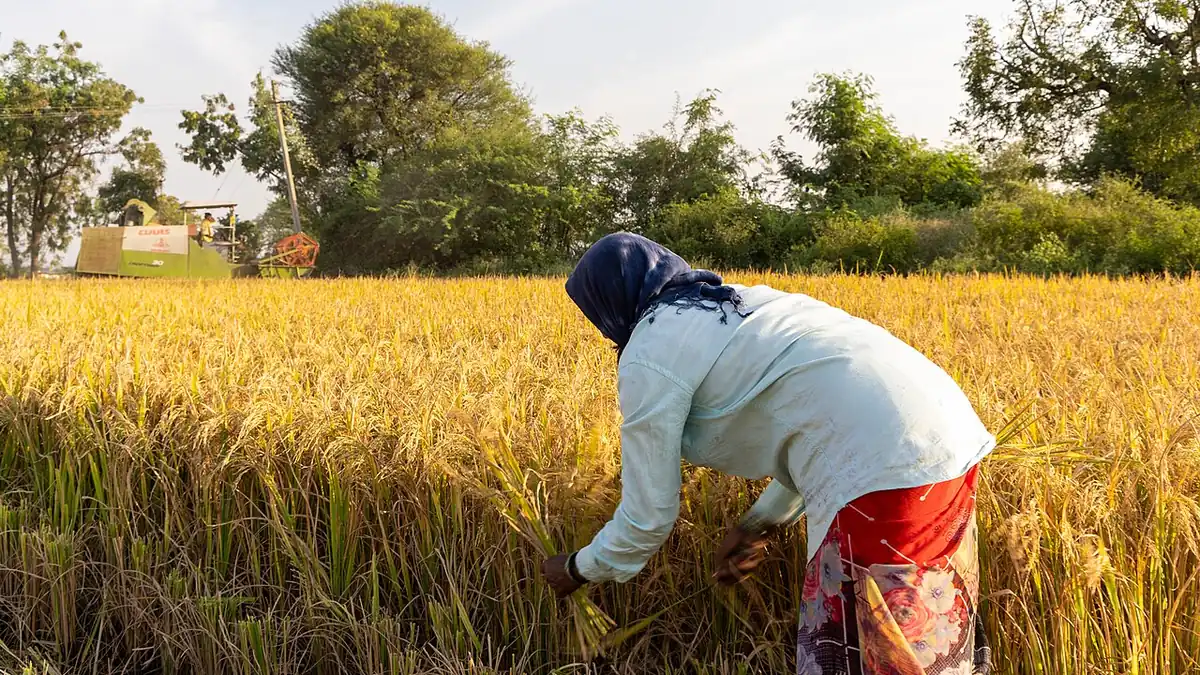
- India harvests ~135–150 million tonnes of milled rice annually across multiple seasons, led at the top nationally by West Bengal, Uttar Pradesh, Telangana, and Punjab depending on seasonal Agricoop/Economic Survey estimates.
- Uttar Pradesh commands India's largest rice-cropped area (~5.9+ million hectares) and leads total production in recent consolidated national foodgrain appendices (~20+ million tonnes), while West Bengal traditionally anchors India's 3-season rice bowl (Aus, Aman, Boro).
- Punjab achieves India's highest per-hectare rice productivity (>4,100 kg/hectare milled rice equivalent) thanks to near-100% assured irrigation, making it a critical pillar of the Central Pool procurement reserve.
- Key southern states where rice is intensively cultivated include Andhra Pradesh (~7–8.6+ MT across the Krishna-Godavari deltas), Telangana (surging via project irrigation up to ~16+ MT in recent multi-crop estimates), and Tamil Nadu.
- Official Kharif paddy MSP set via CACP & PIB and state civil supplies procurement protect grower realization alongside Direct Seeded Rice (DSR) water-saving adoption.
Identifying the most rice producing state in India—and comparing which states lead in total tonnage, planted acreage, per-hectare productivity, and southern deltaic double-cropping—offers vital clarity for agri-traders, competitive exam aspirants, rice millers, and paddy farmers planning varietal investments. As the world's second-largest paddy powerhouse and largest rice exporter globally, India's total milled rice production has scaled toward 135–150 million metric tonnes in official Ministry of Agriculture & Farmers Welfare (Agricoop) and Press Information Bureau (PIB India) advance foodgrain estimates alongside Economic Survey statistical appendices (India Budget / Economic Survey). Yet asking which single state is the largest producer of rice in India depends subtly on whether one cites cumulative three-season data (Uttar Pradesh, West Bengal, or rapidly surging Telangana) versus single-harvest efficiency led by Punjab. Farmers optimizing paddy field yields can explore our complete paddy cultivation manual, compare state grain buying in our MSP paddy procurement guide, and check agronomic specs inside our paddy crop hub.
1. Largest Producer of Rice in India: Top 10 Rice Producing States Ranked
Across official Directorate of Economics & Statistics datasets published via Agricoop and PIB, leadership at the top of India's rice producing states rotates tightly among three powerhouses: West Bengal (historically India's classic multi-crop 'Rice Bowl' harvesting Aus, Aman, and Boro crops), Uttar Pradesh (holding India's single largest sown rice area near 5.9–6.0 million hectares across fertile Ganga-Ghaghara plains), and Telangana (surging dramatically through expanded reservoir and lift irrigation across both Kharif Vanakalam and Rabi Yasangi cycles). Punjab follows closely in absolute output (~13+ MT) while crushing every state nationally in per-hectare yield (~4,175+ kg/ha milled rice equivalent). Growers maximizing per-acre tonnage routinely explore high-yielding cultivars inside our top Indian rice varieties directory, check hybrid paddy seed selection, and calculate acreage seed weights with our KisanPe seed rate calculator.
| National Rank Band | Rice Producing State | Indicative Annual Rice Range | Cropping Season Pattern | Core Agricultural Strength |
|---|---|---|---|---|
| Top Tier (1–3) | Uttar Pradesh | ~15.6 - 20+ Million Tonnes | Majorly Kharif + Summer Rice | Largest cultivated paddy area (~5.9+ M Ha) across alluvial Doab |
| Top Tier (1–3) | West Bengal | ~15.5 - 16.8+ Million Tonnes | Three Seasons: Aus, Aman & Boro | Intensive alluvial soil & monsoon-fed triple paddy cycle |
| Top Tier (1–3) | Telangana | ~13.0 - 16.5+ Million Tonnes | Two Full Crops (Vanakalam & Yasangi) | Rapid reservoir irrigation growth; top southern volume contributor |
| Top 4 | Punjab | ~12.5 - 13.5 Million Tonnes | Intensive Assured Irrigated Kharif | Highest national productivity (>4,100 kg/ha milled rice); Central Pool anchor |
| Top 5–6 | Odisha | ~8.2 - 10.0 Million Tonnes | Kharif + Rabi Coastal Delta Belt | Mahanadi basin grain surplus & strong state paddy procurement |
| Top 5–7 | Andhra Pradesh | ~7.8 - 8.6+ Million Tonnes | Krishna-Godavari Double Crop | Classic southern rice bowl with high coastal yield (>3,800 kg/ha) |
| Top 7–8 | Chhattisgarh | ~7.0 - 8.5+ Million Tonnes | Rainfed & Canal Kharif Belt | Dhan ka Katora (Rice Bowl of Central India) rich in aromatic landraces |
| Top 8–10 | Tamil Nadu | ~6.8 - 7.9 Million Tonnes | Kuruvai, Samba & Thaladi | Cauvery delta intensive paddy systems; high agronomic skill |
| Top 8–10 | Bihar & Assam | ~5.5 - 7.5 Million Tonnes Each | Aghani / Sali & Summer Boro | Humid river-basin soils sustaining massive rural consumption |
2. A Southern State Where Rice Is Cultivated: Andhra Pradesh, Telangana & Tamil Nadu
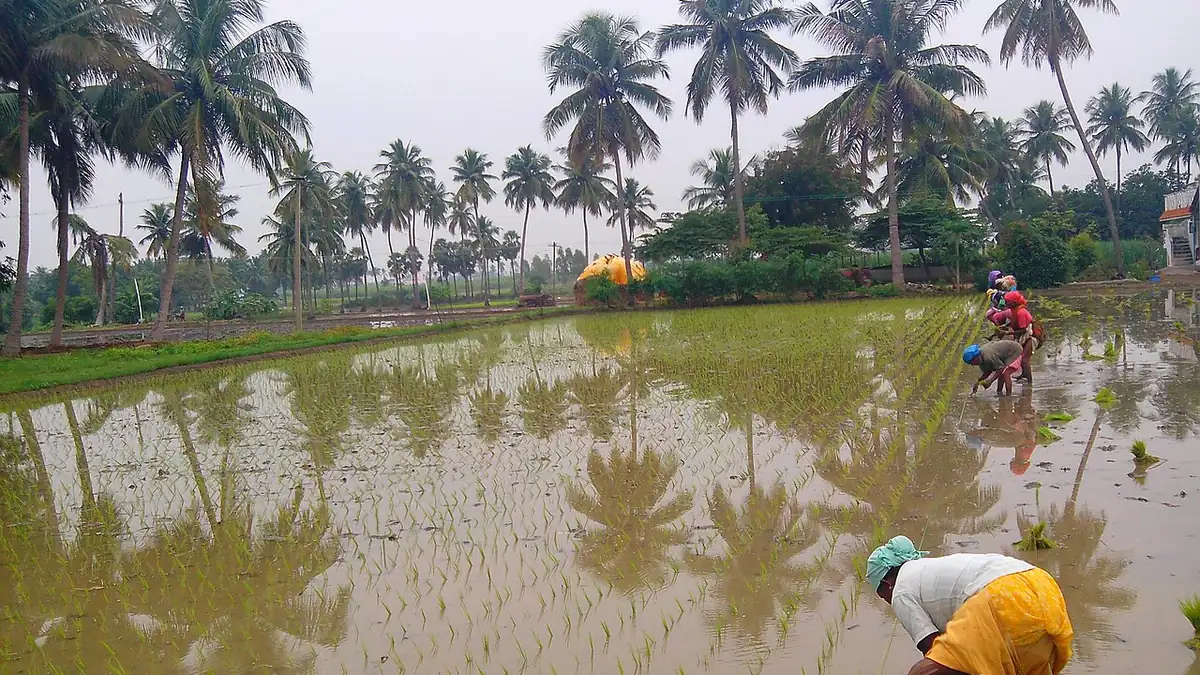
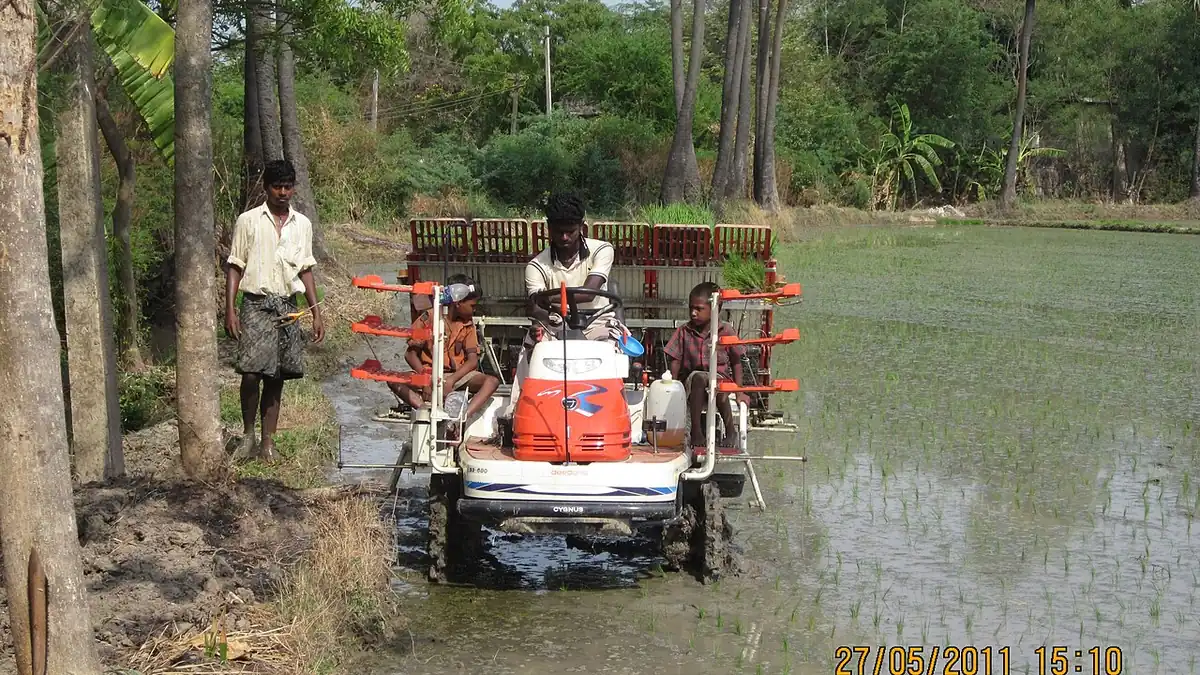
Whether studying geography exams asking for a southern state where rice is cultivated or mapping parboiled raw-paddy mill hubs, Andhra Pradesh, Telangana, and Tamil Nadu lead Peninsular India's paddy economy. Across coastal Andhra Pradesh (East/West Godavari, Krishna, Guntur, and Nellore districts) and northern Tamil Nadu's Cauvery Delta (Thanjavur, Tiruvarur, and Nagapattinam—traditionally celebrated as South India's rice granary), assured river canals allow two to three annual crops (Kuruvai, Samba, Thaladi in TN; Kharif & Rabi in AP) achieving yields near 3,800–4,200 kg/ha. Meanwhile, Telangana emerged as a national sensation following major lift-irrigation expansion across Nalgonda, Suryapet, Karimnagar, and Nizamabad—propelling state paddy output past 15–16+ million tonnes in high-rainfall cycles. Farmers working wet coastal clay soils often utilize mechanized paddy transplanters, specialty Kubota paddy combine harvesters, and soil nutrition tools via our fertilizer dosage calculator.
3. West Bengal's Three-Season Model (Aus, Aman, Boro) vs Punjab's High-Yield Belt
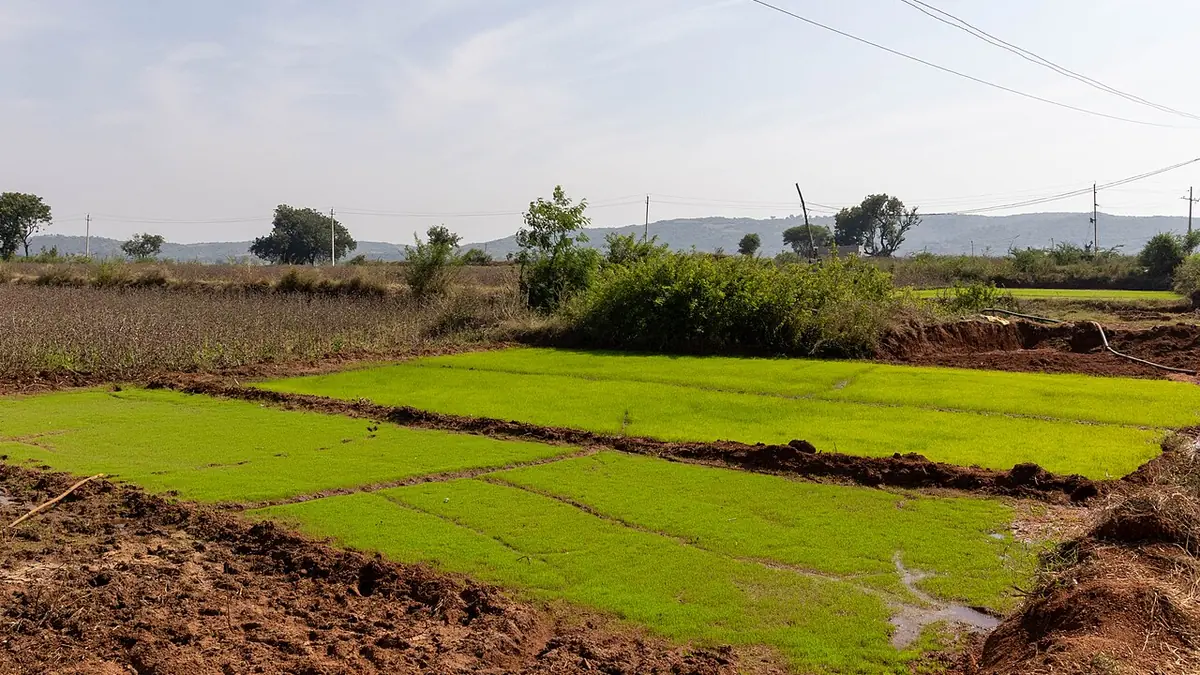
Examining maximum rice producing state in India metrics reveals two contrasting agronomic engines. In West Bengal, humid alluvial plains across Bardhaman, Birbhum, Murshidabad, and Midnapore grow rice virtually year-round across three distinct crops: Aus (autumn pre-monsoon/early Kharif), Aman (main monsoon crop accounting for ~65%–70% of state tonnage), and high-yielding Boro (winter/summer irrigated paddy yielding superior grain quality). By contrast, Punjab and neighbouring Haryana rely almost 100% on synchronized June–October monsoon transplanting combined with tube-well irrigation—delivering India's highest productivity (>4.1 tonnes milled rice per hectare, or ~6.2 tonnes raw paddy/ha) alongside premium aromatic Pusa Basmati 1121 and 1509 exports. Because intensive groundwater pumping in Punjab faces table depletion, state agencies and ICAR push Direct Seeded Rice (DSR) and shorter-duration varieties detailed inside our DSR zero-puddle guide, per-acre paddy seed rate calculator guide, and wheat residue zero-tillage sowing guide.
4. Paddy MSP, Central Pool Procurement & Milling Recovery Economics
Raw harvested paddy (dhan) yields approximately 67% milled rice recovery along with valuable bran oil and husk fuel during hulling and polishing. Under national food security stabilization frameworks overseen by the Commission for Agricultural Costs and Prices (CACP) and Food Corporation of India (FCI), statutory Common and Grade-A Paddy Minimum Support Prices guarantee transparent farmgate revenue floors across major producing states including Punjab, Haryana, Chhattisgarh, Odisha, Andhra Pradesh, and Telangana—where civil supplies corporations weigh clean ≤17% moisture paddy electronically and remit Aadhaar DBT payments directly into grower bank accounts. Learn official procurement quality specs inside our civil supplies paddy procurement manual, monitor grain arrivals across KisanPe mandi rates, and compare cereal parity against rabi wheat in gehu ka bhav mandi trends.
5. Safeguarding High Yields: IPM Pest Control, Mechanization & Central Schemes
Sustaining 4+ tonnes/hectare yield across humid monsoon paddies requires vigilant field scouting against yellow stem borer, brown planthopper (BPH), blast, and sheath blight during tillering and panicle initiation, paired with mechanized combine harvesting or paddy axial-flow threshing to dodge unseasonal cyclonic rains. Growers boost per-acre net income by reading our rice disease & pest guide, targeting paddy stem borer management, testing field fertility with a Soil Health Card, applying for demonstration kits under our National Food Security Mission (NFSM) guide, claiming DBT machinery subsidies via state agri subsidy portals, and financing timely fertilizers through a Kisan Credit Card.
6. Frequently Asked Questions About India's Top Rice Producing States
Review clear answers below summarizing which Indian states rank #1 in total production, acreage, per-hectare yield, southern river delta cultivation, and official government paddy procurement.
Frequently asked questions
- Which is the most rice producing state in India right now?
- In official Agricoop and PIB agricultural statistics, Uttar Pradesh, West Bengal, and Telangana share the very top national tier (~15 to 20+ million tonnes each depending on the specific advance or final seasonal estimate). West Bengal remains India's classic multi-crop rice bowl, while UP leads total cultivated area and recent Economic Survey foodgrain appendices.
- Which state has the highest per-hectare yield (productivity) of rice in India?
- Punjab consistently records India's highest average rice productivity—exceeding 4,100+ kg per hectare (milled rice basis, or >6.2 tonnes raw paddy/ha)—supported by near-complete canal and tube-well irrigation plus intensive mechanization with combine harvesters.
- Name a major southern state where rice is cultivated intensively in India.
- Andhra Pradesh (especially the Krishna-Godavari river deltas), Telangana (Kharif Vanakalam and Rabi Yasangi crops), and Tamil Nadu (Cauvery Delta belts like Thanjavur) are India's flagship southern rice-producing states, harvesting two to three crops annually. Explore agronomic steps in our paddy cultivation guide.
- What are the three seasonal rice crops grown in West Bengal?
- West Bengal's subtropical Gangetic delta sustains three distinct annual rice crops: Aus (pre-monsoon autumn crop), Aman (dominant main-season monsoon paddy harvested in winter), and Boro (irrigated high-yielding winter/summer rice grown in low-lying basins).
- Which state holds the largest area (hectares) under rice cultivation in India?
- Uttar Pradesh leads India in total geographical area planted under rice (~5.9 to 6.0 million hectares), followed closely by West Bengal (~5.4 million ha) and Odisha (~3.8 million ha), across varied alluvial and rainfed eastern plains—check variety selection inside our Indian rice varieties guide.
- How much total rice does India produce annually in recent official estimates?
- Recent Ministry of Agriculture advance estimates reported via PIB India place India's combined Kharif, Rabi, and Summer rice production around 135 to 150 million metric tonnes, keeping India the second-largest producer globally after China and the #1 global rice exporter.
- Which states contribute the largest share of rice to FCI's Central Pool?
- Punjab, Telangana, Chhattisgarh, Odisha, Haryana, and Andhra Pradesh provide the dominant shares of custom-milled rice procured at statutory MSP for India's Public Distribution System—review gate rules in our paddy MSP procurement guide.
- What is the standard conversion ratio from raw paddy (dhan) to milled rice?
- Standard Indian milling regulations count 67% recovery—meaning 100 kg of clean Fair Average Quality paddy yields roughly 67 kg of milled white or parboiled rice along with rice husk and high-value rice bran.
- Which states grow the most Basmati aromatic rice in India?
- Geographical Indication (GI) Basmati cultivation is strictly concentrated across Punjab, Haryana, Western Uttar Pradesh, Uttarakhand, Himachal Pradesh, and parts of J&K/Delhi, producing premium long-grain exports like Pusa Basmati 1121 and 1509.
- Why is Chhattisgarh famously nicknamed the 'Rice Bowl of Central India'?
- Known locally as Dhan ka Katora, Chhattisgarh grows thousands of diverse traditional aromatic and medicinal paddy landraces across the Mahanadi plains alongside strong state cooperative procurement supporting millions of smallholder growers.
- What is Direct Seeded Rice (DSR) and why do states promote it?
- Direct Seeded Rice sows pre-germinated or dry seed directly with multi-crop seed drills instead of puddling soil and manually transplanting seedlings, cutting irrigation water demand by up to 20%–30% and lowering nursery labor—learn full setup in our DSR cultivation guide.
- What subsidies help farmers boost paddy yield and mechanization?
- Farmers qualify for certified seed distribution under our NFSM scheme guide plus 40%–50% DBT subsidies on paddy transplanters, drum seeders, and harvesters via state portals listed in our agricultural subsidy directory.
This article is for general information only and is not financial advice. Loan and scheme eligibility depends on partner and government criteria.