Aaj Ka Chini Ka Rate: Sugarcane FRP, M-30 & Sugar Pricing
Key takeaways
- Statutory Cane FRP Foundation: CCEA / DFPD fixes Sugarcane FRP at ₹355/qtl (SS 2025–26) and ₹365/qtl (SS 2026–27) at 10.25% basic recovery (+₹3.56/qtl per 0.1% excess recovery; ₹338.30/qtl floor ≤9.5%).
- DFPD Monthly Release Quota Engine: Unlike open crops, Indian sugar mills cannot dump unlimited sugar stocks at once—dfpd.gov.in issues monthly state/mill sales quotas shaping wholesale chini swings.
- M-30 vs S-30 Crystal Grades: Uttar Pradesh factories lead bold M-30 crystals favored across North India; Maharashtra & Karnataka dominate fine fast-dissolving S-30 grades.
- Freight Explains Interstate Spread: Shipping UP/Maharashtra sugar bags east toward Bihar, West Bengal, or Assam adds freight premiums cleanly onto regional APMC wholesale parity.
- Ethanol Diversion Buffer: Sugarcane juice / B-heavy molasses ethanol blending diverts excess sucrose cleanly, stabilizing seasonal mill liquidity and timely cane grower payouts.
Tracking aaj ka chini ka rate across Uttar Pradesh, Maharashtra, Karnataka, and Assam requires understanding how India’s tightly regulated sugar economy links cane farmers directly to ex-mill crystal bags. On the supply side, Cabinet-approved Fair and Remunerative Price (FRP) via PIB and Department of Food & Public Distribution (dfpd.gov.in) establishes the legal cane floor paid by mills: ₹355/quintal for Sugar Season 2025–26 rising cleanly to ₹365/quintal for Sugar Season 2026–27 (linked to 10.25% base recovery, with a ₹338.30/qtl floor below 9.5% recovery). On the selling side, monthly DFPD domestic sugar release quotas, ex-mill GST + freight, and crystal size separation (UP M-30 medium bold crystals vs Maharashtra S-30 fine white grades) determine wholesale quintal and retail per-kg rates monitored daily across Agmarknet.
Notice why wholesale ex-factory M-30 or S-30 mill tenders in Muzaffarnagar, Kolhapur, and Vashi differ cleanly by ₹2–₹5/kg from packaged retail grocery counters in Delhi, Patna, or Guwahati once bagging, 5% GST, interstate rail/truck freight, and wholesaler margins stack up! Check retail vs wholesale math on Sugar Rate Per Kg, compare allied mill trends on Chini Ka Bhav Today, and inspect cane payment rules across Sugarcane Farmers Hub and KisanPe Live Mandi Rates.
How Sugarcane FRP (₹355–₹365/qtl) & DFPD monthly quotas steer Indian chini ka rate
Unlike pulses or spices driven purely by free harvest arrivals, aaj ka chini ka rate responds cleanly to statutory supply governance administered by the Directorate of Sugar & Vegetable Oils under DFPD (dfpd.gov.in). At the start of every October–September Sugar Season, the Union Cabinet declares the binding Fair and Remunerative Price (FRP) payable to farmers—specifically ₹355 per quintal for SS 2025–26 rising to ₹365 per quintal for SS 2026–27 at a 10.25% base sugar recovery rate, adding ₹3.56/qtl premium per 0.1% sucrose gain above 10.25% while guaranteeing an absolute ₹338.30/qtl floor even if mill recovery drops under 9.5% (pib.gov.in)!
Simultaneously, state governments like Uttar Pradesh declare separate State Advised Prices (SAP) guiding local cane societies. Because roughly ~10%–11% clean sugar recovers from 100 kg crushed sugarcane, raw cane cost alone establishes a rock-solid minimum production floor beneath every 50 kg crystal bag leaving mill gates. To prevent seasonal crushing gluts from crashing ex-mill values below farmer payment capability, DFPD issues capped monthly domestic sale release quotas alongside statutory Minimum Selling Price (MSP) protections—explaining why late-month quota extensions or festive sweet-shop surges trigger brisk wholesale ticks on Agmarknet and KisanPe Mandi Hub.
| Policy / Grade Benchmark | Official Parameter / Figure | How It Moves Wholesale Chini Rates |
|---|---|---|
| Sugarcane FRP (2025–26 & 2026–27) | ₹355/qtl (25–26) | ₹365/qtl (26–27) @ 10.25% rec. | Sets baseline cane raw-material floor (₹338.30/qtl minimum below 9.5%) |
| Grade M-30 (Medium Crystal) | UP, Uttarakhand, Bihar, Punjab Mills | Slightly larger sparkling crystal grain prized across northern & festive markets |
| Grade S-30 (Small Crystal) | Maharashtra (Kolhapur/Sangli) & Karnataka Mills | Finer fast-dissolving uniform crystal popular with beverage, dairy & western buyers |
| DFPD Monthly Quota Releases | Published monthly at dfpd.gov.in | Tight quotas lift mid-month spot tenders cleanly; surplus additions soften bids |
UP M-30 vs Maharashtra S-30 wholesale quotes & calculating retail per kg parity
Wholesalers tracking Chini Ka Bhav Today compare two foundational origin hubs daily: Muzaffarnagar / Shamli / Hapur (Western UP) pricing M-30 ex-mill quotes and Kolhapur / Sangli / Vashi Navi Mumbai anchoring S-30 wholesale tenders. Note cleanly why commercial ex-mill tender rates appear cheaper than supermarket bills: mill tenders quote bare 50 kg PP/gunny bags excluding 5% GST, loading hamali, long-haul railway/truck freight, city APMC cess, and retail splitting into 1 kg pouches!
For clean farmgate parity calculation, divide official Agmarknet Modal quintal wholesale rates by 100 (e.g. ₹3,900/qtl wholesale = ₹39.00/kg bulk), then add regional transport + GST + retail margin transparently. Compare distant consumer state differences cleanly in our companion Sugar Rate Per Kg Breakdown and track regional agricultural commodity moves across Mandi Price Trends.
- Understand Numeric Crystal Grade Codes ("30 / 31"): The letter (L Large, M Medium, S Small) denotes grain mesh size while 30 (or 29 / 31) denotes ICUMSA colour whiteness under Indian Bureau of Standards—both M-30 and S-30 pack identical pure sucrose sweetness!
- Monsoon Humidity Caking Watch: Store bagged wholesale sugar tightly elevated above damp floors inside dry ventilated rooms to stop syrupy clumping.
- Check Jaggery (Gur) Synergy: Kolhapur, Muzaffarnagar, and Anakapalli gur rates track crushing season cane diversion closely alongside white crystal sugar.
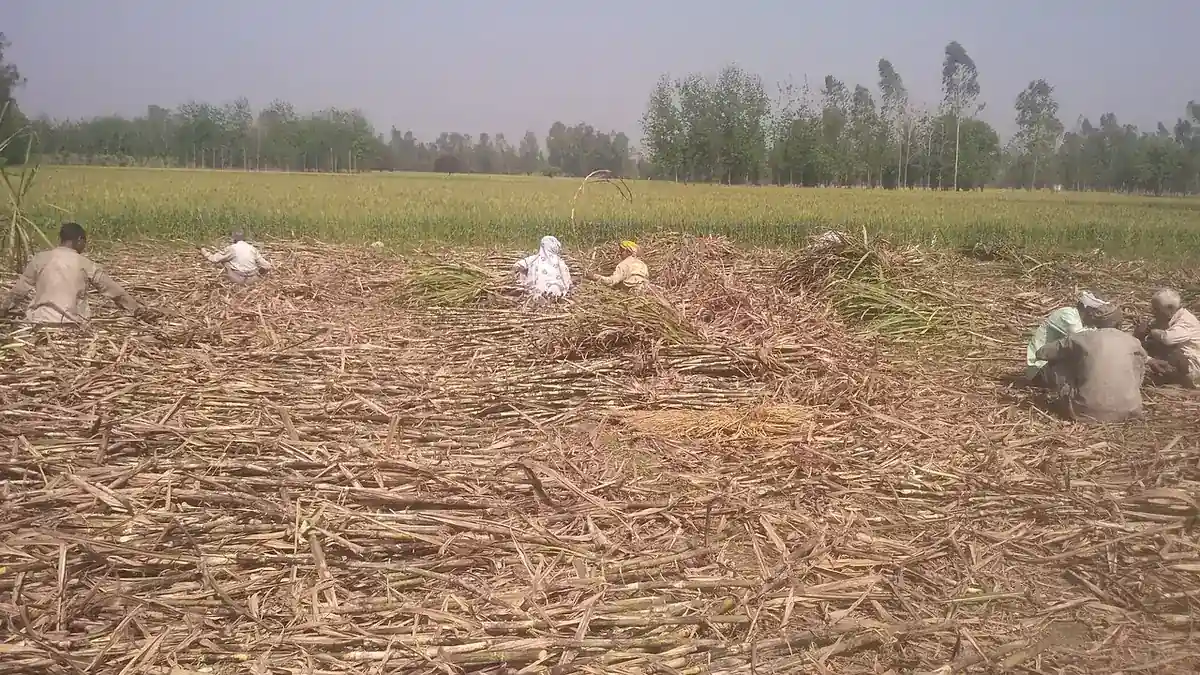
How ethanol blending & summer beverage demand stabilize cane grower payouts
A structural shift over recent crushing seasons dramatically changed both wholesale chini cycles and sugarcane farmer payment reliability across India: large-scale ethanol blending diversion directly from sugarcane juice, B-heavy molasses, and grain feedstocks at integrated mill distilleries. Whenever national stock inventories grow plump inside godowns, diverting surplus cane sucrose cleanly toward oil marketing fuel blending clears warehouse gluts smoothly—lifting mill cash liquidity so mills settle cane society arrears cleanly within statutory 14-day payment windows!
Growers cultivating high-sucrose early-maturing varieties (such as Co-0238, Co-0118, CoLk-14201, or Co-86032 in tropical belts) earn stronger recovery incentives while cutting termite loss (Confidor Termite Drench) and iron chlorosis (Micronutrients Guide). Inspect sugarcane agronomy & payment portals neatly via Sugarcane Farmers Hub.
Checking state mandi portals, freight math & smart farm budgeting calculators
Whether you are a wholesale grocer locking festive stock ahead of Diwali/wedding rushes, a sweet processor comparing S-30 vs M-30 cost splits, or a cane farmer verifying seasonal society dues, always cross-verify official quotes cleanly through agmarknet.gov.in and circular quotas on dfpd.gov.in. Explore regional farm credit tools on KCC Credit Hub, estimate crop margins inside Crop Income Calculator, check neighbouring cereal trends on Maida Price Guide, and consult Best Mandi Near Me.
Sugarcane FRP ₹355–₹365/qtl vs sugar mill ex-mill MSP, SAP & ethanol diversion math
Asking "Aaj ka chini ka rate kya hai?" involves far more than corner kirana store tags—it reflects the tight statutory tug-of-war connecting cane farmers, crushing mills, and Department of Food & Public Distribution (DFPD) monthly sugar release quotas. Under CACP Fair & Remunerative Price (FRP) orders (cacp.dacnet.nic.in), base cane FRP stands at ₹355/qtl for 2025–26 and ₹365/qtl for 2026–27 linked to 10.25% basic sugar recovery (carrying a statutory floor of ₹338.30/qtl at or below 9.5% recovery), while UP, Haryana, and Punjab deploy higher State Advised Prices (SAP) paid directly into cane growers’ linked accounts.
Every quintal of M-30, S-30, and S-31 graded crystal sugar shipped from Kolhapur, Muzaffarnagar, Belagavi, or Gorakhpur vacuum-pan mills balances three forces tracked daily by wholesalers via consumeraffairs.nic.in: monthly DFPD domestic sale quotas, central ex-mill Minimum Selling Price (MSP ₹31/kg historic floor) policy discussions, and B-heavy / sugarcane juice Ethanol Blending (E20) diversion percentages. Compare per-kg trade economics cleanly against Sugar Rate Per Kg, monitor rural commodity trends inside Mandi Price Watch, and explore sugarcane profitability via Crop Income Calculator.
- Understand M-30 vs S-30 Grading: Bold crystal M-30 commands a steady ₹50–₹140/qtl wholesale spread over fine-crystal S-30 predominantly across north Indian sweets & beverage trade.
- Check ICUMSA Colour & Moisture: Commercial mill contracts benchmark low ICUMSA (<100 UI) sparkling dryness under 0.04% moisture.
- Follow DFPD Monthly Release Notifications: Tighter monthly quota allocations immediately firm Muzaffarnagar & Vashi/Navi Mumbai wholesale tender bids.
Monitoring retail kirana markups vs 50 kg PP sack wholesale parity in UP, Maharashtra & Bihar
Retail shoppers comparing local 1 kg packed rates against wholesale 50 kg PP bag quotes should account cleanly for rail/truck freight (typically ₹1.50–₹4.00/kg moving from Maharashtra/UP surplus belts to Assam, West Bengal, or Kerala deficit hubs), mandi APMC charges, unloading hamali, and single-kg packaging margins tracked via KisanPe Mandi Intelligence and Farmer Support Resources.
For sugarcane cultivators tracking crusher mill payment timelines across Uttar Pradesh (Ganna Parchi / e-Ganna), Maharashtra Cooperative Crushers, and Karnataka sugar belts, verifying accurate cane weight slips, trash deduction tolerances, and statutory 14-day cane-bill settlement timelines alongside seasonal ethanol pricing announcements gives strong foresight into household rural liquidity cycles ahead of Kharif sowing inputs. Review district-level sugarcane nutrition programs and crop financing tools inside Farmer Loan Options and KCC Limit Calculator.
Seasonal demand swings further shape retail sweetmeat (halwai), beverage, and festive confectionery buying across India: pre-monsoon cold beverage demand (April–June) and autumn wedding/festive seasons (August–November) consistently tighten wholesale mill pipelines, whereas peak November–March crushing floods local depot sidings with freshly milled 50 kg PP sugar lots.
- Check Monsoon Acreage & Reservoir Storage Early: Low dam storage across Krishna-Godavari and Cauvery cane belts strongly signals firmer next-season ex-mill sugar prices.
- Compare Branded Sulphur-Free vs Standard White Sugar: Refined sulphurless crystalline pouches generally carry ₹4–₹8/kg packaging spreads over loose kirana sugar.
- Verify Factory Bag Printing & Batch Moisture: Bulk caterers and bakery buyers should reject hardened sugar sacks stored over damp concrete godown floors cleanly.
E20 ethanol diversion, buffer stocks & seasonal sugar wholesale spreads across India
Monthly release quotas announced by DFPD alongside B-heavy molasses and direct cane-juice ethanol blending (E20) diversion balance domestic M-30 and S-30 wholesale crystal sugar liquidity cleanly year round. Tracking Maharashtra, UP, and Karnataka factory tenders via KisanPe Mandi Intelligence and monitoring sugarcane FRP settlements on Crop Income Calculator gives cane growers and distributors crisp foresight ahead of festive confectionery surges.
Distributors supplying rural retail grocers in Bihar, Assam, Odisha, and eastern states should also factor railway wagon availability and 50 kg moisture-barrier bag storage before bulk festival stocking across monsoon transit windows.
For broader financial, market, and crop-planning continuity alongside aaj ka chini ka rate, farmers across India also consult KisanPe resources including Mandi Market Intelligence Services, Crop Insights Hub, All-India Mandi Bhav Guide, Anaj Mandi Arrival & Auction Guide, Gehu Ka Bhav Commodity Report.
Frequently asked questions
- What is the official government Fair and Remunerative Price (FRP) of sugarcane for 2025-26 and 2026-27?
- Under Cabinet decisions released via PIB (pib.gov.in) and DFPD, Sugarcane FRP stands at ₹355/quintal for SS 2025–26 and ₹365/quintal for SS 2026–27 at a 10.25% basic recovery rate (with a ₹338.30/qtl floor below 9.5%). Track cane advisories on Sugarcane Farmers Hub.
- What is the difference between M-30 and S-30 chini grades in Indian mandis?
- M-30 carries slightly larger medium crystal granules led predominantly by UP mills, whereas S-30 features finer rapid-dissolving white crystals led by Maharashtra and Karnataka mills—both carry identical #30 BIS whiteness and sucrose purity tracked cleanly via Chini Ka Bhav Today.
- Why does retail sugar per kg cost noticeably more than UP ex-mill wholesale quotes?
- Ex-mill tenders quote bare 50 kg sacks before factoring 5% GST, interstate truck/rake freight, unloading hamali, distributor commissions, and consumer 1 kg repacking margins analyzed in detail inside Sugar Rate Per Kg Guide.
- How does DFPD monthly quota affect aaj ka chini ka rate in wholesale markets?
- Each month dfpd.gov.in allocates exact tonnage each mill may legally sell domestically; tighter quotas strengthen mid-month wholesale spot rates cleanly while extra festive releases stabilize consumer shelves.
- Where can buyers check verified city-by-city wholesale sugar mandi rates daily?
- Check verified daily wholesale Modal prices across Muzaffarnagar, Hapur, Kolhapur, Vashi, Delhi, Kolkata, and Guwahati directly on Agmarknet (agmarknet.gov.in) or KisanPe’s Mandi Rates Hub.
- Do UP and Punjab sugarcane farmers receive State Advised Price (SAP) or only Central FRP?
- Major cane states like Uttar Pradesh, Uttarakhand, Punjab, and Haryana announce regional State Advised Prices (SAP) above central base FRP ceilings, whereas Maharashtra and Karnataka largely settle strictly along official central recovery-linked FRP structures.
- How does ethanol production protect farmers and stabilize sugar pricing?
- Diverting excess sugarcane juice/B-heavy molasses into blended bio-ethanol reduces crushing surpluses in warehouses, lifting sugar mill revenue flows to settle grower dues punctually within statutory 14-day timelines.
- When do sugar prices traditionally peak or soften across Indian mandis?
- Prices frequently tighten in warm April–June cold-drink/ice-cream demand months and ahead of August–November festivals, whereas peak winter December–February crushing runs boost immediate mill supply.
- Why do wholesale Assam or Northeast sugar prices sit slightly higher than UP rates?
- Assam and Northeast consumer hubs rely predominantly on long-distance broad-gauge rail rakes and highway transport hauling milled bags from UP, Bihar, or West Bengal—adding clean rail freight charges per kg.
- What moisture and storage guidelines preserve bagged wholesale chini without clumping?
- Stack stitched PP-lined bags neatly across wooden dunnage pallets away from damp wall seepage under relative humidity below 60%–65%, keeping crystal shine intact year-round.
This article is for general information only and is not financial advice. Loan and scheme eligibility depends on partner and government criteria.