Barwala Egg Rate Today: Daily NECC Bhav & Jabalpur Rate
Key takeaways
- The official Barwala wholesale egg rate today benchmarks between ₹5.75 and ₹6.10 per piece, translating to ₹172.50 to ₹183.00 per standard 30-egg tray, ₹575 to ₹610 per 100 eggs, and ₹1,207.50 to ₹1,281.00 per standard commercial peti (210 eggs / 7 trays) under National Egg Coordination Committee (NECC) Barwala Zonal directives.
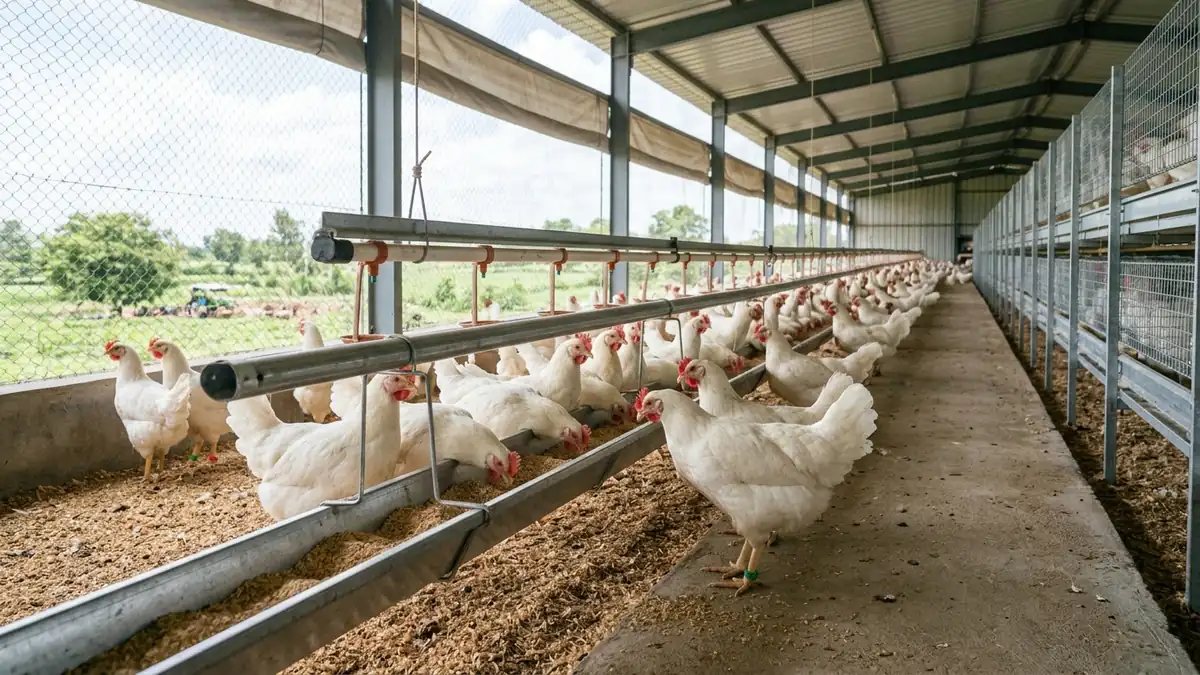
- Barwala in the Panchkula district of Haryana represents Asia’s second-largest commercial egg-producing belt after Namakkal, maintaining over 1.8 crore commercial layer hens and supplying approximately 1.35 crore fresh table eggs daily to North and Central India.
- Jabalpur and the broader Mahakoshal region of Madhya Pradesh operate as a major consumption and transit hub; because local layer farms supply less than 35% of regional demand, Jabalpur relies heavily on long-haul truck dispatches from Barwala and Hyderabad.
- Due to long-distance freight over 1,050 km, toll transit taxes, and an in-transit breakage allowance of 1.5% to 2.0%, the wholesale egg rate in Jabalpur trades at a consistent transport premium of ₹0.60 to ₹0.85 per egg over the Barwala farmgate base price.
- Layer poultry feed expenditures represent roughly 70% to 72% of total egg production costs; current yellow maize and de-oiled soybean meal (DOC) market prices establish a farm-level break-even cost of production (COP) of ₹4.65 to ₹4.90 per egg.
For commercial layer poultry farmers, egg traders, commission agents, bakery enterprises, and retail vendors across northern and central India, checking the Barwala egg rate today is the defining commercial ritual of every business afternoon. Situated in the Panchkula district of Haryana along the Himalayan foothills—with extended poultry belts spanning Raipur Rani, Ambala, and Hisar—Barwala stands as the undisputed egg capital of North India and the second-largest table egg production hub across Asia, surpassed only by Namakkal in Tamil Nadu.
Every day at approximately 1:00 PM, the National Egg Coordination Committee (NECC) Barwala Zonal Committee officially announces its benchmark wholesale selling price, known throughout the poultry trade as the "Barwala CC Rate". This single quotation dictates the financial valuation of over 1.35 crore eggs produced locally each day, directly determining procurement costs across major metropolitan consumption terminals—including Delhi Gazipur Mandi, Jammu, Srinagar, Chandigarh, Ludhiana, and eastward into Uttar Pradesh, Bihar, and the central Indian transit hub of Jabalpur in Madhya Pradesh.
Understanding egg price discovery requires analyzing both origin production economics and inter-state consumption corridors. In particular, thousands of traders and consumers daily track the price correlation between Barwala and Central India mandis like Jabalpur, Bhopal, and Indore. Because Madhya Pradesh has a high protein demand deficit relative to its local commercial layer population, thousands of commercial egg crates (petis) travel daily along the 1,050-kilometer freight corridor from Barwala down into Jabalpur. This detailed operational guide examines daily wholesale rates across all packaging units, analyzes the Barwala-Jabalpur freight margin, breaks down layer feed production costs, and provides actionable poultry economic intelligence.
Indicative Wholesale Egg Rates: Barwala vs Jabalpur & Key Mandis
Egg prices vary systematically across production origin belts, transit terminals, and consumption metros depending on regional production capacity, transportation freight, seasonal weather, and wholesale distributor margins. The table below outlines prevailing indicative wholesale benchmark prices across major packaging units in Barwala, Jabalpur, and key connected mandis:
| Mandi / Regional Market Hub | State / Geographic Role | Per Piece Wholesale (₹) | Standard 30-Egg Tray (₹) | 100-Egg Benchmark (₹) | Commercial Peti (210 Eggs) (₹) |
|---|---|---|---|---|---|
| Barwala Poultry Mandi | Haryana (Production Origin) | ₹5.75 – ₹6.10 | ₹172.50 – ₹183.00 | ₹575.00 – ₹610.00 | ₹1,207.50 – ₹1,281.00 |
| Jabalpur Terminal Mandi | Madhya Pradesh (Transit Hub) | ₹6.35 – ₹6.80 | ₹190.50 – ₹204.00 | ₹635.00 – ₹680.00 | ₹1,333.50 – ₹1,428.00 |
| Delhi Gazipur Poultry Mandi | National Capital Territory | ₹6.20 – ₹6.60 | ₹186.00 – ₹198.00 | ₹620.00 – ₹660.00 | ₹1,302.00 – ₹1,386.00 |
| Bhopal Wholesale Mandi | Madhya Pradesh (State Capital) | ₹6.30 – ₹6.75 | ₹189.00 – ₹202.50 | ₹630.00 – ₹675.00 | ₹1,323.00 – ₹1,417.50 |
| Indore Choithram APMC | Madhya Pradesh (Commercial) | ₹6.25 – ₹6.70 | ₹187.50 – ₹201.00 | ₹625.00 – ₹670.00 | ₹1,312.50 – ₹1,407.00 |
| Kanpur Wholesale Yard | Uttar Pradesh (Central Mandi) | ₹6.25 – ₹6.65 | ₹187.50 – ₹199.50 | ₹625.00 – ₹665.00 | ₹1,312.50 – ₹1,396.50 |
| Ludhiana Mandi | Punjab (Industrial Terminal) | ₹5.85 – ₹6.20 | ₹175.50 – ₹186.00 | ₹585.00 – ₹620.00 | ₹1,228.50 – ₹1,302.00 |
| Jammu & Srinagar Terminal | J&K (High Inflow Terminal) | ₹6.50 – ₹7.10 | ₹195.00 – ₹213.00 | ₹650.00 – ₹710.00 | ₹1,365.00 – ₹1,491.00 |
In retail grocery shops, modern supermarkets, and quick-commerce delivery apps across urban residential colonies, retail consumer prices range from ₹7.00 to ₹8.50 per single egg in North India, and ₹7.50 to ₹9.00 per egg in Central Indian cities like Jabalpur, incorporating final-mile transport, secondary breakage risk, and shopkeeper operating margins.
Commercial Packaging Formats: Piece vs Tray vs 100 Eggs vs Peti
Commercial egg transactions utilize standardized packaging denominations. Because farmgate quotes, wholesale wholesale invoices, and retail counter displays use different units, understanding these conversions prevents accounting errors for commercial buyers:
- Single Piece Rate (प्रति अंडा भाव): The base calculation unit. While individual eggs are rarely sold wholesale, retail consumers and small street food stalls buy eggs per piece, typically ranging from ₹7.00 to ₹8.50.
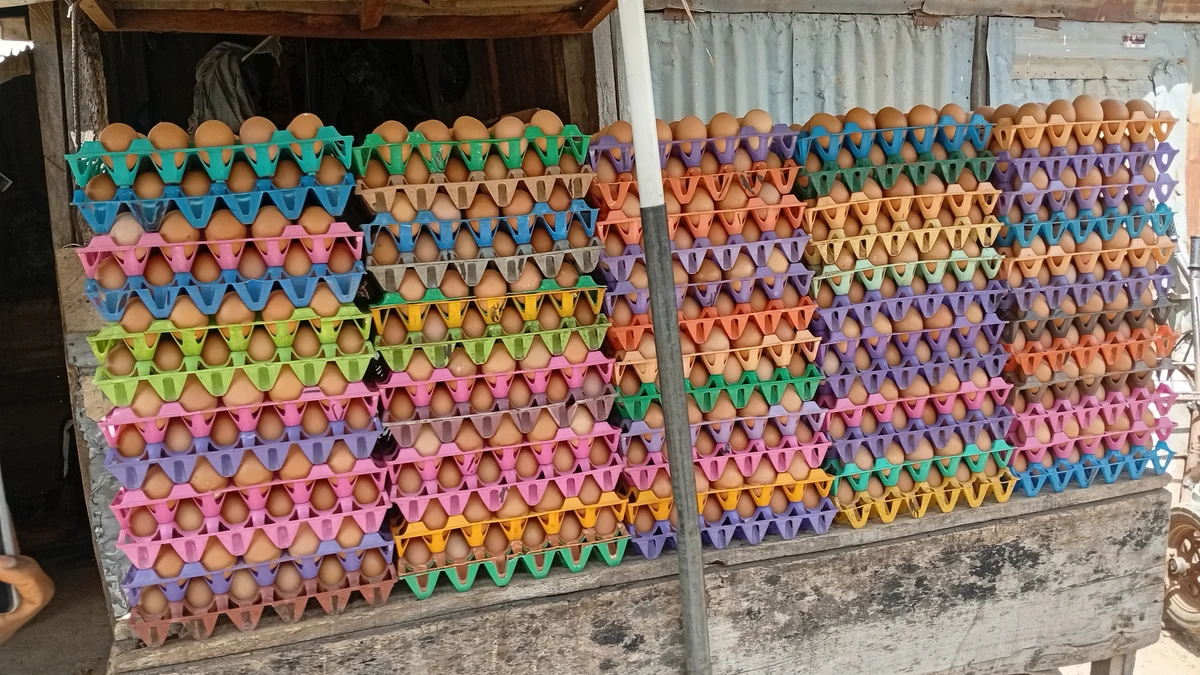
- Standard 30-Egg Paper Pulp Tray (30 अंडे की ट्रे): The universal wholesale handling unit throughout India. Molded from recycled paper pulp, each tray holds 30 eggs arranged in a 5x6 egg pocket grid. In Barwala, a 30-egg tray trades wholesale between ₹172.50 and ₹183.00.
- 100-Egg Trading Unit (100 अंडे का भाव): The official quotation standard published daily by NECC. Zonal committees quote wholesale prices strictly per 100 eggs (e.g., ₹585 per 100 eggs). Dividing the 100-egg price by 100 gives the exact single-egg price (₹5.85), which is then multiplied by 30 to determine the tray rate (₹175.50).
- Standard Commercial Peti (210 Eggs / 7 Trays): The primary master shipping carton for interstate and intercity trucking. A standard corrugated fiberboard peti holds exactly 7 paper trays stacked vertically (7 trays x 30 eggs = 210 eggs). In long-haul dispatches from Barwala to Jabalpur, quotes are negotiated per peti, currently trading between ₹1,207.50 and ₹1,281.00 at origin.
- Heavy Commercial Peti (300 Eggs / 10 Trays): Used primarily by high-volume institutional caterers and large cold storage facilities, packing 10 trays (300 eggs) per master carton, valued at ₹1,725 to ₹1,830 in Barwala.
The Barwala to Jabalpur Egg Corridor: Freight Economics & Price Spreads
A frequent query among agricultural market analysts is why "jabalpur anda rate" is searched so heavily alongside Barwala. Jabalpur occupies a strategic geographical location in central Madhya Pradesh, serving as the commercial distribution gateway for the entire Mahakoshal region (including Mandla, Dindori, Katni, Seoni, Narsinghpur, and Balaghat):
- Regional Supply Deficit: While Madhya Pradesh has a thriving rural backyard poultry sector, its commercial intensive layer population is insufficient to meet rising urban protein demand. Local farms produce less than 35% of daily consumption requirements in eastern and central MP.
- Long-Haul Freight Logistics: To bridge this gap, wholesale egg distributors in Jabalpur import 15 to 20 large truckloads (each carrying 1,200 to 1,500 petis / 2.5 to 3.1 lakh eggs) daily from the Barwala-Panchkula poultry corridor and the Hyderabad poultry belt.
- Transit Distance & Route: The overland highway route spans approximately 1,050 km along NH 44 and NH 30, taking 28 to 36 hours of continuous truck transit via Delhi, Agra, Gwalior, Jhansi, and Sagar to reach Jabalpur Mandi.
- Freight & Handling Breakdown: Transporting eggs over 1,050 km incurs freight costs of ₹80 to ₹110 per commercial peti (approx. ₹0.38 to ₹0.52 per egg). Adding interstate loading, unloading labor, transit insurance, and toll taxes adds another ₹0.10 per egg.
- In-Transit Breakage & Spoilage Margin: Even when packed carefully in molded paper pulp trays inside corrugated petis, road vibrations and speed breakers cause an average in-transit breakage rate of 1.5% to 2.2% (approx. 3 to 5 broken eggs per peti). Wholesalers absorb this loss by building a ₹0.12 to ₹0.18 per egg safety margin into the Jabalpur wholesale price.
- The Resulting Price Spread: Consequently, the wholesale egg rate in Jabalpur trades at a consistent and predictable transport premium of ₹0.60 to ₹0.85 per egg (₹18 to ₹25 per tray) above the Barwala origin rate, explaining why Jabalpur traders monitor Barwala NECC daily closing quotes every afternoon.
How NECC Determines Daily Barwala Egg Prices
Prior to the formation of the National Egg Coordination Committee (NECC) in May 1982 under the visionary leadership of Padma Shri Dr. B.V. Rao, egg prices in India were ruthlessly manipulated by cartels of wholesale commission agents who forced farmgate prices below production costs during summer months. Today, NECC’s price discovery mechanism operates transparently and democratically:
- Zonal Committee Composition: The Barwala Zonal Committee comprises elected commercial layer farmers, local poultry association representatives, and prominent wholesale dealers operating in Haryana, Punjab, and Delhi NCR.
- Daily Polling & Inventory Audit: Every morning between 10:30 AM and 12:30 PM, committee members survey cold storage holding levels, truck dispatch counts, rail movements, and regional consumer demand trends across northern consumption centers.
- Trade Volume Equilibrium: If unlifted egg stocks are accumulating in farm godowns and truck dispatches to Delhi, Jammu, and Jabalpur are slow, the committee lowers the CC rate by 5 to 10 paise per egg to stimulate aggressive buying. Conversely, if demand exceeds daily production, rates are revised upwards.
- Official 1:00 PM Announcement: The finalized rate is broadcast across NECC’s official digital platform (e2necc.com), published via automated SMS alerts to registered growers, and relayed to trade exchanges nationwide.
Commercial Layer Feed Economics: Break-Even Cost of Production
In commercial layer poultry farming, feed expenditure accounts for 70% to 75% of total recurring operating expenses. Understanding feed conversion and ingredient price volatility is essential to evaluate whether a published egg rate delivers farm profit or forces operational losses:
| Feed Ingredient / Operating Component | Inclusion Rate in Layer Mash (%) | Benchmark Market Price (₹/Quintal) | Cost Impact per Egg Produced (₹) |
|---|---|---|---|
| Yellow Feed Maize (मक्का) | 55% to 60% | ₹2,350 – ₹2,550 | ₹1.55 – ₹1.70 |
| De-Oiled Soybean Meal (DOC / खली) | 24% to 28% | ₹4,100 – ₹4,400 | ₹1.15 – ₹1.30 |
| Limestone Grit & Shell Grit (Calcium) | 8% to 10% | ₹650 – ₹850 | ₹0.15 – ₹0.20 |
| De-Oiled Rice Bran (DORB) | 4% to 6% | ₹1,450 – ₹1,650 | ₹0.10 – ₹0.14 |
| Amino Acids, Tox-Binders & Premixes | 2% to 3% | Specialized Premix | ₹0.25 – ₹0.35 |
| Chicks Amortization (Pullet Rearing 0-18 Wks) | — | ₹280 – ₹320 per pullet | ₹0.90 – ₹1.05 |
| Labor, Electricity, Vaccines & Maintenance | — | Operational Overhead | ₹0.55 – ₹0.65 |
Summing all input costs, the comprehensive Cost of Production (COP) for a standard commercial egg currently benchmarks between ₹4.65 and ₹4.90. Therefore, when the Barwala wholesale rate stands at ₹5.85 to ₹6.10, layer farmers earn a clean operating margin of ₹1.00 to ₹1.25 per egg. For a typical commercial flock of 1,00,000 layer hens laying 88,000 eggs daily, this translates to net daily operating earnings of ₹88,000 to ₹1,10,000.
Seasonal Price Elasticity: Winter Boom vs Summer Slump
Egg consumption in India follows pronounced seasonal and cultural cycles, causing predictable annual price swings that farmers and bulk buyers must anticipate:
- Winter Peak (November to February): The golden quarter for poultry farmers. Cold weather across North and Central India drives consumer dietary preference toward warm, protein-dense foods, while street egg vendors experience peak footfall. Egg rates in Barwala historically reach annual highs between ₹6.20 and ₹7.10 per piece.
- Summer Trough (April to June): Extreme ambient temperatures (42°C to 47°C) cause heat stress in layer hens, reducing average egg size while speeding up spoilage of ambient stocks. High consumer perception of eggs being "heat-inducing" temporarily softens demand, depressing wholesale prices to seasonal lows between ₹4.30 and ₹4.85 per piece.
- Religious & Cultural Slumps: The holy Hindu month of Shravan (July-August) and the Navratri festival periods cause sharp temporary declines in egg consumption across northern and central states. During these periods, Barwala farmers utilize commercial cold storage rooms (maintained at 10°C to 12°C with 75% RH) to store eggs for up to 3 to 4 weeks, avoiding distress sales.
Official Regulatory Benchmarks & National Poultry Intelligence
Commercial layer farmers and poultry traders across northern India rely on verified institutional data to benchmark daily trade and evaluate contract logistics. Official daily farmgate benchmark prices, cold storage buffer stocks, and zonal advisory announcements are published directly by the National Egg Coordination Committee (e2necc.com). National poultry health protocols, feed quality standards, and disease surveillance guidelines are administered by the Department of Animal Husbandry & Dairying (dahd.nic.in).
Producers can also explore our detailed today egg rate national tracker, study regional historical trends in our dedicated Barwala egg rate analysis, and review complete farm operational setup in our commercial poultry farming guide. Producers managing mixed livestock operations can evaluate high-yield dairy husbandry through our dairy farming business guide and indigenous Gir cow dairy management, while projecting seasonal net profits via our crop income calculator and securing working capital through a Kisan Credit Card (KCC).
Frequently asked questions
- What is the current Barwala egg rate today per tray and piece?
- The indicative wholesale Barwala egg rate today benchmarks between ₹5.75 and ₹6.10 per piece, which equals ₹172.50 to ₹183.00 per standard 30-egg tray, ₹575 to ₹610 per 100 eggs, and ₹1,207.50 to ₹1,281.00 per commercial peti (210 eggs / 7 trays), as established by the NECC Barwala Zonal Committee. Farmers can cross-check multi-state rates in our today egg rate daily tracker.
- Why is the egg rate in Jabalpur higher than the Barwala egg rate?
- Jabalpur in Madhya Pradesh is a major consumption and transit hub with a regional poultry supply deficit. Wholesalers transport eggs over 1,050 km from Barwala to Jabalpur by truck, incurring freight charges of ₹0.40 to ₹0.55 per egg, toll transit costs, and an in-transit breakage loss of 1.5% to 2.0%. This creates a ₹0.60 to ₹0.85 per egg premium in Jabalpur.
- At what time does NECC announce the daily Barwala egg rate?
- The NECC Barwala Zonal Committee audits cold storage stocks, daily production volumes, and interstate truck dispatches throughout the morning and officially announces the daily benchmark "Barwala CC Rate" every working day at approximately 1:00 PM.
- How many eggs are there in one commercial egg peti?
- In Indian wholesale poultry commerce, a standard commercial peti holds 210 eggs, consisting of 7 molded paper pulp trays stacked vertically with 30 eggs each. A heavy master carton containing 10 trays (300 eggs) is also used by large institutional caterers, as detailed in our comprehensive Barwala egg rate guide.
- What is the break-even cost of production (COP) for one egg in Barwala?
- Based on prevailing yellow maize rates (₹2,350 to ₹2,550/quintal) and de-oiled soybean meal (₹4,100 to ₹4,400/quintal), along with chick amortization, labor, and vaccines, the farm-level break-even cost to produce one commercial egg ranges between ₹4.65 and ₹4.90. Producers can model enterprise margins with our farm profit calculator.
- Why is Barwala in Haryana so famous for poultry and egg production?
- Barwala, located in Panchkula district, is Asia’s second-largest egg production hub after Namakkal. It houses over 1.8 crore commercial layer hens and produces roughly 1.35 crore eggs daily, benefiting from dry northern winters, proximity to Punjab/Haryana grain markets, and direct highway access to Delhi NCR and central Indian consumption belts. Complete farm infrastructure is detailed in our poultry farming guide.
- How does winter weather affect egg prices in Barwala and Jabalpur?
- During winter (November to February), consumer demand for dietary protein surges across North and Central India, while street food vendors and bakeries experience peak sales. This higher demand historically drives egg prices 20% to 25% higher, reaching seasonal highs of ₹6.20 to ₹7.10 per piece.
- How much feed does a commercial layer hen consume per day?
- A mature commercial layer hen (such as BV-300, Bovans White, or Hy-Line) consumes approximately 110 to 118 grams of balanced layer mash daily, containing 16% to 18% crude protein and 3.5% to 4.0% calcium to support continuous daily eggshell calcification.
- Can fresh eggs be stored in cold storage during summer or religious festivals?
- Yes. Commercial cold storage facilities store fresh table eggs at temperatures of 10°C to 12°C with 75% to 80% relative humidity for 3 to 4 weeks without significant quality loss, allowing farmers to prevent distress selling during Shravan and Navratri demand slumps.
- What is the difference between farmgate egg rate and retail egg rate?
- The farmgate rate is the wholesale price paid to the poultry farmer at the farm gate in Barwala (₹5.75 to ₹6.10 per egg). The retail rate is the final consumer price charged by neighborhood grocery shops and quick-commerce apps (₹7.00 to ₹8.50 in North India, and up to ₹9.00 in Central India), which includes transport freight, breakage, packaging, and trader margins. Track daily APMC prices across regions in our wholesale mandi rates directory.
- What role does NECC play in protecting poultry farmers?
- Before NECC was established in 1982, wholesale cartels manipulated egg prices below production costs. NECC empowers farmers by establishing fair, transparent daily benchmark prices based on actual national supply-demand balance, operating cold storage buffer schemes, and promoting egg nutrition campaigns.
- How can small poultry traders track real-time egg prices across India?
- Traders can track official daily rates on the National Egg Coordination Committee website (e2necc.com), through NECC SMS subscription alerts, on Agmarknet (agmarknet.gov.in), and via KisanPe’s comprehensive live mandi rate tools.
This article is for general information only and is not financial advice. Loan and scheme eligibility depends on partner and government criteria.