Gazipur Fish Market Delhi Rate Today: Rohu & Catla Price
Key takeaways
- Ghazipur Wholesale Fish Market (East Delhi, NH-24/NH-9) serves as North India’s premier freshwater & coastal aquaculture hub receiving chilled ice-truck consignments daily from Andhra Pradesh, UP, Bihar, Punjab, and West Bengal.
- Indicative wholesale Gazipur mandi slabs (November 2026) range at Rs 130–Rs 180/kg for Rohu, Rs 150–Rs 220/kg for bold Catla, and Rs 100–Rs 140/kg for economical boneless-cut Pangas tracked via NFDB FMPIS.
- Peak wholesale morning trade runs between 3:30 AM and 9:30 AM (check clean gill brightness & firm eye clarity when inspecting insulated Andhra vs fresh local UP/Haryana lots).
- Indian aquaculture entrepreneurs scaling composite carp/pangasius ponds qualify for 40%–60% capital subsidies under Pradhan Mantri Matsya Sampada Yojana (PMMSY) plus dedicated KCC Fishery limits.
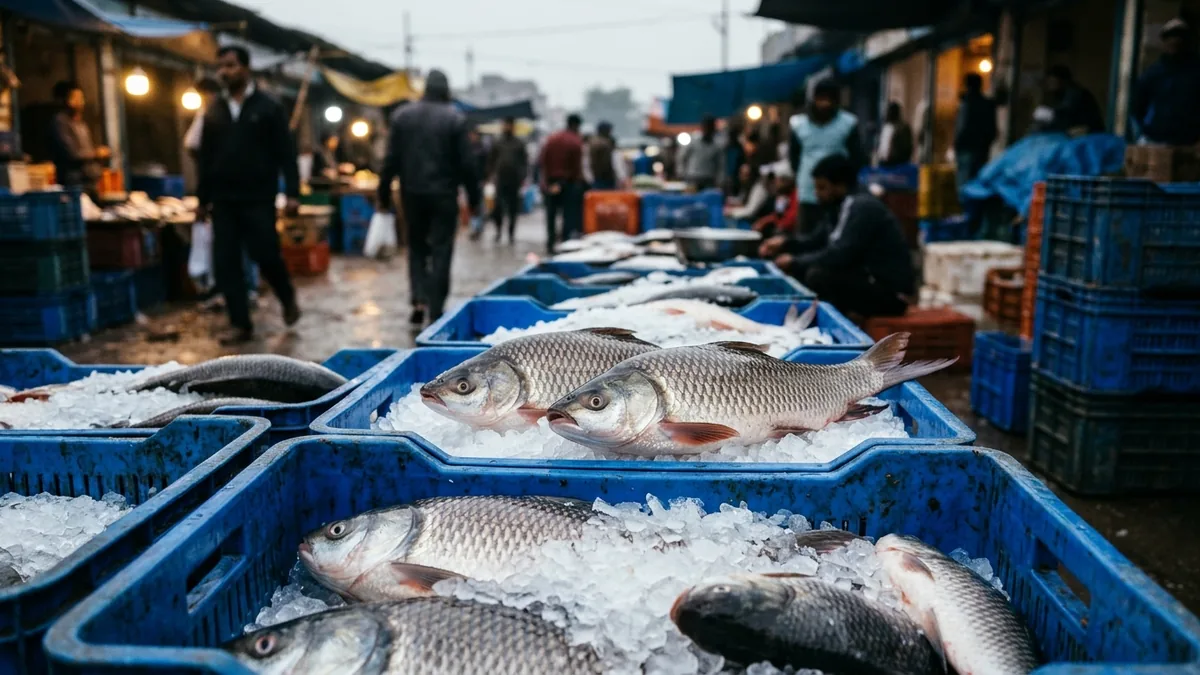
Searching for Gazipur fish market (Ghazipur Machli Mandi, located on the Delhi–UP border along NH-24 near East Delhi’s Ghazipur Subzi Mandi and Ghazipur Egg Mandi complex) reveals North India’s busiest dawn aquaculture trading yard! Every morning before sunrise, hundreds of insulated thermocol ice trucks arrive directly from Andhra Pradesh’s Godavari–Kolleru aquaculture belt alongside fresh aerated live-tanker catches from Uttar Pradesh, Haryana, Punjab, Bihar, and West Bengal—setting daily wholesale benchmark rates across Delhi NCR, Noida, Ghaziabad, Gurugram, Faridabad, and Jaipur.
Both institutional caterers buying crate lots and freshwater pond farmers shipping harvested harvests toward NCR commission agents (arhatiyas) track daily species differentials closely through the official Fish Market Price Information System (NFDB FMPIS) managed by the National Fisheries Development Board (nfdb.gov.in) under the central Department of Fisheries (dof.gov.in). Understanding weight-grade cuts, ice-packed vs live-tank price premiums, and winter North Indian demand surges prevents steep post-harvest marketing losses.
1. Gazipur Fish Market Wholesale Price List by Species & Size (November 2026)
At Ghazipur’s wholesale sheds, per-kg rates escalate sharply by average single-fish weight: bold 1.5 kg–2.5 kg table Rohu and Catla command significantly higher bids per kg from NCR hotels and families than small 500–700 g juvenile harvests. Always clarify net ice-free weight (gross box weight minus crushed ice weight) during wholesale auction hammering!
| Freshwater / Coastal Fish | Major Supply Belt Into Delhi | Indicative Wholesale Band (Nov 2026) | Commercial Quality & Weight Premium |
|---|---|---|---|
| Rohu (Labeo rohita) — Ice-Packed | Andhra Pradesh (Kolleru), UP, Bihar | Rs 130 – Rs 180 / kg | 1.2 kg – 2.2 kg bold bright scales command top bid |
| Catla (Gibelion catla) — Table Grade | Andhra Pradesh, West Bengal, UP | Rs 150 – Rs 220 / kg | 2.0 kg – 4.0 kg thick meat back slices fetch peak NCR rates |
| Pangas / Pangasius (Basa) | Andhra Pradesh & Intensive Haryana Ponds | Rs 100 – Rs 140 / kg | Economical 1.0–1.5 kg high-volume caterer & fillet staple |
| Singhi / Magur / Live Desi Catfish | Bihar, Eastern UP & Haryana Tanks | Rs 280 – Rs 450+ / kg (Live) | Live aerated water drums sell fiercely in winter markets |
| Silver Carp / Grass Carp / Mrigal (Nain) | Punjab, Haryana & UP Composite Ponds | Rs 115 – Rs 165 / kg | Mixed carp harvest complement lowering pond FCR overhead |
| Hilsa / Pomfret / Seer / Prawns | Digha (WB), Gujarat, Maharashtra Coast | Rs 380 – Rs 1,200+ / kg | Air-freight/freezer van niche seafood varying strongly by size |
2. Ghazipur Fish Market Timings, Peak Seasons & Ice-Packed vs Live Arbitrage
Timing arrival precisely dictates both cleanliness for home shoppers and auction competition for farmer trucks:
- Official Auction Hours (3:30 AM to 9:30 AM): Bulk crate wholesalers, restaurant suppliers, and regional NCR tempo buyers swarm Ghazipur’s illuminated main yard between 4:00 AM and 8:30 AM. Retail neighborhood stalls and home consumers seeking multi-kg deals enter smoothly between 7:30 AM and 11:30 AM (market operates practically all week except clean hygiene days/major closures).
- Why Winter (November to February) Lifts NCR Fish Prices 15%–25%: Cold North Indian winter evenings sharply stimulate regional demand for rich Rohu/Catla/Singhi curries and street fish pakoda stalls, while slower winter pond metabolism slows down local Haryana/Punjab harvests.
- Andhra Iced Consignments vs Live Local Aerated Lots: Long-haul chilled thermocol crates packed 1:1 with flake ice from coastal AP arrive affordably year-round, whereas oxygenated live fish haulage from Western UP/Sonipat fetches Rs 30 to Rs 70/kg freshness premium directly at live tank counters.
3. Starting Profitable Composite Carp & Pangas Fish Farming Under PMMSY
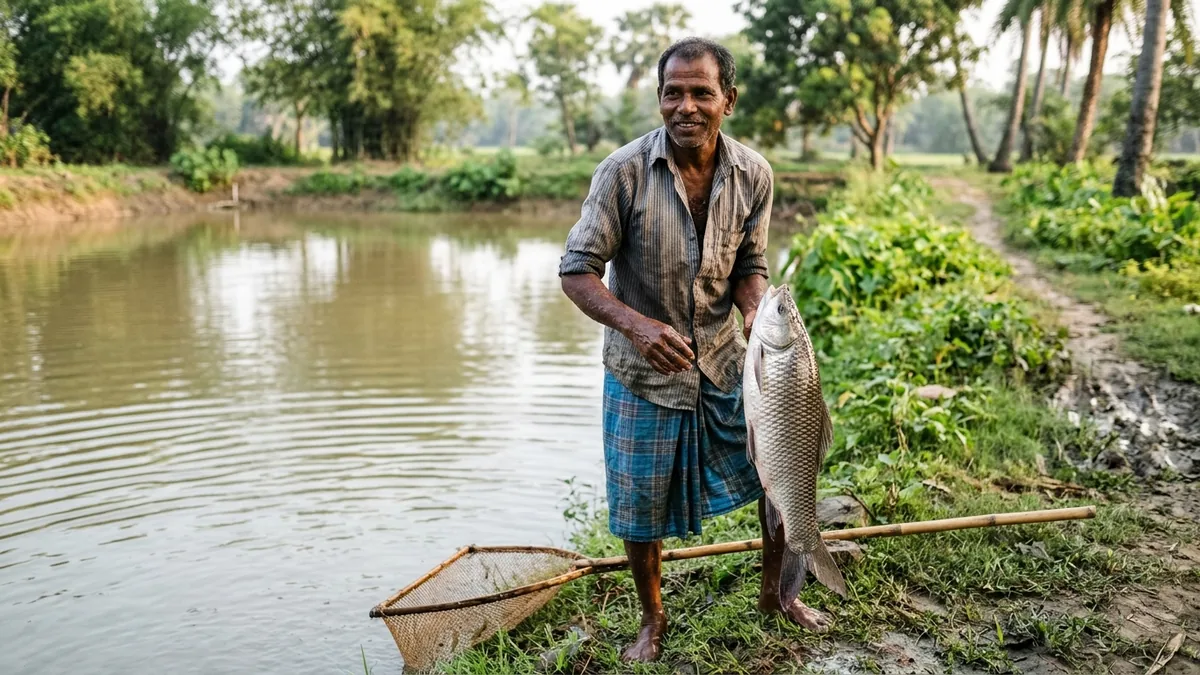
Indian rural landowners converting marginal seasonal waterlogged plots along Ganga, Yamuna, Ghaghara, or Sutlej floodplains into engineered fish ponds consistently achieve higher per-acre returns than basic staple grains when following ICAR-CIFA Bhubaneswar (icar.org.in) composite aquaculture stocking ratios and NFDB biosecurity norms:
- Balanced 3-Layer Composite Carp Ratio: Stock Catla (35%–40% surface feeder) + Rohu (35%–40% column feeder) + Mrigal / Common Carp (20%–25% bottom detritus feeder) at 3,500–4,500 fingerlings/acre so every pond depth converts natural phytoplankton cleanly without wasted feed.
- Floating Extruded Feed Conversion Efficiency (FCR 1.3–1.6): Replacing messy dusty floating rice-bran lumps with balanced floating 24%–28% protein pellets lets farmers judge exact pond appetite in 15 minutes—preventing rotting bottom ammonia gas spikes!
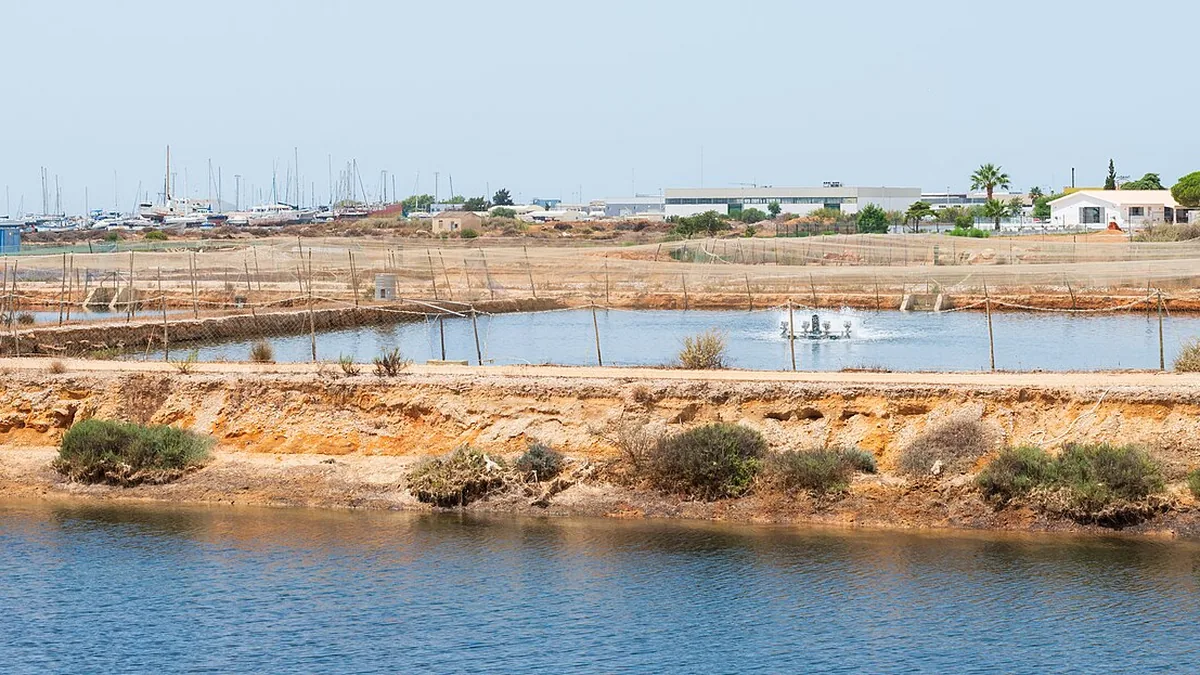
- Dissolved Oxygen & Winter Fungus Vigilance: Keep morning dissolved oxygen above 4.5–5.0 mg/L using paddle-wheel aerators (check water volumes cleanly with our farm water calculator) and apply clean salt/liming sanitation before January cold snaps (EUS skin ulcer defense).
- Maize & Soybean Feed Sourcing Links: Because balanced carp/pangas floating diets rely heavily on yellow maize (maize rate analysis) and soymeal (soybean rate updates), locking feed raw grains cleanly protects per-kg COP around Rs 85–Rs 110/kg.
4. PMMSY 40%–60% Pond Subsidies, Fishery KCC Loans & Cold-Chain Arbitrage
Unlike traditional crop farmers restricted only to land loans, aquaculture growers operate on generous central backing under Pradhan Mantri Matsya Sampada Yojana (PMMSY — dof.gov.in): General category entrepreneurs qualify for 40% central/state project subsidy while SC/ST and Women fishery entrepreneurs receive 60% subsidy on new pond excavation, Biofloc/RAS high-density tanks, insulated pickup trucks, and ice-plant kiosks!
Simulate seasonal fishery farm economics alongside allied poultry farming or dairy units using our farm ROI calculator and farm income planner, calculate eligible capital grants via our subsidy calculator & government schemes portal, estimate Fishery KCC working feed capital up to Rs 2 lakh collateral-light via our KCC loan calculator, review NCR agricultural trade dynamics on daily mandi rates & Ghazipur Phool Mandi, compare nearby meat/protein spreads across Delhi wholesale egg pricing, and ensure Farmer ID registration remains active.
5. How Buyers & Hoteliers Check Freshness at Gazipur (4 Physical Quality Rules)
Because long-distance Andhra Pradesh crates sit 48–72 hours under flake ice during cross-country highway transit, both NCR retail buyers and catering chefs should never rely solely on cheap per-kg quoting. Run four quick physical checks before handing cash at any Ghazipur wholesale stall:
- 1. Lift the Operculum Gill Plate: Fresh healthy carp displays crisp bright crimson/cherry-red clean gills smelling cleanly like fresh water; slimy brown or grey gills packed with foul sulfur odor indicate slow ice spoilage.
- 2. Press Dorsal Back Muscle Firmly: Fresh iced flesh rebounds immediately when poked gently by one fingertip; stale decomposed fish leaves deep permanent mushy indentations.
- 3. Inspect Clear Convex Eyes: Look for shiny transparent black pupils sitting plump rather than sunken milky cloudy white corneas.
- 4. Refuse Unlabeled Chemical Preservative Dip: Legitimate NFDB-hygiene compliant suppliers rely purely on strict crushed flake-ice chilling (0°C–2°C) rather than unsafe unauthorized formalin rinses.
For fish growers across Western Uttar Pradesh (Bulandshahr, Hapur, Meerut), Haryana (Sonipat, Panipat, Karnal), and Bihar shipping farmgate ponds toward Ghazipur Fish Mandi commission sheds, coordinating winter harvest pulls with insulated pickup logistics saves Rs 15 to Rs 28 per kg in distressed middleman cuts. Rather than emptying an entire 3-acre pond unconditionally on a single congested week, partial netting of 1.5+ kg bold Catla and Rohu during strong December–February Delhi NCR festive weekends while leaving smaller 600–800 g fingerlings another 60 days to grow doubles average per-kg auction realization smoothly.
Equally critical for sustainable pond profitability is routine soil-and-water alkalinity testing (pH 7.5–8.5 balanced safely with agricultural limestone ~100–150 kg/acre), regular monthly net growth sampling to prevent expensive floating feed over-pouring, and maintaining clean biosecurity separation across harvest drag nets used by visiting contractors so bacterial hemorrhagic septicemia never spreads across clean family aquaculture units!
From a wholesale trade lens, monitoring weekly price differentials between Ghazipur Fish Market (East Delhi), neighboring Faridabad/Gurugram wholesale hubs, and origin Godavari/Kolleru packing sheds tracked cleanly via NFDB FMPIS equips NCR institutional caterers, hotel purchase managers, and rural fish farmers with crystal-clear bargaining benchmarks! Whenever northern summer crop holidays or winter wedding rushes tighten local Uttar Pradesh–Haryana live supply tanks, insulated ice trucks rolling northward from Andhra Pradesh quickly stabilize market pricing—rewarding pond owners who raise crisp 1.8+ kg clean graded Rohu and Catla harvested right during peak festive windows rather than dumping underweight stocks cheaply in midsummer heat.
Frequently asked questions
- What is the wholesale price of Rohu, Catla, and Pangas in Gazipur Fish Market today?
- Indicative wholesale ranges at Ghazipur Fish Market (Delhi) in November 2026 stand at Rs 130–Rs 180/kg for Rohu, Rs 150–Rs 220/kg for bold Catla, and Rs 100–Rs 140/kg for Pangas, fluctuating daily by individual fish weight as monitored via NFDB FMPIS.
- What are the opening and peak auction timings at Ghazipur Fish Market Delhi?
- Major wholesale crate auctions begin early between 3:30 AM and 9:30 AM for NCR caterers and fishmongers, while neighborhood shoppers buying single whole fish or retail crate cuts comfortably shop between 7:00 AM and 12:00 PM.
- Where is Ghazipur Fish Market located and how to reach it?
- It sits along NH-24 / NH-9 (Delhi–Meerut Expressway border) in East Delhi near Ghazipur Mandi, easily reachable from Kaushambi Metro (Blue Line), Anand Vihar ISBT, Noida Sector 62, and Akshardham.
- How can fish farmers check official wholesale fish rates across Indian cities?
- Farmers can view verified daily species-wise wholesale and retail rates nationwide free via the Government of India’s Fish Market Price Information System (NFDB FMPIS) mobile app and web dashboard.
- Which states send the most freshwater fish into Gazipur Mandi?
- Coastal Andhra Pradesh (Kolleru/Eluru aquaculture zone) dominates year-round chilled Rohu, Catla, and Pangas ice-crate volume, complemented by fresh live-tanker catches from Uttar Pradesh, Haryana, Punjab, Bihar, and West Bengal.
- What government subsidy is available for starting fish farming in India?
- Under the central Pradhan Mantri Matsya Sampada Yojana (PMMSY), General farmers receive 40% subsidy while SC/ST and Women fish farmers qualify for 60% capital subsidy on ponds, RAS/Biofloc tanks, and insulated transport. Estimate grant ratios via our subsidy calculator.
- Can aquaculture farmers take low-interest KCC loans for fish feed and fingerlings?
- Yes! RBI extended Kisan Credit Card (KCC) working-capital support directly to inland fisheries and aquaculture entrepreneurs up to Rs 2 lakh collateral-light with interest subvention (~4% effective on timely repayment). Check installments via our KCC calculator.
- How can buyers tell if fish sold at Gazipur is genuinely fresh?
- Check three non-negotiables: bright cherry-red wet gills, plump shiny clear eyes, and firm dorsal meat that springs right back without leaving finger dents—avoid slimy yellowed bellies or foul ammonia smell.
- Why does fish weight size change the per-kg rate so sharply?
- Small 500 g juvenile Rohu contains a higher percentage of bones and gut waste, whereas mature 1.5–2.5 kg table Rohu or Catla yields thick bone-free back steaks preferred by families and hotels—earning Rs 30–50/kg higher wholesale prices.
- Is pond composite carp farming profitable on 1 acre of farmland?
- Well-managed 1-acre composite ponds stocking balanced Catla–Rohu–Mrigal fingerlings with scientific aeration per ICAR-CIFA produce 2.5 to 3.5+ tonnes/acre per 10–12 month cycle, offering attractive margins when linked directly to regional wholesale markets.
- Can individual consumers buy 2 kg or 5 kg at Gazipur instead of full 40 kg boxes?
- Yes! Alongside 30–40 kg thermocol wholesale crates auctioned before 8:00 AM, dedicated outer retail lanes at Ghazipur cleanly sell whole single Rohu/Catla pieces, descaled cuts, and fresh cleaned prawns from 1 kg upward.
- How are other neighboring Ghazipur markets (egg, vegetable, flower) linked?
- East Delhi’s integrated agricultural complex houses Poultry/Fish sheds alongside India’s massive Ghazipur Egg Market and wholesale Ghazipur Flower Mandi, making dawn freight logistics convenient for NCR buyers.
This article is for general information only and is not financial advice. Loan and scheme eligibility depends on partner and government criteria.