Jeera Ka Bhav Today: Unjha Mandi, NCDEX & Cumin Price
Key takeaways
- Indicative physical spot rates (jeera ka bhav) at Asia’s largest cumin market—Unjha APMC in Mehsana, Gujarat—span Rs 21,500 to Rs 27,500 per quintal (Rs 4,300 to Rs 5,500 per 20 kg Gujarat maund) in November 2026 across bold clean Europe/Singapore grades.
- Rajasthan wholesale hubs (Merta City, Nagaur, Jodhpur, Barmer) typically trade Rs 20,500 to Rs 26,000 per quintal (Rs 4,100 to Rs 5,200/20 kg) depending on bold grain size and black soil speck percentage.
- Gujarat and Rajasthan combined harvest over 98% of India’s cumin seed crop, giving India an overwhelming ~75%+ share of global cumin spice exports tracked by Spices Board of India.
- Because Gujarat & Unjha traders traditionally quote prices per 20 kg maund (man) rather than 100 kg quintal, multiplying the Unjha maund quote by 5 gives the exact Rs/quintal equivalent.
- NCDEX Jeera futures contracts settle against exchange-accredited Unjha warehouse quality (2% max foreign matter, 8.5% moisture max), acting as the forward price barometer for farmers.
- Adopting high-yielding wilt/blight-tolerant GC-4 (Gujarat Cumin-4) & RZ-209 varieties alongside timely Mancozeb/Azoxystrobin foliar fungicide sprays raises clean yield to 3.5–5.5 quintals per acre.
Tracking daily jeera ka bhav (jeera bhav today) is a daily priority across Gujarat’s Mehsana, Patan, and Banaskantha districts as well as western Rajasthan’s Nagaur, Barmer, Jaisalmer, and Jodhpur belts. Known worldwide as "Cumin Capital," Unjha APMC in Mehsana (Gujarat) auctions millions of bags annually—translating farmgate arrivals into domestic retail spice prices and global export quotes across Europe, Bangladesh, UAE, and Southeast Asia.
Whether you trade Unjha auctions quoted traditionally per 20 kg Gujarat maund (man) or compare per-quintal (100 kg) receipts across Rajasthan mandis on the Agmarknet portal and e-NAM national marketplace alongside Spices Board of India export advisories, understanding grade moisture, volatile oil content (2.5%–4.0%), and winter Rabi sowing weather protects farm income. Growers tracking multi-crop commodity benchmarks also review our daily mandi rates platform, Mandi Price Watch alerts, raw turmeric prices, and mentha oil mandi bhav.
1. Jeera Bhav Today: Unjha APMC vs Rajasthan & NCDEX Parity (Nov 2026)
One of the quickest mistakes new cumin growers make is misreading Gujarat vs Rajasthan units: Unjha and Rajkot APMCs traditionally quote auction slips in Rupees per 20 kg, whereas Merta City, Nagaur, Jodhpur, and NCDEX futures quote in Rupees per 100 kg (Quintal). Use this converted matrix for fast comparison:
| Mandi Hub / Grade | State | Indicative 20 kg Rate (Rs) | Quintal Equivalent (Rs/100 kg) | Primary Quality & Buyer Profile |
|---|---|---|---|---|
| Unjha APMC (Export Europe / Super Bold) | Gujarat | Rs 4,800 - Rs 5,500 | Rs 24,000 - Rs 27,500 | Machine-cleaned <1% impurity, bold pale greenish-grey seed |
| Unjha APMC (FAQ / Singapore Grade) | Gujarat | Rs 4,300 - Rs 4,900 | Rs 21,500 - Rs 24,500 | 98%–99% clean standard wholesale spice grinding quality |
| Gondal & Rajkot APMC (Saurashtra) | Gujarat | Rs 4,200 - Rs 5,100 | Rs 21,000 - Rs 25,500 | Regional Saurashtra dryland winter arrivals |
| Merta City & Nagaur Mandi | Rajasthan | Rs 4,250 - Rs 5,200 | Rs 21,250 - Rs 26,000 | High aromatic oil desert cumin favored by domestic blenders |
| Jodhpur & Barmer Mandis | Rajasthan | Rs 4,100 - Rs 4,950 | Rs 20,500 - Rs 24,750 | Arid western desert lots; clean bright skin on frost-free crops |
| Farmgate Uncleaned Lot (High Dust/Chaff) | Gujarat/Raj | Rs 3,800 - Rs 4,350 | Rs 19,000 - Rs 21,750 | Requires gravity/sortex cleaning (5%–8% refraction deduction) |
Source: Indicative physical spot auction ranges compiled from Unjha APMC circulars, Agmarknet Rajasthan/Gujarat spice arrivals, and domestic cumin exporter benchmarks (November 2026). Rates respond sharply daily to November–December Rabi sowing area surveys, Syria/Turkey global carryover news, and USD export shipments.
2. Why Unjha Jeera Prices Swing Violently: Weather, Carryover & Exports
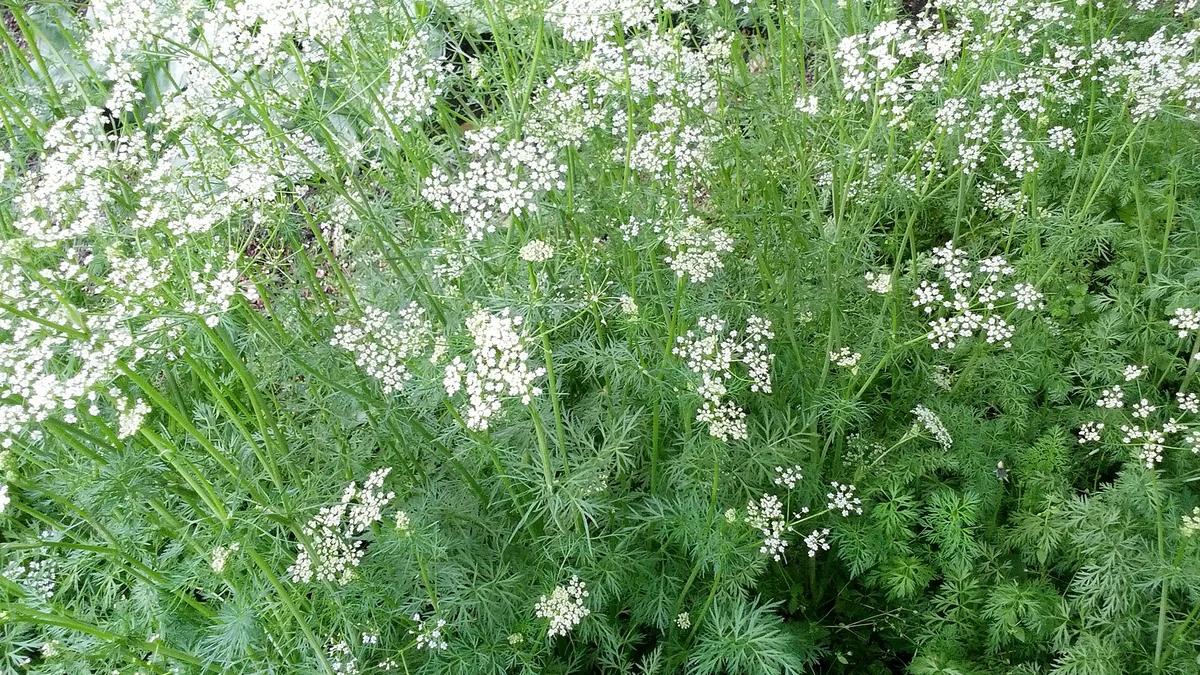
Cumin (Cuminum cyminum) ranks among India’s most weather-sensitive Rabi winter spices! Cultivated on sandy-loam dryland plots sown from late October through November and harvested across February–March, the tender flowering umbels (chandni) hate unseasonal January cloudiness, morning dew condensation, or frost—a single 4-day cloudy fog spell across Mehsana and Barmer can trigger rampant Alternaria Blight (Kalia / Charkha), cutting district yields 30%–50% overnight and sparking sharp rallies in jeera ka bhav!
- Rabi Acreage vs Soil Moisture (Nov–Dec): When alternative dryland crops like coriander, mustard, or fennel (saunf) trade comparatively stronger or monsoon subsoil moisture looks high, farmers shift acreage, tightly swinging February new-crop arrival expectations.
- Alternaria Blight & Wilt Vulnerability (Jan–Feb): Sudden cloudy winter weather causes dark scorching blight across blooming cumin flowers; monitor humidity early and plan preventive fungicidal sprays checked via our broad-spectrum fungicide guide and pesticide dosage calculator.
- Global Rival Supply (Syria, Turkey & Iran): Because geopolitical disruptions in Syria/Middle East repeatedly constrain overseas export volumes, international buyers turn overwhelmingly to Unjha whenever India ships clean, pesticide-MRL compliant lots (APEDA / Spices Board standards).
3. High-Yielding Varieties, Seed Rate & Crop Protection (ICAR / SDAU)
Selecting certified Gujarat Cumin-4 (GC-4) developed by Sardarkrushinagar Dantiwada Agricultural University (SDAU) or RZ-209 / RZ-345 from SKNAU Jobner alongside ICAR-NRCSS (National Research Centre on Seed Spices), Ajmer recommendations significantly improves resistance against devastating Fusarium Wilt and powdery mildew:
| Variety / Cultivation Metric | GC-4 / RZ-209 Improved Package | Local Untreated Seed Stock | Economic Advantage per Acre |
|---|---|---|---|
| Seed Rate & Treatment | 5–6 kg/acre (Carbendazim/Trichoderma treated) | 7–8 kg/acre untreated | Prevents damping-off & early wilt stand gaps |
| Crop Duration (Sowing to Harvest) | 110 - 120 Days (Nov to Feb/Mar) | 115 - 125 Days | Escapes hot March winds causing grain shriveling |
| Wilt & Alternaria Tolerance | Moderate-to-High Wilt Resistance | Susceptible (Up to 40% loss) | Retains clean bright-colored premium Unjha grade |
| Average Clean Yield per Acre | 3.5 to 5.5 Quintals (9–14 Maunds) | 2.0 to 3.2 Quintals | Doubles gross realization at steady Rs 22,000/qtl |
| Essential Volatile Oil (%) | 3.2% - 4.0% | 2.2% - 2.8% | Attracts Europe & bold-grade APMC buyers cleanly |
Source: Varietal and seed-spice extension guidelines compiled from ICAR-NRCSS Ajmer and SDAU Gujarat cumin advisories (2026). Check balanced phosphorus/nitrogen dosing with our fertilizer dosage calculator, light sprinkler moisture timing via our irrigation calculator, and aphid vector control via Imidacloprid 17.8% SL guidelines.
4. Sortex Value Addition, Pledge Finance & Crop Insurance Protection
Bringing dusty farm-threshed cumin mixed with 6%–10% stem chaff straight into Unjha or Merta auctions hands buyer brokers an immediate excuse to slash bids by Rs 300–Rs 600 per maund! Running simple mechanical spiral-gravity or sieve cleaning at village FPOs lifts realization instantaneously while generating uniform Exchange-standard lots. Farmers storing clean jeera bags safely until off-season price recoveries can use e-NWR warehouse receipts and cheap KCC working credit instead of selling under harvest debt pressure.
Estimate clear per-acre jeera margins cleanly using our crop income calculator, check drip/sprinkler/shade subsidies via our farm subsidy calculator & government schemes portal, protect weather-vulnerable cumin plots before December deadlines under PMFBY crop insurance and PMFBY claim status checks, maintain Farmer ID enrollment, and review dry spice price pages across Isabgol (Psyllium) & coriander mandi rates.
5. Jeera Agronomy Mastery: Preventing Wilt, Blight (Kalia) & Harvest Shattering
Cumin (Cuminum cyminum) delivers one of India’s highest returns per unit irrigation water in arid zones of Mehsana, Patan, Banaskantha, Nagaur, Barmer, Jaisalmer, and Jalore—yet remains notoriously unforgiving if morning fog, excessive nitrogen, or poor soil drainage hits during flowering (chandni). Adopting scientific practices standardized by ICAR-NRCSS Ajmer and SDAU Gujarat shields fragile seed clusters from catastrophic crop wipeouts:
- Seed Selection & Wilt Shielding: Rotate cumin strictly on a 3-to-4-year cycle away from prior solanaceous/cumin plots to starve dormant Fusarium oxysporum wilt, sow resistant GC-4 or RZ-209 seed (4–5 kg/acre), and treat seeds thoroughly before late-November sowing alongside soil enrichment using Soil Health Card guidelines.
- Ultra-Light Micro-Irrigation Scheduling: Excess standing water triggers instant root asphyxiation and powdery mildew. Irrigate sparingly only 4–5 light passes (immediately post-sowing, 8–10 days for germination emergence, 35–40 days branching, 55–65 days flowering, and delicate seed filling), using our irrigation planner to avoid mid-January fog overlap.
- Fighting Alternaria Blight (Kalia) & Powdery Mildew: Watch closely every January morning when relative humidity exceeds 80% paired with cloudy skies—protective prophylactic sprays recommended on CIB&RC label protocols and calculated accurately via our pesticide calculator keep umbels glossy bright amber.
- Clean Threshing for Maximum Sortex Premiums: Uproot cured yellowish plants early morning before sun-crisp umbels shatter onto dust soils, thresh onto smooth clean tarpaulins (never bare sandy ground!), and sieve thoroughly before bagging for e-NAM / Unjha auctions.
Comparing clean physical export parity against daily arrivals on Agmarknet and Spices Board of India export bulletins helps Saurashtra, Kutch, and Marwar growers decide confidently between partial harvest-month selling (~25% to clear labor dues) and warehousing dry 99% clean lots safely under WDRA e-NWR credit. Check complementary cash-crop opportunities via our turmeric cultivation guide, saunf (fennel) market tracker, fertilizer dosage tool, and farm ROI calculator.
Exporter MRL (Maximum Residue Limit) compliance has steadily become the single largest hidden separator inside Unjha APMC over the past five seasons: international European and North American spice grinders automatically test incoming Sortex cumin lots for over 150 fungicide and systemic pesticide molecules. Uninspected late-stage cocktail sprays leave persistent trace deposits even after machine hulling—blocking lots from Europe-grade export premiums (often paying Rs 500 to Rs 1,200/20 kg above domestic masala grinders) and pushing growers into discounted domestic grindings!
Practically, cumin cultivators aiming for peak Europe Sortex pricing in Patan, Banaskantha, Nagaur, and Barmer should rely strictly on well-timed preventive sulfur dusting for powdery mildew, CIB&RC-approved label molecules adhering strictly to pre-harvest Waiting Periods (PHI >= 21 days before harvest pulling), solar-heated dry concrete threshing floors, and clean hermetically lined poly-jute storage bags kept cleanly away from livestock barns or petroleum odors that dry essential-oil seeds easily absorb.
Furthermore, progressive western Indian spice farmer-producer organizations (FPOs) now deploy gravity-separator destoners, spiral seed cleaners, and rapid digital moisture testers at village collection centers before booking single auction slots on Unjha APMC or e-NAM. Because uncleaned farmer raw lots carrying 4%–6% dry stems, sand pebbles, and black shriveled blight seeds suffer sharp quality markdowns from local Unjha commission brokers, spending Rs 80 to Rs 120 per quintal on mechanical pre-cleaning routinely unlocks Rs 400 to Rs 1,100 per quintal cleaner spot realizations alongside direct institutional exporter competition—turning modest rural FPO grading setups into profitable harvest-season revenue multipliers.
Frequently asked questions
- What is jeera ka bhav today in Unjha APMC Gujarat (per 20 kg and per quintal)?
- Indicative physical spot auctions at Unjha APMC in November 2026 range from Rs 4,300 to Rs 5,500 per 20 kg maund (Rs 21,500 to Rs 27,500 per quintal) across clean FAQ Singapore and bold Europe-export grades tracked on Agmarknet and e-NAM.
- How do farmers convert Unjha 20 kg mandi rate into per-quintal rate?
- In Gujarat mandis (Unjha, Gondal, Rajkot), 1 maund (man) equals 20 kg, so simply multiply the Unjha 20 kg auction rate by 5 to get the 100 kg (quintal) rate (for example, Rs 4,600 per 20 kg × 5 = Rs 23,000 per quintal).
- Which city decides the benchmark cumin price in India?
- Unjha APMC (Mehsana district, Gujarat) dictates India’s wholesale spot cumin rate globally, followed closely in Rajasthan by Merta City, Nagaur, and Jodhpur mandis plus exchange-traded NCDEX Jeera futures centered in Unjha.
- How many quintals of jeera are produced from 1 acre or 1 bigha?
- Under clean raised-bed sowing with disease-resistant varieties like GC-4, Gujarat and Rajasthan cumin farmers harvest 3.5 to 5.5 quintals per acre (roughly 2.2 to 3.4 quintals per standard Rajasthan pucca bigha) when winter frost and fungal blight are averted.
- Why does cloudy foggy weather in January raise jeera bhav quickly?
- Cumin flowers (chandni stage) are ultra-sensitive to winter humidity and morning fog; cloudy spells trigger explosive Alternaria Blight (Kalia) and powdery mildew cutting supply dramatically—causing traders to bid aggressively. Check preventive fungicide schedules in our broad-spectrum fungicide guide.
- Which jeera variety gives the highest wilt tolerance and yield?
- Gujarat Cumin-4 (GC-4) bred by SDAU and RZ-209 recommended under ICAR-NRCSS Ajmer combine strong Fusarium wilt tolerance with high 3.2%–4.0% volatile oil percentage favored by Unjha exporters.
- Can cumin farmers insure jeera against winter frost and unseasonal hail under PMFBY?
- Yes! Both Gujarat and Rajasthan notify cumin across major spice districts during the Rabi season under PMFBY / Weather-Based Crop Insurance, covering unseasonal rain, hailstorms, and frost-induced yield losses before enrollment cutoff dates.
- What quality factors cause Unjha buyers to deduct Rs 300–500 per 20 kg?
- High moisture (>9%), excess inert dust/stem chaff, dark shriveled black blight seeds (kali jeeri), and unapproved pesticide MRL residues trigger steep discounts compared to machine-cleaned Sortex-ready lots.
- What is the total cost and net profit potential of 1-acre jeera farming?
- Cultivating 1 acre costs roughly Rs 16,000–Rs 24,000 (seed treatment, minimal light irrigation, fungicide protection, manual harvesting/threshing); harvesting 4 quintals at Rs 22,500/qtl yields Rs 90,000 gross. Run exact farm budgets via our crop income calculator.
- Does India export most of its jeera harvest?
- Roughly 30%–40% of Indian output exports internationally across Europe, Middle East, US, China, and Bangladesh through Spices Board of India registered exporters, making USD export demand a major price driver.
- Should growers sell cumin immediately in March or store in warehouses?
- March–April peak harvest arrivals often dip 10%–15% seasonally. Farmers with dry <8.5% moisture cumin stored safely in sealed bags or e-NWR godowns can use low-interest KCC credit instead of selling into harvest gluts.
- What are the main differences between Unjha FAQ, Singapore, and Europe jeera grades?
- FAQ (98%) suits domestic grinding, Singapore Grade (99%) cuts extraneous dust to 1%, and Europe Grade (99.5%–99.8% bold Sortex) meets stringent European heavy-metal and pesticide residue MRL thresholds at top market premiums.
This article is for general information only and is not financial advice. Loan and scheme eligibility depends on partner and government criteria.