Jute Price Today in West Bengal: TD5 Rates & Rs 5,925 MSP
Key takeaways
- Central Cabinet MSP for benchmark raw jute (new BIS TD-3 grade, formerly aligned with legacy TD-5 floor) stands officially at Rs 5,650/quintal (2025–26) rising to Rs 5,925/quintal for the 2026–27 marketing season per CACP & PIB notifications.
- Because acute erratic summer-monsoon yields tighten golden fiber inventories around West Bengal and Assam mills, clean dry spot market rates in Nadia, Murshidabad, Samsi, and Karimpur often trade cleanly above MSP—with strong TD-5 / TD-3 lots recently capturing Rs 6,200 to Rs 11,200+ depending on localized scarcity waves.
- Grading cleanly under Jute Corporation of India (JCI) & BIS 5-grade parameters alongside ICAR-CRIJAF CRIJAF-SONA microbial retting lifts dull dark grey low-grade fiber smoothly toward glossy lustrous "Golden Fiber" premiums.
Tracking jute price today (Patson / Pat ka mandi bhav) steers cash decisions for over 4 million smallholder farming households across West Bengal (Nadia, Murshidabad, North 24 Parganas, Malda, Cooch Behar), Bihar (Purnia/Katihar), Assam (Nagaon/Barpeta), and Odisha! Governed centrally by Cabinet Committee on Economic Affairs (CCEA) announcements following CACP cost assessments, official Government of India Raw Jute MSP sits at Rs 5,650 per quintal (2025–26) stepping upward cleanly by +Rs 275 to Rs 5,925 per quintal for 2026–27—protected directly across rural haats by the nodal Jute Corporation of India (JCI) (jutecorp.in)!
Crucially, spot open auction rates in Karimpur, Beldanga, Samsi, and Kolkata baler godowns often diverge steeply from headline MSP numbers—rising dramatically above MSP during short summer-rain seasons when clean glossy golden lots stay scarce! Below, decode the vital shift from old TD-5 to BIS TD-3 MSP nomenclature, check regional West Bengal & Assam wholesale parity, and see how ICAR-CRIJAF SONA clean microbial retting doubles fiber luster without muddy pond stains.
1. Raw Jute MSP & Regional Spot Price Table (TD-3 vs TD-5 Grades)
Note carefully that under updated Bureau of Indian Standards (BIS) 5-grade classification (TD-1 to TD-5), government MSP of Rs 5,925/quintal applies specifically to benchmark TD-3 (which matches old legacy TD-5 baseline quality), while lower modern TD-4 / TD-5 lots draw statutory grade differentials published via the Office of the Jute Commissioner (check daily APMC commodity benchmarks):
| Jute Benchmark / Grade | Hub / Regulatory Portal | Indicative Price Band | Key Quality & Retting Standard |
|---|---|---|---|
| Official Raw Jute MSP (2026–27) | CCEA / CACP (jutecorp.in) — BIS TD-3 Baseline | Rs 5,925 / quintal (+Rs 275 over Rs 5,650) | Protected floor procured at JCI village Departmental Purchase Centres (DPCs) |
| Nadia / Murshidabad Top Glossy (Tossa) | Karimpur / Beldanga / Krishnanagar | Rs 6,400 – Rs 11,800+ / quintal (Seasonal Spot) | Bright golden fine lustrous Tossa (JRO-524 / JRO-204) crisp fiber, zero dark bark |
| North Bengal & Bihar (White & Tossa Mix) | Samsi (Malda) / Purnia / Katihar Haats | Rs 5,850 – Rs 10,500+ / quintal | Uniform well-washed 85%+ root-cut clean dry bundles (<14% moisture) |
| Assam Valley Raw Jute (TD-4 / TD-5 Spot) | Nagaon / Kharupetia / Barpeta | Rs 5,650 – Rs 9,800 / quintal | Slight rail/truck freight gap below Kolkata mill parity; clean fiber closes spread |
| Lower Hard Root-Cut & Stained (Cross/Mesta) | Secondary Mill & Hessian Baler Yards | Rs 4,800 – Rs 6,600 / quintal | Coarse barky un-trimmed shamla dark muddy ponds penalized heavily at mills |

2. Understanding "TD-3 vs TD-5" So Balers Don’t Confuse Your Price Grade
Walking into village haats carrying freshly dried bundles often baffles young farmers hearing brokers argue "MSP is for TD-3, yours is TD-5!" Let us clear that historic grading shift plainly using Jute Commissioner BIS standards:
- 1. 8-Grade Era Turned Into Crisp 5-Grade Standard (TD-1 to TD-5): Historically, India graded raw Tossa/Desi (TD) jute across 8 tiers (TD-1 finest down to TD-8 poorest), where old TD-5 sat near the middle MSP benchmark! Today’s revised BIS 5-tier scale scores top clean white-gold fiber strictly across TD-1, TD-2, TD-3 (new MSP midpoint!), TD-4, and TD-5.
- 2. What Earns TD-2 / TD-3 Golden Premiums at JCI DPCs?: Inspectors test Color/Luster (bright creamy-gold beats dark grey shamla!), Root-Base Hardness % (well-retted soft butt cuts skip heavy mill trimming cuts), Strength/Tensile Snap, and Zero Sand/Dust Moisture (<12%–14%).
- 3. Why Open Spot Market Rates Can Surge Past Rs 11,000+ During Tight Years: Whenever delayed March-April Nor’westers stunt early Bengal germination OR stagnant dry July drought stops crisp pond retting, total mill bale arrivals shrink sharply—forcing West Bengal packaging mills mandatory Jute Packaging Materials Act (JPMA 100% foodgrain sack mandate!) orders to bid open rates far above statutory MSP!
3. ICAR-CRIJAF Retting Revolution: Turning Muddy Grey Bundles Golden in 12 Days
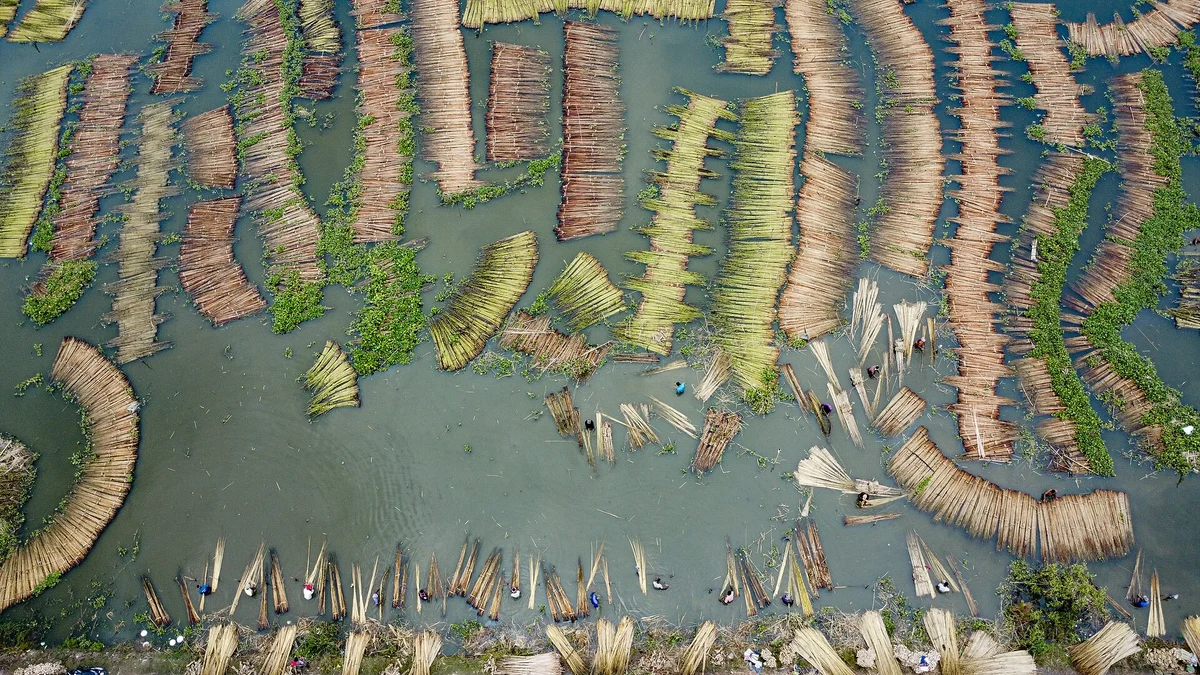
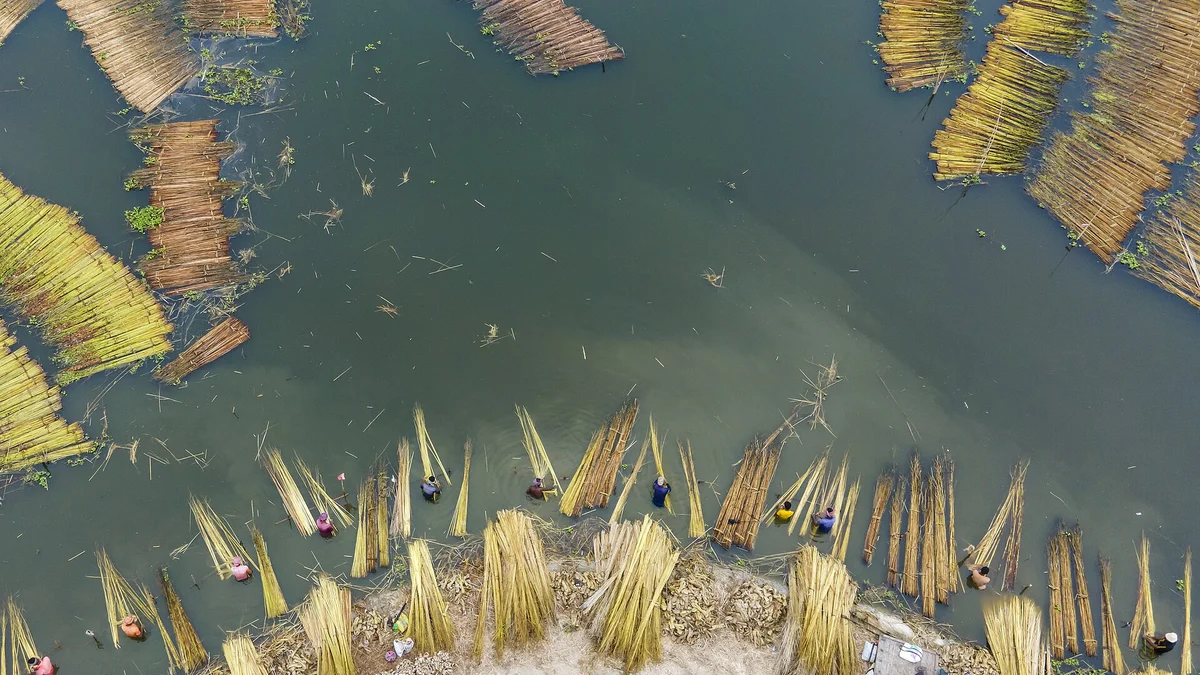
Nothing slashes raw jute value faster than anchoring fresh green bundles down into shallow muddy ditch slime loaded with rusty iron clay and decaying banana trunks (over-retting black "Shamla" fiber losing Rs 1,000–2,000/quintal overnight)! Following simple ICAR-Central Research Institute for Jute and Allied Fibres (CRIJAF, Barrackpore) microbial retting packs elevates golden brilliance dramatically:
- 1. Plant Top CRIJAF Tossa Varieties: Certified JRO-204 (Suren), JRO-524 (Navin), JRO-8432, and CO-58 deliver crisp strong golden Corchorus olitorius fibers averaging 10 to 13+ quintals dry retted fiber per acre plus valuable fuel wood Jute Sticks (Patkathi)!
- 2. CRIJAF-SONA Talc Bio-Inoculant Powder: Dusting cheap microbial CRIJAF-SONA pectin-degrading culture across neat layered bundles inside clean gentle water (not soil-weighted mud clods—use clean water-filled bags or concrete blocks instead of clay clods!) finishes soft silky retting uniformly in just 12 to 15 days vs 22 days, boosting bright creamy fiber sheen cleanly by 1–2 BIS grades!
- 3. Ribbon / Single-Stem Wash Timing: Strip glossy golden ribbons cleanly right when soft bark slips smoothly off wooden cores (never leave stems soaking an extra 3 days getting brittle!), rinse softly in clean surface water, and sun-dry cleanly over bamboo racks (zero direct wet dirt ground contact!).
4. One-Acre Jute Profit Math, JCI MSP Registration & Farm Calculators
Cultivating 1 acre of spring-summer Tossa jute takes roughly 120 crisp days (sown cleanly March–April ahead of Aman Kharif paddy transplanting!) spending around Rs 24,000 to Rs 34,000 across seed drilling, line weeding, retting culture, and stripping labor! Harvesting 11 quintals/acre even at base central Rs 5,925/quintal JCI MSP guarantees ~Rs 65,175 fiber income (climbing toward Rs 90,000–Rs 1,20,000+ in tight scarcity markets!) PLUS ~22–28 quintals of crisp white Patkathi fuelwood sticks sold easily for fences, fuel, or industrial activated carbon!
Estimate accurate 1-acre cash profitability upfront via our crop income calculator and farm ROI calculator, check ICAR-NFSM Commercial Crops seed-drill & CRIJAF-SONA minikit subsidies via our agri subsidy calculator & central schemes hub, borrow affordable 4% crop inputs via our KCC loan calculator, check flood/storm insurance under PMFBY (claim checker), track pre-monsoon Nor’wester hail & retting rain forecasts on our IMD weather portal guide, verify balanced NPK & Potash doses on our fertilizer tool & stem-weevil IPM calculator, compare seasonal eastern crops like Bengal paddy rates, Kolkata poultry trends & daily mandi rates, and complete your Farmer ID enrollment before registering at JCI MSP Procurement Centres (DPC).
5. How to Register Directly at JCI DPC Centres for Rs 5,925 MSP Protection
Whenever bumper harvests soften private faria traders below official Rs 5,925/qtl norms, Jute Corporation of India (JCI) operates Departmental Purchase Centres (DPCs) and cooperative PACS procurement counters directly across Bengal, Bihar, and Assam guaranteeing 100% digital bank NEFT/DBT payments within days of grade weighing! Register cleanly before August arrivals carrying your Aadhaar Card, Active Bank Passbook, Land Record (Porcha / Khatauni), and digital Farmer ID (Jute-ICARE enrollment) cleanly avoiding 10%–15% roadside broker cuts.
6. Value Addition: Geo-Textiles, Eco-Shopping Bags & "Patkathi" Stick By-Products
Global bans on single-use supermarket plastics ignite soaring industrial demand for clean Indian Jute Geo-Textiles, Biodegradable Nursery Sapling Bags, Fashion Tote Weaving, and Composite Bio-Resins! Progressive women SHGs and rural FPOs supported via National Jute Board and MSME cluster grants process clean golden ribbons locally into high-value braided yarns and stitched nursery sleeves—while dried crisp Patkathi internal stalks feed growing bio-charcoal brick plants across Malda and Nadia.
Frequently asked questions
- What is the official Raw Jute MSP for 2026–27 announced by the Government of India?
- Approved by the Cabinet Committee on Economic Affairs (CCEA) and published via PIB, the official Government of India Raw Jute MSP sits at Rs 5,650/quintal for 2025–26 and rises cleanly to Rs 5,925/quintal (benchmark TD-3 quality) for 2026–27.
- What is the difference between TD-3 and TD-5 grades in West Bengal jute markets?
- Under revised Bureau of Indian Standards 5-grade rules enforced by the Jute Commissioner, TD-3 serves as the official MSP midpoint grade (matching legacy middle quality formerly labeled TD-5), while lower modern TD-4 / TD-5 lots attract notified quality differentials.
- Where can farmers check official jute procurement centres and daily MSP support?
- Nodal central procurement operations are executed directly across West Bengal, Assam, and Bihar through village Departmental Purchase Centres (DPCs) operated by the Jute Corporation of India (JCI) alongside cooperative PACS societies.
- How much raw dry jute fiber yields from 1 acre in West Bengal or Bihar?
- Using improved JRO-204 (Suren) or JRO-524 (Navin) cultivars paired with line-sowing seed drills, 1 acre commonly yields 10 to 13 quintals of dry retted golden fiber (~25–30 qtl/ha) plus 22+ quintals of crisp Patkathi sticks.
- How does CRIJAF-SONA powder make retted jute brighter and fetch higher prices?
- Developed by ICAR-CRIJAF Barrackpore, CRIJAF-SONA microbial retting powder breaks down stem pectin rapidly inside just 12–15 days (versus 21+ stagnant pond days)—producing glossy creamy golden fibers free from ugly black shamla mud stains!
- Why do brokers penalize jute lots anchored with heavy mud clay clods?
- Dark iron-rich pond mud iron-reactions stain wet golden jute fibers dull slate-grey (Shamla grade) and embed grit onto root butts—always hold immersed bundles cleanly underwater using concrete weights or clean water-filled gunny bags instead!
- Why does spot jute price sometimes double past Rs 11,000/quintal in mandis?
- Under India’s mandatory Jute Packaging Materials Act (JPMA) requiring 100% wheat/paddy foodgrain bagging in jute sacks, tight dry summer seasons slash golden arrivals sharply—driving acute competitive bidding among Kolkata jute mills!
- What is Jute-ICARE scheme and how does it help small jute farmers?
- Managed jointly by the National Jute Board, JCI, and ICAR-CRIJAF, Jute-ICARE supplies subsidized certified seed, mechanical wheel-hoes/line seeders, and free CRIJAF-SONA retting packs elevating smallholder income per acre (estimate agri rebates).
- What moisture limit do JCI & private balers check before weighing jute bundles?
- Clean thoroughly sun-dried fiber morahs (twists) must stay below 12% to 14% moisture (usually 2–3 sunny days over raised bamboo racks after clean rinsing) without damp inner warmth.
- What documents are required to sell jute at Rs 5,925 MSP at JCI DPC centres?
- Bring valid Aadhaar Card, Aadhaar-seeded active Bank Passbook, Land Record (Porcha/Khata), and JCI/Farmer ID portal registration (check Farmer ID guide) for rapid direct DBT bank settlement.
- Can farmers earn money from leftover jute woody sticks (Patkathi) after fiber stripping?
- Yes! Drying long lightweight crisp Patkathi stalks yields 20–28 quintals/acre sold profitably as rural fencing panels, dry firewood, or crushed raw industrial bio-charcoal/particle board.
- Should I grow Tossa (Corchorus olitorius) or White Jute (Corchorus capsularis)?
- Across non-waterlogged upland loams, grow golden high-strength Tossa jute (JRO-204 / JRO-524) commanding prime mill quotes; pick hardy water-tolerant White jute (Pat / capsularis) only on low-lying early river floodplains!
This article is for general information only and is not financial advice. Loan and scheme eligibility depends on partner and government criteria.