Egg Rate Today Kolkata: NECC Wholesale Tray & Peti Price
Key takeaways
- Kolkata NECC wholesale egg quotes indicatively hover around Rs 6.60 to Rs 6.80 per egg (Rs 660–Rs 680 per 100 eggs), translating cleanly to Rs 198–Rs 204 per 30-egg tray and Rs 1,386–Rs 1,428 per 210-egg wholesale peti.
- Local retail corner shops across Salt Lake, Howrah, Barasat, and South 24 Parganas typically add handling and transport margins trading around Rs 7.00–Rs 7.15+ per white shell egg, while red/brown Bengal Deshi eggs fetch Rs 10–16 each.
- Because West Bengal consumes millions more table eggs daily than domestic clusters currently produce, rail/truck imports from East Godavari (AP), Vijayawada, and Telangana shape Kolkata’s slight freight premium over southern hubs.
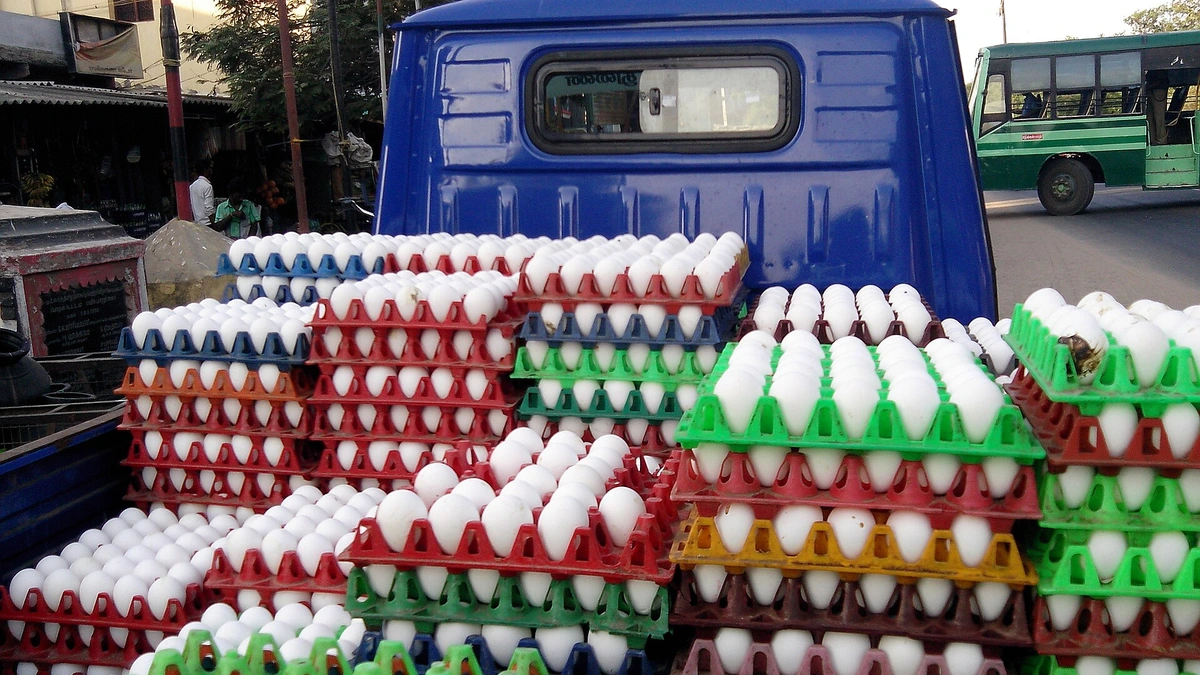
Checking egg rate today Kolkata guides daily procurement decisions for Howrah and Sealdah wholesale traders, sweet-confectionery mishti/cake bakeries, street egg-roll vendors across Park Street to New Town, and commercial poultry cooperatives throughout Nadia, Bardhaman, Midnapore, and Bankura! Guided centrally by National Egg Coordination Committee (NECC) Kolkata zone benchmarks, indicative wholesale farm/broker slabs sit steadily around Rs 6.60 to Rs 6.80 per egg (Rs 660 to Rs 680 per 100 eggs, or Rs 198 to Rs 204 per 30-egg tray), with local colony mudir dokan retail pieces selling slightly higher around Rs 7.00 to Rs 7.15+.
Why does Kolkata consistently trade Rs 35 to Rs 70 per 100 eggs higher than Hyderabad or Namakkal wholesale yards? Unlike Andhra Pradesh or Tamil Nadu which export massive poultry surpluses nationwide, West Bengal remains one of India’s premier egg-consumption corridors (DAHD / BAHS livestock reports)—relying continuously on insulated express highway rakes from East Godavari, Chittoor, and Telangana alongside fast-growing domestic Bengal layer sheds! Below, examine clean tray-vs-peti conversion math, Deshi vs commercial white egg spreads, and West Bengal layer farm subsidies.
1. Kolkata Egg Rate Conversion Table: 1 Egg, 30-Egg Tray & 210-Egg Peti
Always separate official NECC wholesale per-100 board quotes from secondary wholesale peti handling rates and corner shop retail charges (compare regional city benchmarks in Hyderabad, Delhi, all-India Anda Rate & national egg market):
| Kolkata Market Unit | Indicative NECC Wholesale Slab | Open Wholesale / Trader Band | Retail / Hospitality Consumer Range |
|---|---|---|---|
| 1 Egg (Single Piece White) | Rs 6.60 – Rs 6.80 | Rs 6.75 – Rs 6.95 | Rs 7.00 – Rs 7.50 / egg (Loose kirana / roll stalls) |
| 30-Egg Tray (Ek Crate / Tray) | Rs 198 – Rs 204 | Rs 204 – Rs 214 (Incl. pulp tray) | Rs 210 – Rs 235 / tray (Colony grocery / supermarkets) |
| 100 Eggs (NECC Benchmark) | Rs 660 – Rs 680 | Rs 675 – Rs 695 | Used directly by hostel, hospital & mess tenders |
| 210-Egg Peti (7 Trays × 30) | Rs 1,386 – Rs 1,428 | Rs 1,425 – Rs 1,475 (Boxed carton) | Wholesale yard standard across Koley, Sealdah & Howrah |
| Deshi / Brown Bengal Duck (Hanser Dim) | Village Haat Auction Parity | Rs 9.50 – Rs 13.00 / egg wholesale | Rs 12.00 – Rs 16.50 / egg (High winter demand in Bengal) |
2. Andhra Freight Parity + Duck Eggs (Hanser Dim) Impact in West Bengal
Three market realities shape Kolkata wholesale mornings distinctively compared to northern wheat states:
- 1. AP & Telangana Express Freight Parity: Around 1,100–1,400 km haulage from East Godavari (Tanuku/Rajahmundry) and Hyderabad along NH-16 adds ~Rs 0.55 to Rs 0.85 per egg cleanly in diesel transport, cardboard peti strength, and transit crack buffers above southern shed quotes (Hyderabad base rates).
- 2. Huge Bakery, Street Roll & Winter Duck Egg (Hanser Dim) Appetite: Kolkata’s iconic street-food stalls, Park Street Christmas/winter cake bakeries, and Mid-Day Meal / ICDS nutrition programs create resilient baseline daily turnover even during humid months!
- 3. State Layer Self-Reliance Push: To reduce out-of-state freight dependency, West Bengal’s Animal Resources Development Department alongside NABARD incentivizes automated 10,000-to-30,000 bird commercial layer estates throughout Bankura, Purulia, Paschim Medinipur, and Birbhum!
3. How East Zone Poultry Farmers Lower Feed Costs Without Cutting Laying %
Running profitable layer houses across West Bengal and Odisha turns cleanly on controlling the 68%–72% mash feed bill (ICAR-Central Avian Research Institute formulas) rather than buying high-priced bagged commercial pellets blindly:
- Direct Purnia / Gulabbagh Maize Sourcing: Because Gulabbagh (Bihar) sits barely a few hundred highway/rail kilometers northwest of Kolkata, alert Bengal egg producers lock crisp <13% dry Rabi yellow maize cleanly right at April–May harvest lows inside WDRA or dry farm cribs—saving Rs 300–Rs 500/quintal feed inflation all monsoon!
- Balanced De-Oiled Rice Bran (DORB) & Broken Rice Substitution: Replacing ~8%–10% corn modestly with clean low-silica Bengal rice bran + mustard/soya DOC balances metabolizable layer energy cheaply across alluvial paddy districts (paddy crop hubs).
- Summer Humidity & Heat Ventilation: Humid April–May Bay of Bengal heat spikes shed heat index fiercely even at 37°C; automated fogger nozzles + exhaust fans keep shell thickness crisp reducing crack losses inside trucks!

4. Commercial Layer Farm Profitability, NLM Subsidies & Poultry KCC Finance
Evaluate complete poultry investment math cleanly before breaking ground on raised slatted or multi-tier automated cages: simulate flock margins, FCR (Feed Conversion Ratio ~1.9–2.1 kg feed per dozen eggs), and pullet-rearing capital via our poultry profit calculator and farm ROI calculator! Unlock central National Livestock Mission (NLM) / Animal Husbandry Infrastructure Development Fund (AHIDF) capital/interest subvention via dahd.nic.in and our agri subsidy calculator (government schemes guide).
Arrange working maize-soybean inventory funds cleanly at subsidized rates on our KCC livestock loan calculator (NABARD credit norms), compare adjacent Kolkata protein markets via our fish market dynamics & dairy economics, check rural livestock risk covers (livestock insurance models), monitor input corn/jute/oilseed rates (Bengal jute rates), plan cyclone/heatwave safety via our IMD weather alert hub, and keep your Farmer ID enrollment ready cleanly.
5. Protecting Egg Quality in Humid Monsoon Transport & Retail Storage
Eastern India’s muggy June–September monsoon pushes ambient humidity past 85% RH—sweating cool chilled eggs rapidly if moved blindly between cold storage and humid open market stalls! Always keep wholesale trays shaded, dry, and ventilated (never seal damp sweating pulp trays inside airtight black polybags where fungal black spots grow rapidly!), stack max 6 corrugated peti boxes high preventing crushed bottom shells, and dispatch fresh farm arrivals within 4–7 days directly toward neighborhood kirana retailers.
6. Free-Range Ducks (Hanser Dim) & Backyard Layer Micro-Enterprises in Rural Bengal
Rural ponds (pukur) across South 24 Parganas, Howrah, Hooghly, and Nadia offer an enviable backyard biological advantage over arid states: Khaki Campbell and Indian Runner layer ducks forage paddy snails, duckweed, and insects along pond embankments—laying 250 to 290 big white/pale-blue eggs yearly per duck with minimal bought feed! Pairing 100-bird pond-bank backyard ducks or Sonali/Kuroiler brown layers easily supplements marginal smallholders earning steady Rs 10–Rs 15 per egg in local village haats verified via Agmarknet regional market monitoring.
Comparing Kolkata hotel/confectionery supply patterns against seasonal holidays also explains brisk winter price surges cleanly: starting right around Durga Puja through Saraswati Puja, Christmas fruitcake production, winter wedding buffets, and January picnic outings across West Bengal, commercial peti buyers lock standing direct contracts with Bardhaman and Midnapore sheds days ahead! Keeping layer pullets immunized properly against Newcastle/IBD, weighing random eggs weekly to maintain plump 55+ gram average table size, and switching smoothly to dry maize/DORB rations whenever soybean DOC spikes keeps eastern Bengal poultry producers consistently profitable across cycles.
Additionally, eastern zone producers partnering under state FPO poultry feed mills or Ahidf / NLM automated grading units capture reliable institutional supply contracts for hostels, hospitals, and state nutrition programs—bypassing daily middleman brokerage volatility while storing graded clean petis safely inside insulated cool-air buffers whenever peak summer temperatures soften roadside demand temporarily. Tracking daily South Bengal vs Midnapore wholesale truck dispatch flows alongside weekly West Bengal maize-de-oiled cake price moves helps medium-sized 10,000-bird operators hedge working corn inventory well ahead of monsoon river transport bottlenecks, keeping year-round egg rate today in Kolkata realizations consistently rewarding above break-even costs (~Rs 4.25–4.75/egg production cost baseline depending on corn parity). Clean biosecurity logs, ventilated curtain sheds, and uniform egg grading protect premium neighborhood market demand season after season.
Frequently asked questions
- What is the egg rate today in Kolkata for 1 tray (30 eggs) and 1 peti (210 eggs)?
- Under indicative NECC Kolkata wholesale quotes averaging Rs 6.60–Rs 6.80 per egg (Rs 660–Rs 680 per 100 eggs), a 30-egg tray wholesale value ranges cleanly between Rs 198 and Rs 204 while a 210-egg peti sits around Rs 1,386 to Rs 1,428 before local handling margins.
- What is the retail price of 1 egg in Kolkata local shops today?
- Local neighborhood groceries (mudir dokan) and retail supermarkets across Kolkata typically retail standard clean white eggs around Rs 7.00 to Rs 7.50 per egg depending on locality transport, broken shell allowance, and cold packing.
- Why is the Kolkata egg rate higher than Hyderabad or Namakkal?
- Kolkata absorbs large interstate egg truck arrivals from Andhra Pradesh (East Godavari) and Telangana; adding 1,200+ km fuel freight, driver expenses, and transit breakage lifts Kolkata rates roughly Rs 0.55–Rs 0.85/egg above southern production farms (Hyderabad egg benchmark).
- Where are Kolkata’s biggest wholesale poultry egg mandis located?
- Bulk inter-state peti unloading and regional trade cluster tightly around Sealdah (Koley Market corridor), Howrah Maidan / Wholesale Egg Yards, Mechhua, and Barasat/Budge Budge distribution hubs feeding greater Kolkata.
- Are duck eggs (Hanser Dim) more expensive than white chicken eggs in Kolkata?
- Yes! Rich Khaki Campbell / Bengal Hanser Dim duck eggs typically trade between Rs 12 and Rs 16.50 per egg retail in Kolkata markets due to larger ~65–70 g yolk weights and winter Bengali household demand.
- How does West Bengal help farmers set up new commercial egg layer units?
- Prospective entrepreneurs tap credit-linked central NLM / AHIDF incentives (DAHD portal) alongside NABARD dairy-poultry interest schemes and 4% Poultry KCC loans (simulate flock margins cleanly).
- Why does poultry feed maize cost shape Kolkata egg profits directly?
- Layer mash blends ~55% yellow maize + 25% soybean DOC; purchasing crisp <14%-moisture Rabi Bihar maize directly out of harvest troughs slashes feed costs across Bengal sheds (check maize storage trends).
- What is the ideal egg size grading buyers demand in Kolkata wholesale?
- Standard commercial white Leghorn table eggs weigh 54 to 58 grams per egg (~11.5–12.2 kg per 210-egg carton tray stack)—tiny pullet eggs (<48 g) get discounted sharply by wholesale peti agents.
- Does humid Bay of Bengal monsoon weather affect layer sheds?
- Yes! High >85% RH summer humidity suppresses feed intake and lowers shell Calcium uptake; running good ridge fans, reflective white shed roofs, and afternoon limestone/Vitamin-C electrolytes prevents thin broken eggs (ICAR-CARI poultry notes).
- Can Kisan Credit Card (KCC) working loans cover commercial layer feed?
- Yes! Animal Husbandry KCC extends working capital cleanly for poultry growers managing recurrent chick, vaccine, and maize/DOC feed expenses—calculate monthly servicing on our KCC loan calculator.
- How long can eggs stay fresh in Kolkata kitchen weather without a fridge?
- Unwashed crisp shells held inside cool dry airflow spots last roughly 5 to 7 days during hot humid summer heat and 10 to 14 days comfortably during mild December–January winters.
- Where do official NECC Kolkata egg rates publish daily?
- Official daily Kolkata zone wholesale price boards publish directly at e2necc.com alongside state-level livestock circulars tracked nationally.
This article is for general information only and is not financial advice. Loan and scheme eligibility depends on partner and government criteria.