Egg Market India: NECC Wholesale Hubs, Feed & Profit Math
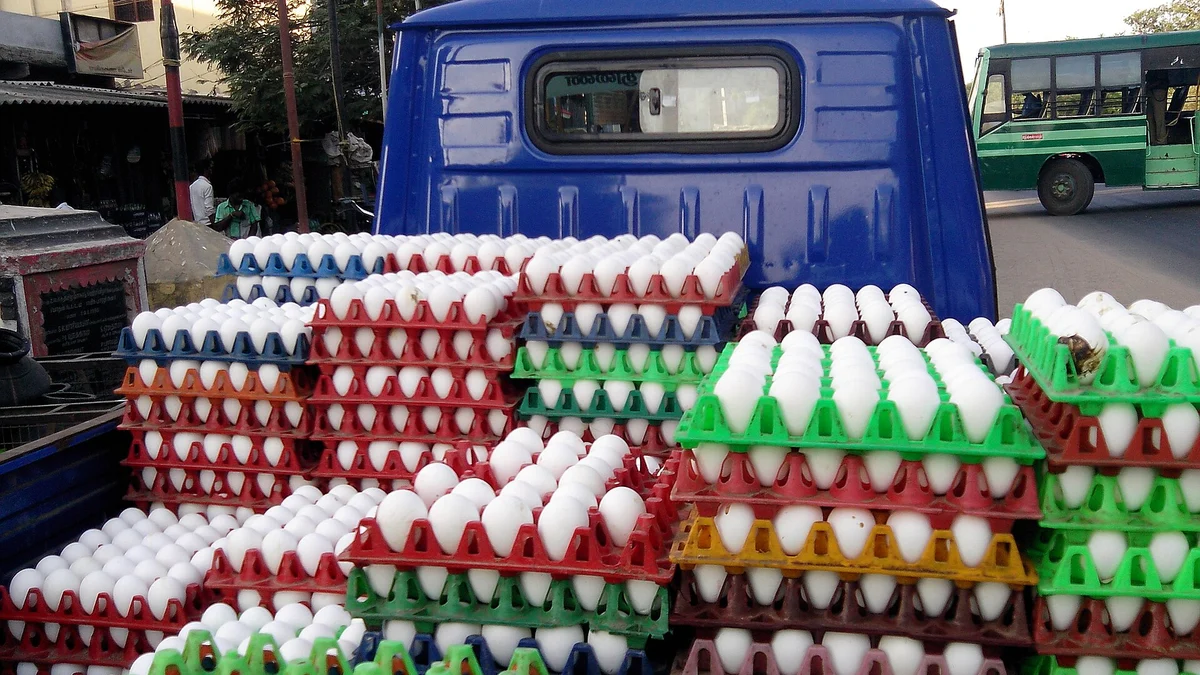
Key takeaways
- India’s commercial egg market revolves tightly around two surplus base zones—Namakkal (Tamil Nadu) and Andhra–Telangana (Hyderabad / East Godavari)—shipping refrigerated & insulated rail/highway loads daily toward northern and eastern deficit hubs (Delhi NCR, UP, Bihar, West Bengal).
- Indicative wholesale farm-gate NECC quotations commonly span Rs 545–Rs 615 per 100 eggs in southern sheds up to Rs 600–Rs 685+ per 100 eggs in North/East city wholesale markets, mirroring transport freight plus 30-egg tray and 210-egg peti handling.
- Because corn (~55%) and soybean DOC (~25%) comprise 70% of recurring layer expenses, buying crisp dry harvest maize alongside NLM shed & feed-mill subsidies drives long-term commercial flock profitability.
Understanding India’s dynamic egg market—whether you are running a 10,000-bird commercial cage shed in Telangana, sourcing 210-egg peti truckloads cleanly inside Kolkata or Delhi Ghazipur, or planning a new rural poultry enterprise—demands watching one connected supply machine! Ranking among the top three egg-producing nations globally per Department of Animal Husbandry & Dairying (DAHD Basic Animal Husbandry Statistics), India produces over 138+ billion eggs annually, powered heavily by organized intensive White Leghorn belt clusters across Andhra Pradesh, Tamil Nadu, Telangana, Haryana (Barwala), Maharashtra, and West Bengal.
Yet daily spot realizations inside this national egg market move sharply between winter consumption surges and blazing summer gluts—driven centrally by evening declarations across the National Egg Coordination Committee (NECC)! Let us compare active wholesale rates across India’s flagship trading zones, track how maize & soybean oilcake prices steer layer breakeven floors, decode export dry-egg powder trends (APEDA poultry exports), and explore NLM & Poultry KCC financing.
1. India’s Egg Market Benchmark Matrix: Southern Surplus vs Metro Consumption Hubs
Notice how prices step smoothly upward from surplus rural hatchery zones cleanly toward distant metro retail corridors covering highway fuel freight, cardboard box wear, and commission margins (dive deeper into city rates via Namakkal, Hyderabad, Delhi, Kolkata, & Anda Ka Rate guide):
| Egg Market Hub / Zone | Indicative 100-Egg NECC Quote | 30-Egg Tray Value | Supply Role in National Trade |
|---|---|---|---|
| Namakkal (Tamil Nadu Core) | Rs 545 – Rs 615 / 100 eggs | Rs 164 – Rs 185 / tray | South production engine exporting nationwide & Gulf shipping containers |
| Vijayawada / East Godavari / Hyderabad | Rs 555 – Rs 625 / 100 eggs | Rs 167 – Rs 188 / tray | Massive AP/TS belt railing weekly supply trains directly into East/North |
| Barwala (Haryana) & Ajmer (RJ) | Rs 565 – Rs 640 / 100 eggs | Rs 170 – Rs 192 / tray | Premier North Indian belt supplying Delhi NCR, Punjab & Himalayan tourism |
| Pune / Bengaluru / Mumbai CC | Rs 585 – Rs 675 / 100 eggs | Rs 176 – Rs 203 / tray | Metro western/southern bakery & supermarket hotel demand hubs |
| Delhi Ghazipur / UP–Bihar Mandis | Rs 590 – Rs 665 / 100 eggs | Rs 177 – Rs 200 / tray | Major North consumption corridor surging every Nov–Feb winter wave |
| Kolkata / Guwahati (East Zone) | Rs 630 – Rs 685+ / 100 eggs | Rs 189 – Rs 206+ / tray | Heavy eastern demand absorbing interstate AP freight margins |
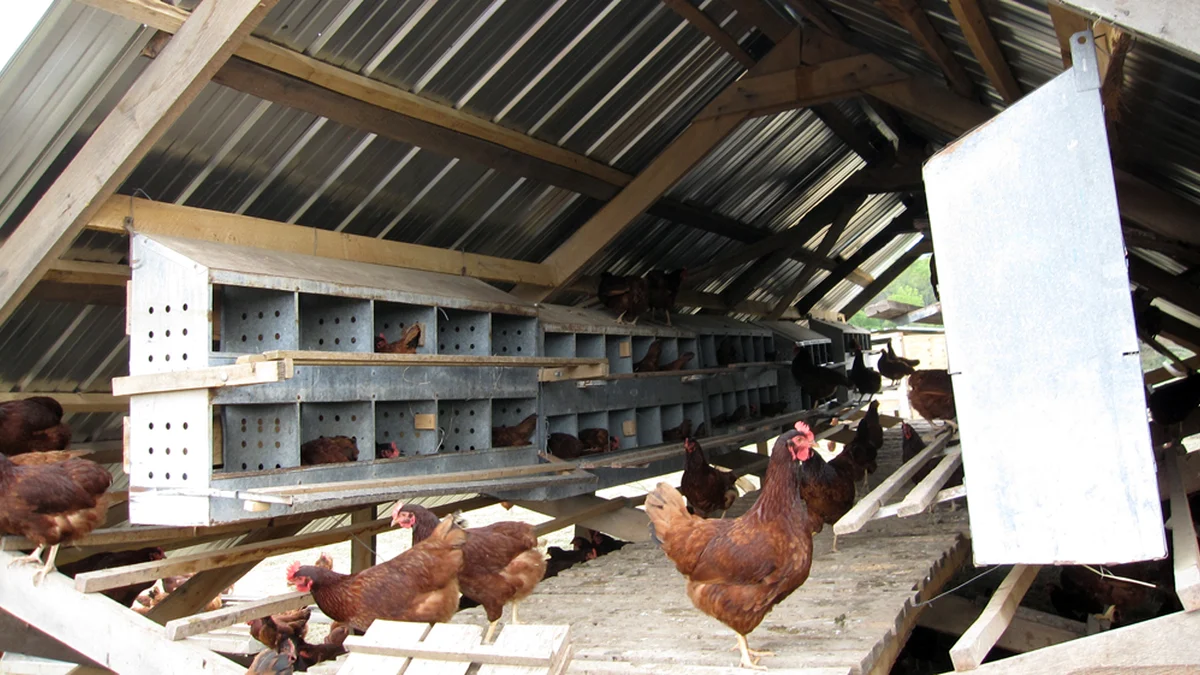
2. Inside Layer Feed Math: Why Maize & Soybean DOC Control Farm Profits
Walk onto any 20,000-bird automated shed and one single expense dominates over 70% of monthly operating cash: Daily Balanced Layer Mash Feed! Each adult White Leghorn hen eats ~108 to 115 grams daily containing roughly 55% yellow maize + 22%–26% de-oiled soybean meal (DOC) + rice bran/shell grit calcium (ICAR-CARI Izatnagar poultry feed formulations):
- 1. Direct Maize Feed Sensitivity: Every Rs 200/quintal jump in yellow corn rates adds ~Rs 0.14–0.18 onto producing 1 egg! Top farms maintain on-site dry grain silos stocking <13% moisture corn directly during May/November harvest dips.
- 2. Feed Conversion Ratio (FCR Target < 1.9–2.0 kg/Dozen): Pruning spilled trough feed waste, maintaining balanced nipple drinker flow, and keeping evening shed lighting steady around 16 hrs turns 1.95 kg feed cleanly into 12 crisp 56 g eggs.
- 3. Spent Hen Salvage & Poultry Litter Sale: At Week 72–76 culled lay completion, selling spent layers cleanly PLUS nutrient-rich dry cage poultry manure (prized by local sugarcane & vegetable growers!) recovers key pullet-rearing replacement capital.
3. Export Demand, Pasteurized Egg Powder & Backyard Desi Niche Trends
Notice how India’s poultry economy increasingly diversifies beyond loose paper trays (APEDA egg & poultry export data):
- Chilled Shell Exports & Whole Egg Powder Plants: Namakkal exporters ship fresh graded white shells rapidly via Tuticorin/Chennai sea containers into Oman, UAE, and Maldives alongside spray-dried pasteurized whole/albumen egg powder factories serving European & Asian bakeries!
- High-Margin Desi / Omega-3 / Free-Range Branding: Metro wellness shoppers happily spend Rs 10 to Rs 18/egg on verified brown-shelled, herbal-fed, or backyard Kadaknath/Sonali/Kuroiler cartons packed cleanly with QR traceability.
- Cold-Room Buffer Prevents Distress Dumping: Chilling excess warm May production safely at 4°C–7°C inside 75% RH cold stores buys producers cleanly 25–35 days avoiding summer market dumps.

4. Poultry Shed Capital, NLM Subsidies & KCC Feed Working Credit Tools
Before taking bank loans for a 5,000-to-25,000 bird elevated cage or deep-litter unit, verify unit cost carefully against 30-month pullet amortization and working feed buffers using our poultry profit calculator and farm ROI calculator!
Explore central National Livestock Mission (NLM) / Animal Husbandry Infrastructure Development Fund (AHIDF) credit-linked entrepreneurship & feed-mill subsidies on dahd.nic.in via our agri subsidy calculator & central schemes hub, borrow affordable working maize/DOC cash at subsidized limits via our poultry KCC loan calculator, compare neighboring protein markets (Delhi fish/poultry market, Pune & Bengaluru egg trends), check dairy integration & livestock risk schemes (livestock cover guides), safeguard bird flocks against sudden summer heatwaves tracked on our IMD weather radar guide, monitor corn/soybean ingredient trends on daily mandi rates & soybean markets, and confirm Farmer ID enrollment cleanly.
5. Biosecurity & Cool-Chain Discipline Guarding Commercial Layer Sheds
Nothing wipes out a thriving regional egg farm faster than avian viral outbreaks (Avian Influenza / Ranikhet) carried innocently onto bare footwear or dirty reused second-hand cardboard egg cartons! Enforcing strict shed perimeter wheel-dip footbaths, barring outside trader delivery trucks right past farm main gates, swapping strictly onto brand-new clean paper trays for outgoing eggs, and adhering vigilantly to cold-chain Newcastle / IBD / Marek’s immunization ensures uninterrupted 310-egg/bird flocks.
6. Choosing Between White Leghorn Intensive Cages vs Rural Semi-Intensive Flocks
Match farm scale strictly to market outlets: high-volume commodity White Leghorn sheds (10,000+ birds) depend heavily on mechanical feed-mixers and low bulk per-egg margins winning across urban peti markets—whereas rural families owning 0.5-acre fenced orchards often double capital returns comfortably running 300–800 free-range Vanaraja / Gramapriya / Sonali layers, converting farm greens + coarse grains smoothly into lucrative village-premium brown eggs!
Tracking India’s shifting dietary protein trends cleanly also rewards forward-thinking farmers planning expansion across 2026–2030: urban gym fitness routines, hostel institutional contracts, and organized bakery supply chains steadily expand annual per-capita Indian egg demand past 100+ eggs per person/year tracked by DAHD national statistics—still leaving deep consumption headroom compared to ~180 eggs recommended by NIN dietary bodies! Producers investing early in clean automated manure-belt ventilation, bulk harvest-time maize cribs (WDRA pledge storage), and zero-antibiotic spotless table shell grading lock in steady multi-year profitability even across brief summer dips. Smart layer cooperatives across Namakkal, Barwala, Chittoor, and Ajmer increasingly hedge grain costs further by contracting dry Kharif maize and broken rice directly with village FPO warehouses, maintaining uniform 2,650–2,750 kcal/kg layer mash energy levels so peak flock lay rates never dip below 85% across shifting monsoon and cold winter months cleanly. Buyers checking daily egg market wholesale parity should factor interstate diesel backhaul freight (~Rs 0.25–0.55 per egg from Namakkal to North India or AP to East India), broken tray shrinkage, and seasonal Navratri/Shravan vegetarian consumption dips cleanly before committing forward wholesale cold-room stock orders. Meanwhile, integrated Indian poultry farmers diversifying toward graded 6-egg retail MRP cartons and cold-washed pasteurized liquid egg supply hotels and aviation catering corridors that stay largely insulated from open rural mandi price turbulence year-round! Inspecting fresh shell weights accurately across daily dispatch grading belts (54–58g commercial Grade-A), maintaining dry ventilated shed floors free from ammonia buildup, and booking seasonal Layer Day-Old Chicks (DOC) directly through certified hatcheries keeps unit economics healthy throughout volatile corn-soybean harvest cycles.
Frequently asked questions
- Who fixes daily egg market prices across Indian cities?
- The National Egg Coordination Committee (NECC) announces daily farm-gate benchmark wholesale quotes per 100 eggs across 25+ regional Indian zones every evening—guiding brokers, poultry growers, and city buyers nationwide.
- What is the typical wholesale rate range in major Indian egg market hubs?
- Indicative NECC wholesale pricing commonly spans Rs 545–Rs 615 per 100 eggs in southern clusters like Namakkal & Hyderabad, and Rs 590–Rs 685+ per 100 eggs in North/East consumption metros (Delhi, UP, Kolkata) reflecting transport freight (check conversion math).
- How many eggs are packed per wholesale tray and per peti carton in India?
- Universal Indian wholesale trade packs 30 eggs cleanly in 1 pulp tray and stacks 7 trays cleanly inside 1 corrugated peti box, equaling 210 eggs per peti.
- What makes up 70% of the cost of running a commercial egg poultry farm?
- Poultry layer mash feed (roughly 55% yellow maize + 25% soybean DOC + minerals/limestone) accounts for ~70% of total egg production costs—making smart bulk grain stocking essential.
- Does India export chicken eggs and processed egg powder internationally?
- Yes! Governed by APEDA food export standards, South Indian clusters (led by Namakkal) ship millions of chilled table shells weekly to Gulf markets alongside high-value pasteurized whole/albumen dried egg powder globally.
- What government subsidies exist for starting a new layer shed or poultry feed plant?
- Under central National Livestock Mission (NLM) and AHIDF schemes via DAHD, rural entrepreneurs and cooperatives qualify for targeted back-ended capital/interest subsidies (estimate project aid cleanly).
- Why do egg market rates peak every year between November and February?
- Winter temperatures boost household consumption, street omelette/roll stalls, and festive bakery cake output nationwide while post-monsoon fasting periods end—lifting wholesale realizations significantly over May–June lows.
- How many eggs does 1 commercial White Leghorn hen lay before replacement?
- Properly vaccinated hens fed balanced ICAR-CARI formulas cleanly lay 305 to 315 grade-A eggs across an economical ~72-week commercial laying cycle (simulate flock cashflows).
- Can poultry farmers avail 4% Kisan Credit Card (KCC) working capital loans?
- Yes! Animal Husbandry KCC extends subsidized revolving credit lines cleanly covering day-old chicks, vaccines, and layer mash procurement (check loan terms).
- What causes watery egg whites or thin fragile eggshells during May summer heat?
- Heat stress slows hen feed intake and panting upsets blood bicarbonate Calcium deposition—fitting shed cooling foggers, reflective roofs, night feeding hours, and Vitamin-C/limestone grit keeps firm crisp shells!
- How can small farms stop fatal Ranikhet / viral disease outbreaks cleanly?
- Maintain strict gate wheel-dip sanitation, ban external unwashed recycled buyer pulp cartons inside clean laying rooms, control wild rodents/sparrows with mesh netting, and keep strict cold-chain vaccination schedules!
- Are Desi brown eggs actually healthier than regular commercial white eggs?
- Standard commercial white vs cage-free brown shells offer nearly identical protein (~6–6.5 g/egg); free-range green-foraging backyard flocks (Sonali / Kadaknath) occasionally show deeper golden omega/carotenoid yolk richness fetching premium village prices.
This article is for general information only and is not financial advice. Loan and scheme eligibility depends on partner and government criteria.