Namakkal Egg Rate Today: NECC Wholesale Bhav & Price Guide
Key takeaways
- The official Namakkal wholesale egg rate today benchmarks between ₹5.65 and ₹5.85 per piece under National Egg Coordination Committee (NECC) Namakkal Zonal directives as of November 2026.
- Commercial packaging rates translate to ₹169.50 to ₹175.50 per standard 30-egg tray, ₹565.00 to ₹585.00 per 100 eggs, and ₹1,186.50 to ₹1,228.50 per standard commercial peti (210 eggs / 7 trays).
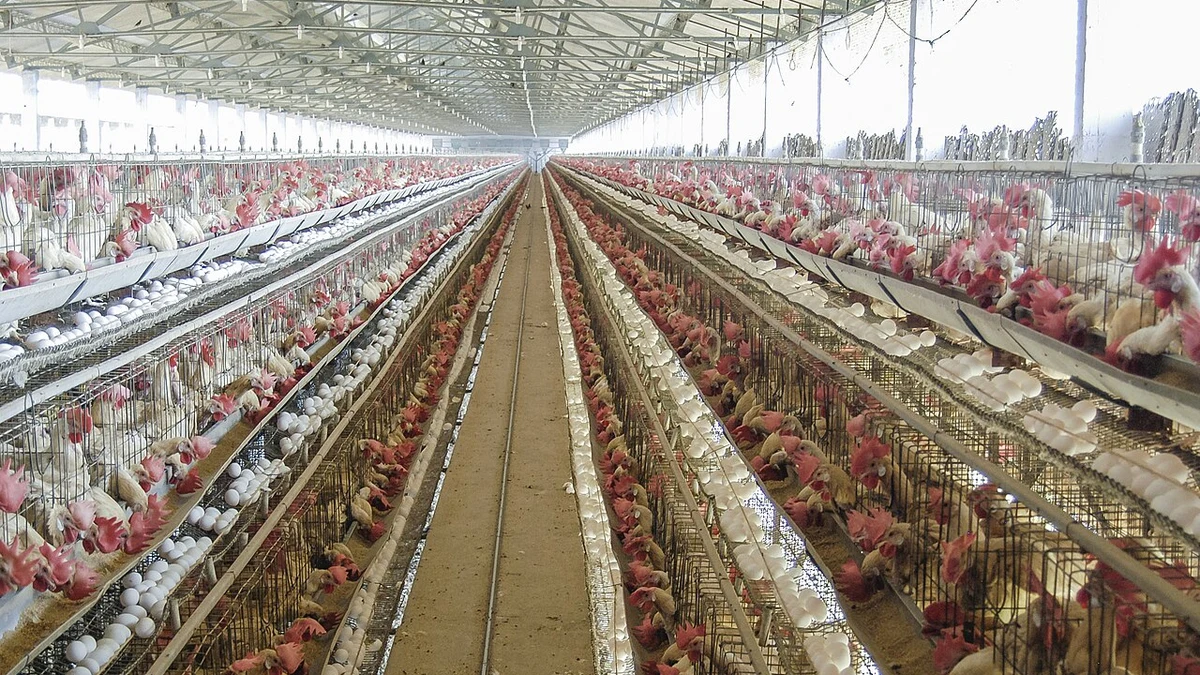
- Namakkal in Tamil Nadu represents Asia’s largest table egg production hub, housing over 4.5 crore commercial layer hens across 1,500+ poultry farms and producing approximately 4.5 to 5.0 crore fresh eggs daily.
- Kerala serves as Namakkal’s largest interstate consumption market, absorbing over 1.5 crore eggs daily with an average transport premium of ₹0.45 to ₹0.65 per egg over the Namakkal farmgate rate.
- Commercial poultry layer feed represents roughly 70% to 72% of total egg production expenditure; prevailing yellow maize (₹2,150/qtl) and soya DOC (₹3,850/qtl) prices establish a farm-level break-even cost of production (COP) of ₹4.70 to ₹5.00 per egg.
- Namakkal is India’s preeminent egg export gateway, dispatching millions of fresh table eggs monthly to UAE, Oman, Qatar, Bahrain, Kuwait, and Maldives via Tuticorin (V.O. Chidambaranar) and Cochin container ports under strict APEDA quality certification.
For commercial poultry farm owners, egg wholesalers, feed millers, bakery conglomerates, and retail food distributors across Southern India and international export corridors, checking the Namakkal egg rate today represents the essential commercial heartbeat of daily trade. Located in the western agro-climatic zone of Tamil Nadu along the Cauvery basin, Namakkal is universally celebrated across global poultry markets as the "Egg City of India" and the premier table egg production powerhouse of Asia. Producing an astounding 4.5 to 5.0 crore (45 to 50 million) fresh table eggs every single day, the Namakkal poultry belt establishes the benchmark wholesale price standard across South India, influencing retail food costs from Chennai and Bengaluru to Thiruvananthapuram, Kochi, and Gulf Cooperation Council (GCC) export terminals.
Every afternoon at approximately 5:30 PM, the National Egg Coordination Committee (NECC) Namakkal Zonal Committee—convening leading local poultry farmers, egg traders, and the Tamil Nadu Poultry Farmers Association (TNPFA)—formally announces its suggested wholesale farmgate selling price, known across the trade as the "Namakkal NECC Rate". This benchmark quotation coordinates market transactions, prevents distress seasonal price crashes, and dictates next-day wholesale billing across regional retail mandis. Poultry farmers tracking South Indian markets often compare these benchmarks with the Barwala egg rate today in North India, the Delhi egg rate, and broader today egg rate movements across regional mandis. Understanding daily egg rate movements requires analyzing farmgate production costs, seasonal consumption shifts, feed commodity pricing (yellow maize and de-oiled soybean meal traded at the local anaj mandi), inter-state transport margins into Kerala, and refrigerated ocean container export demand tracked via the NECC egg rate today bulletin and national egg rate trends. This comprehensive guide provides verified price data across commercial packaging units, in-depth poultry feed economics, and practical commercial intelligence for farmers and traders.
Namakkal egg rate today: wholesale pricing matrix across packaging units
Wholesale egg trading operates across standardized packaging metrics rather than individual piece transactions. The table below outlines prevailing indicative wholesale benchmark prices across standard commercial units established by NECC Namakkal as of November 2026.
| Packaging Unit | Egg Quantity | Min Rate (₹) | Max Rate (₹) | Average Modal Rate (₹) | Target Market Segment |
|---|---|---|---|---|---|
| Single Piece (Per Egg) | 1 Egg | ₹5.65 | ₹5.85 | ₹5.75 | Official NECC Farmgate Base Rate |
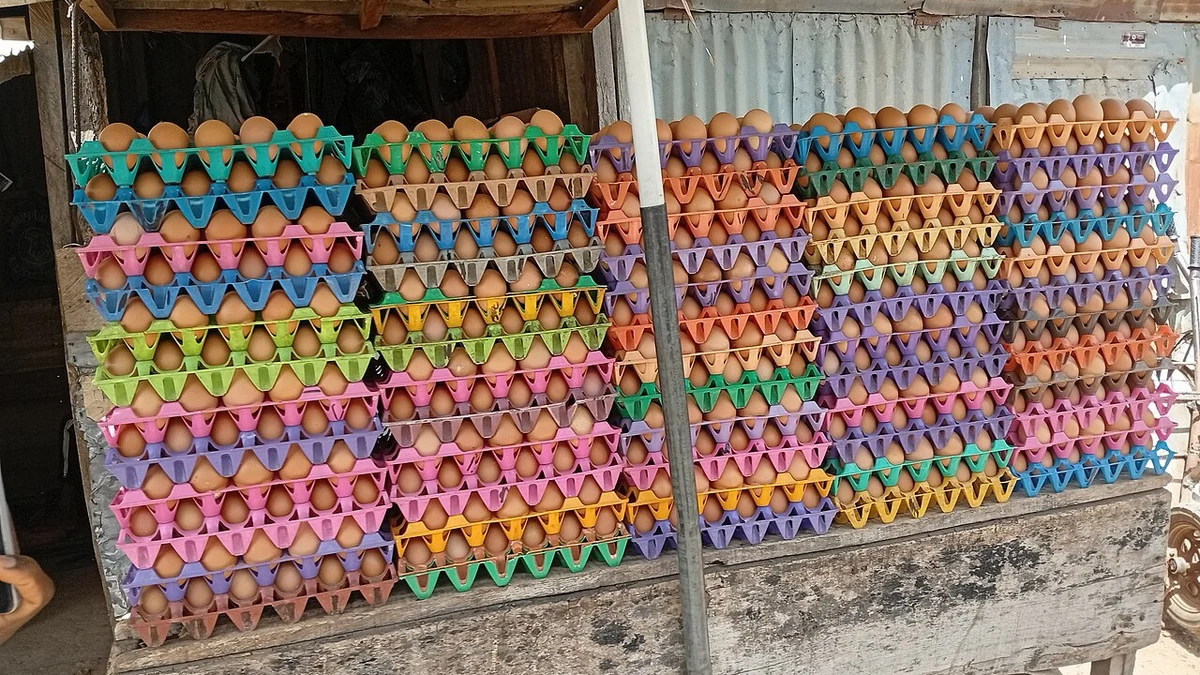
| Standard Paper Tray | 30 Eggs (5x6 Grid) | ₹169.50 | ₹175.50 | ₹172.50 | Local Retailers, Bakeries, Supermarkets |
| Century Lot (Per 100 Eggs) | 100 Eggs | ₹565.00 | ₹585.00 | ₹575.00 | Wholesale Mandi Trading Standard |
| Commercial Peti / Box (Small) | 180 Eggs (6 Trays) | ₹1,017.00 | ₹1,053.00 | ₹1,035.00 | Local Hotel & Institutional Supply |
| Standard Peti (7 Trays) | 210 Eggs (7 Trays) | ₹1,186.50 | ₹1,228.50 | ₹1,207.50 | Interstate Truck Haulage Standard |
| Heavy Master Carton (Export) | 360 Eggs (12 Trays) | ₹2,034.00 | ₹2,106.00 | ₹2,070.00 | Reefer Container Ocean Export Standard |
Source: National Egg Coordination Committee (NECC) Namakkal Zonal price releases and Tamil Nadu Poultry Farmers Association (TNPFA) market trade bulletins, November 2026. Disclaimer: All listed figures reflect indicative wholesale auction benchmarks at farmgate level. Final retail prices in destination consumer cities incorporate transport freight, transit breakage allowance (1.5% to 2.0%), local distributor commissions, and municipal taxes.
Destination freight margins: Namakkal versus Chennai, Kerala & Bengaluru
Because Namakkal produces vastly more eggs than can be absorbed within its home district, over 85% of daily egg output is dispatched via high-capacity multi-axle freight trucks to external consumption centers. The final wholesale price in destination cities is determined by adding line-haul freight, highway tolls, driver allowances, in-transit handling, and a customary 1.5% to 2.0% egg breakage buffer to the Namakkal base price. For commercial retail and institutional comparisons, buyers also track the egg price today across tier-1 consumption hubs and the egg price in Delhi to gauge national demand patterns.
| Destination Market | State / Region | Distance from Namakkal | Freight & Handling Margin | Indicative Wholesale Price (₹/Egg) | Daily Inflow Volume |
|---|---|---|---|---|---|
| Chennai Metropolitan Area | Tamil Nadu | 380 km | +₹0.30 to +₹0.40 | ₹6.05 - ₹6.25 | 80 to 90 Lakh eggs/day |
| Kochi / Central Kerala | Kerala | 260 km | +₹0.45 to +₹0.55 | ₹6.20 - ₹6.40 | 65 to 75 Lakh eggs/day |
| Thiruvananthapuram / South Kerala | Kerala | 390 km | +₹0.50 to +₹0.65 | ₹6.25 - ₹6.50 | 50 to 60 Lakh eggs/day |
| Kozhikode / North Kerala | Kerala | 240 km | +₹0.40 to +₹0.50 | ₹6.15 - ₹6.35 | 35 to 45 Lakh eggs/day |
| Bengaluru Urban & Rural | Karnataka | 250 km | +₹0.30 to +₹0.40 | ₹6.05 - ₹6.25 | 40 to 50 Lakh eggs/day |
| Coimbatore & Tiruppur Hub | Tamil Nadu | 120 km | +₹0.15 to +₹0.25 | ₹5.90 - ₹6.10 | 25 to 35 Lakh eggs/day |
| Middle East Export Parity | GCC / Malé (FOB Tuticorin) | Export Seaport | +₹0.95 to +₹1.25 | ₹6.70 - ₹7.10 | 50 to 80 Containers/month |
Source: Inter-state poultry logistics freight indexes, Walayar and Zuzuvadi commercial transport monitoring data, November 2026.
Layer feed economics and cost of production (COP) in Namakkal
Commercial layer farming is a high-volume, low-margin business where profitability is governed almost entirely by feed raw material prices. Poultry feed constitutes between 70% and 72% of the total recurring operational expenditure of producing an egg. A commercial high-yielding layer hen consumes approximately 110 to 115 grams of balanced mash or pellet feed daily to maintain steady peak lay rates (88% to 94% egg production during peak lay cycles).
A standard commercial layer ration formulated by poultry nutritionists at the Veterinary College and Research Institute (VCRI) Namakkal comprises:
- Yellow Maize (Energy Source): 58% to 62% of feed formulation. Supplies metabolizable energy (approx. 3,300 kcal/kg). Currently trading at ₹2,100 to ₹2,250 per quintal in regional grain mandis.
- De-Oiled Soybean Meal / Soya DOC (Protein Source): 24% to 28% of formulation. Delivers 46% to 48% crude protein rich in essential amino acids like lysine and threonine. Currently trading at ₹3,750 to ₹3,950 per quintal.
- Calcite & Crushed Oyster Shell Grit (Calcium Source): 8% to 10% of formulation. Essential for eggshell thickness and structural calcification. Costs roughly ₹380 to ₹450 per quintal.
- Dicalcium Phosphate (DCP), Synthetic DL-Methionine, and Toxin Binders: 2% to 3% of formulation. Balances available phosphorus, supports feathering, and prevents mycotoxicosis during humid weather.
- Trace Minerals, Vitamin Premix & Choline Chloride: 1% of formulation. Maintains bird immunity, metabolic efficiency, and internal yolk color intensity.
At current raw material costs, the composite cost of mixed commercial layer feed hovers between ₹31.00 and ₹33.50 per kilogram. With an average Feed Conversion Ratio (FCR) of 1.45 to 1.55 kg of feed required per dozen eggs (or roughly 110 to 115 grams per egg), the feed cost alone accounts for ₹3.45 to ₹3.70 per egg.
When fixed overheads—including day-old chick depreciation (amortized over a 72-week laying lifecycle), flock vaccinations, electricity for automated feeding and ventilation fans, litter management, borehole water pumping, mortality reserves (standard 4% to 6%), and farm labor—are incorporated, the comprehensive farmgate Cost of Production (COP) settles between ₹4.70 and ₹5.00 per egg. Consequently, when the NECC Namakkal wholesale rate holds above ₹5.65 per egg, commercial farmers generate an operational net margin of ₹0.65 to ₹0.95 per egg, providing the financial buffer needed to weather low-demand summer periods.
Why Kerala depends on Namakkal: the interstate egg supply lifeline
The commercial relationship between the Namakkal poultry cluster and the state of Kerala represents one of India’s most vital inter-state agricultural trade lifelines. Kerala is a heavily consumer-dense state with exceptionally high per-capita egg consumption (over 90 eggs per person annually, compared to the national average of roughly 95 eggs, with major urban centers exceeding 130 eggs). However, due to steep land acquisition costs, dense rural-urban settlement patterns, high ambient humidity, and strict environmental pollution control regulations, Kerala maintains very few large-scale commercial layer poultry farms.
Key factors cementing this trade corridor include:
- Massive Daily Supply Volume: Kerala consumes approximately 1.5 to 1.8 crore eggs daily, of which more than 85% is sourced directly from Namakkal farms.
- Dedicated Transport Fleet: Every evening, hundreds of specialized trucks loaded with 500 to 1,200 petis (1 to 2.5 lakh eggs each) depart Namakkal via the Coimbatore-Palakkad Gap (NH 544), reaching central distribution godowns in Ernakulam, Thrissur, Kozhikode, and Kollam by dawn.
- Institutional Demand: The Kerala Government’s Mid-Day Meal school nutrition program, anganwadis, bakeries, and high tourist hospitality demand in Kochi, Munnar, and Kovalam maintain an inelastic baseline demand year-round.
- Seasonal Price Variations: During traditional fasting periods—such as the 41-day Sabarimala pilgrimage season (Mandala-Makaravilakku from mid-November to mid-January)—vegetarian dietary shifts in Kerala temporarily moderate egg consumption, prompting Namakkal producers to divert excess supplies toward North Indian mandis or Middle East export channels.
International table egg exports from Namakkal: APEDA standards and port logistics
Namakkal is the uncontested export capital of Indian poultry, responsible for more than 90% of India’s total table egg shipments overseas. Facilitated by the Agricultural and Processed Food Products Export Development Authority (APEDA) under the Ministry of Commerce and Industry, Namakkal exporters supply fresh shell eggs across the Arabian Gulf, Southeast Asia, and island nations.
Key aspects of the Namakkal poultry export ecosystem include:
- Core Export Destinations: United Arab Emirates (Dubai, Sharjah), Sultanate of Oman (Muscat), Qatar, Kuwait, Bahrain, and the Republic of Maldives. Periodic consignments are also approved for Malaysia and Sri Lanka during local production deficits.
- APEDA Quality and Biosecurity Standards: Export eggs must be produced from bio-secured, closed-shed layer farms certified free from Avian Influenza (Bird Flu), Salmonella pullorum, and Salmonella enteritidis. Shells must be unwashed, clean, free from blood or fecal stains, and exhibit strong shell thickness exceeding 0.35 mm.
- Standard Export Grading: Export eggs are strictly graded by weight into uniform 50g-to-55g or 55g-to-60g categories. Yolk color must meet Roche Color Fan score 9 to 11 (golden orange), achieved through natural dietary marigold petal meal or yellow corn xanthophylls.
- Reefer Container Logistics: Eggs are packaged in special export-grade 30-egg pulp trays, stacked into 360-egg 5-ply corrugated export cartons, and loaded into 40-foot refrigerated maritime containers (reefers) holding approximately 1,312 cartons (4,72,320 eggs). Containers are maintained at a constant temperature of 12°C to 15°C with 75% to 80% relative humidity, departing via Tuticorin (V.O. Chidambaranar Port) or Cochin Port with ocean transit times of 5 to 7 days to the Middle East.
Flock management, layer breeds and biosecurity best practices
The sustained commercial dominance of Namakkal layer farms stems from progressive adoption of modern genetic stock and bio-secured farm infrastructure. Leading commercial breeds reared include:
- BV-300 (Venkateshwara Hatcheries / Venky’s): The undisputed dominant white-egg layer in India, accounting for over 75% of Namakkal’s layer population. Highly adapted to hot tropical climates, producing 315 to 330 eggs per hen-housed over a 72-to-80-week cycle with excellent feed conversion.
- Hy-Line Brown & Lohmann Brown: Reared in specialized farms catering to premium brown-egg urban supermarket demand and European-style bakery procurement.
- Housing Evolution: While traditional farms utilize open-sided elevated wire-mesh cage sheds, modern Namakkal farms are transitioning to Environmentally Controlled (EC) closed houses featuring automated evaporative cooling pads, cross-ventilation exhaust fans, automated nipple drinkers, and chain-driven feed distribution troughs that reduce bird stress and mortality during extreme summer heat waves.
- Vaccination Shield: Rigorous adherence to mandatory vaccination schedules—including Marek’s disease (day 1 at hatchery), Newcastle Disease (Ranikhet / Lasota), Infectious Bursal Disease (IBD / Gumboro), Infectious Bronchitis (IB), and Fowl Pox—safeguards flock health across the dense poultry cluster.
Frequently asked questions
- What is the current wholesale egg rate in Namakkal today?
- As of November 2026, the official NECC Namakkal wholesale egg rate benchmarks between ₹5.65 and ₹5.85 per piece at farmgate. This translates to ₹169.50 to ₹175.50 per standard 30-egg tray, ₹565.00 to ₹585.00 per 100 eggs, and ₹1,186.50 to ₹1,228.50 per commercial peti of 210 eggs (7 trays). Farmers can track broader national movements on the official today egg rate daily dashboard.
- What time does NECC announce the daily Namakkal egg rate?
- The National Egg Coordination Committee (NECC) Namakkal Zonal Committee officially declares its suggested daily wholesale egg rate every afternoon at approximately 5:30 PM. The rate is decided in consultation with local poultry producers, egg merchants, and the Tamil Nadu Poultry Farmers Association (TNPFA), with updates published on the NECC egg rate today portal.
- Why is Namakkal known as the Egg City of India?
- Namakkal is called the Egg City because it is India’s largest poultry egg production cluster, housing over 4.5 crore commercial layer hens and producing between 4.5 and 5.0 crore table eggs daily. It accounts for the vast majority of South India’s egg supply and over 90% of India’s table egg exports.
- How many eggs does Kerala buy from Namakkal each day?
- Kerala purchases approximately 1.5 to 1.8 crore eggs daily from Namakkal farms, representing over 85% of Kerala’s total egg consumption. Due to high consumer demand and limited local layer farming, hundreds of transport trucks ferry eggs daily along the Coimbatore-Palakkad highway corridor, while North Indian routes are benchmarked against the Barwala egg rate today.
- What is the wholesale price difference between Namakkal and Chennai or Kerala?
- Due to road freight costs, toll charges, handling, and an in-transit breakage allowance of 1.5% to 2.0%, wholesale egg prices in Chennai trade at a premium of ₹0.30 to ₹0.40 per egg over Namakkal, while prices in Kerala (Kochi and Thiruvananthapuram) carry a premium of ₹0.45 to ₹0.65 per egg.
- What is the current cost of production (COP) for an egg in Namakkal?
- The comprehensive cost of producing one commercial table egg in Namakkal currently ranges from ₹4.70 to ₹5.00. Feed ingredients (yellow maize at ₹2,150/qtl and soya DOC at ₹3,850/qtl) represent 70% to 72% of total costs, with chick amortisation, medicines, electricity, and labor accounting for the remainder.
- Which countries import table eggs from Namakkal?
- Namakkal exports fresh table eggs primarily to Middle Eastern and Gulf nations—including the United Arab Emirates (UAE), Sultanate of Oman, Qatar, Kuwait, and Bahrain—as well as the Maldives under APEDA export certification standards. Shipments depart via refrigerated maritime containers through Tuticorin and Cochin seaports.
- Which commercial layer hen breed is most popular in Namakkal?
- The BV-300 white-egg layer (developed by Venkateshwara Hatcheries / Venky’s) is the most widely farmed commercial breed in Namakkal, comprising over 75% of flocks. It is renowned for high tropical heat resilience, low feed consumption, and producing 315 to 330 eggs per hen over a 72-to-80-week laying cycle.
- How does seasonal demand impact egg prices in Namakkal?
- Egg prices typically rise during North Indian winter months (October to February) and high school mid-day meal session periods due to increased protein intake. Prices tend to soften during the hot summer months (April to June) and during regional religious fasting periods such as the Sabarimala season in Kerala and Shravan.
- What standards must export eggs meet under APEDA guidelines?
- Export table eggs must come from bio-secured farms certified free of Avian Influenza and Salmonella. Eggs must weigh between 50g and 60g, possess unwashed clean shells with thickness over 0.35 mm, feature an intense golden yolk color (Roche score 9-11), and be transported at 12°C to 15°C in refrigerated reefer containers.
- How many eggs are packed in a standard commercial peti in the poultry trade?
- In the commercial Indian poultry trade, a standard transport peti (box) contains 210 eggs, arranged in 7 paper trays of 30 eggs each. Smaller retail boxes contain 180 eggs (6 trays), while international export master cartons contain 360 eggs (12 trays).
- Where can traders and farmers verify official NECC Namakkal daily egg rates?
- Farmers and commercial buyers can check official daily rates on the NECC portal, review North Indian trends on the egg price in Delhi guide, consult DAHD official advisories, and monitor live farmgate rates across the country on KisanPe.
This article is for general information only and is not financial advice. Loan and scheme eligibility depends on partner and government criteria.