Moong Dal Price: Rate per kg, MSP 2026-27 & Mandi Guide
Key takeaways
- The all-India average retail moong dal price was Rs 115.48 per kg on 23 November 2026, as reported by the Department of Consumer Affairs from 555 price centres.
- The all-India average wholesale moong dal rate was Rs 10,612.43 per quintal (about Rs 106 per kg) on 23 November 2026, up 6.39% from Rs 9,975.31 a year earlier.
- The Minimum Support Price (MSP) of whole moong for Kharif Marketing Season 2026-27 is Rs 8,780 per quintal (Rs 87.80 per kg), Rs 12 above 2025-26 (PIB, 13 May 2026).
- Moong has the highest margin over cost of all kharif crops in 2026-27: 61% over a cost of Rs 5,438 per quintal.
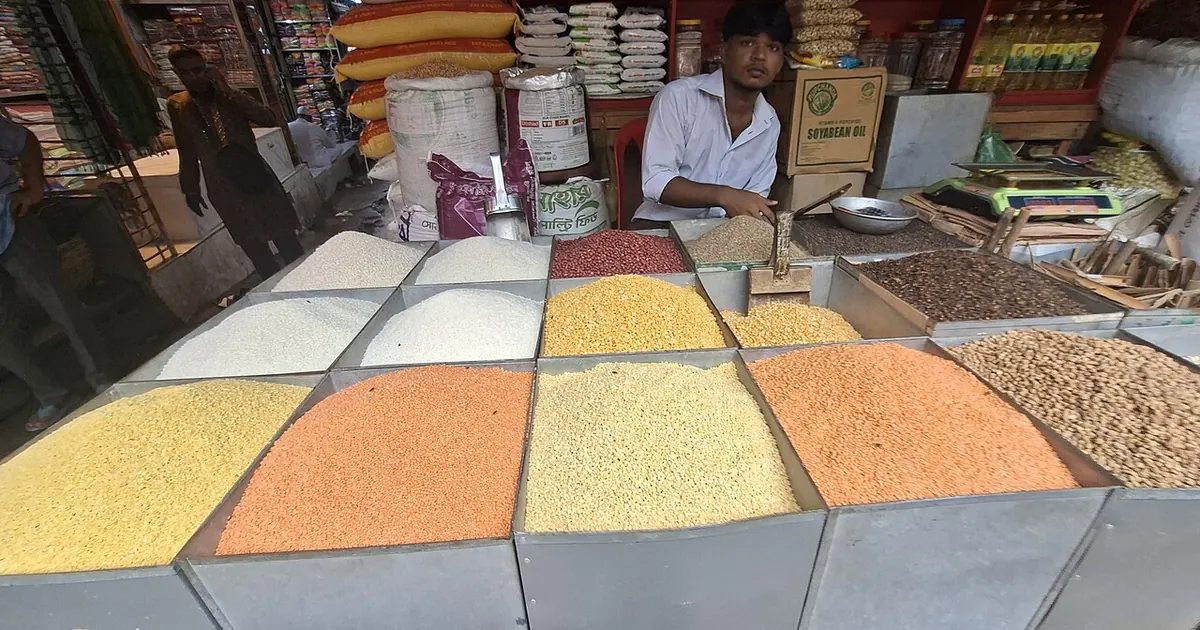
Moong dal price (moong dal ka rate) in India was Rs 115.48 per kg at retail on 23 November 2026, as the all-India average of the Department of Consumer Affairs. This page is for farmers who grow green gram (moong), traders who buy it at the mandi, and families who want to know a fair moong dal rate per kg. It gives the official retail and wholesale averages, the moong MSP for 2026-27, the gap between whole moong and split dal, and how to check current market rates in your own APMC mandi before you sell or buy.
All prices here are dated, indicative figures from government sources. Mandi rates change every day; check moong mandi trends and crop market insights or verify live APMC auctions via our today's mandi bhav tracker before transporting grain.
Moong dal rate overview: official all-India averages
The Price Monitoring Division of the Department of Consumer Affairs (fcainfoweb.nic.in) collects daily retail and wholesale prices of 22 essential food items across 555 market centres in the North, West, East, South and North-East regions. These are the most reliable public benchmarks for a national moong dal price per kg.
| Item | Retail (Rs per kg) | Wholesale (Rs per quintal) | Wholesale (Rs per kg, calculated) | As on |
|---|---|---|---|---|
| Moong dal | 115.48 | 10,612.43 | 106.12 | 23 Nov 2026 |
| Tur / Arhar dal | 136.28 | 12,743.32 | 127.43 | 23 Nov 2026 |
| Urad dal | 127.06 | 11,829.39 | 118.29 | 23 Nov 2026 |
| Gram (chana) dal | 95.83 | 8,811.88 | 88.12 | 23 Nov 2026 |
| Masoor dal | 91.12 | 8,279.02 | 82.79 | 23 Nov 2026 |
Moong dal sits in the middle of the pulse price ladder. On 23 November 2026 it was Rs 20.80 per kg cheaper than tur (arhar) dal at retail and Rs 11.58 cheaper than urad dal, while trading Rs 19.65 per kg dearer than chana dal and Rs 24.36 dearer than masoor dal. You can track all competing pulse baskets across our tur insights, urad insights, masur insights, and chana insights pages.
How has the moong dal price changed this year?
The DoCA wholesale report compares each day with one week, one month and one year earlier. For moong dal the movement was mild in the short run and firm over the year.
| Date | Wholesale moong dal (Rs per quintal) | Change to 23 Nov 2026 |
|---|---|---|
| 23 Nov 2026 | 10,612.43 | - |
| 16 Nov 2026 (1 week ago) | 10,625.43 | -0.12% |
| 23 Oct 2026 (1 month ago) | 10,488.90 | +1.18% |
| 23 Nov 2025 (1 year ago) | 9,975.31 | +6.39% |
A 6.39% yearly rise in wholesale moong dal is much smaller than the rise in other dals over the same year. Tur dal wholesale rose 22.80%, urad dal 14.54% and chana dal 13.99% between 23 November 2025 and 23 November 2026, while masoor dal rose 2.89%. So moong dal has been one of the steadier pulses in 2026.
One reason is supply. A PIB inter-ministerial briefing dated 1 June 2026 says moong production rose by around 6% to 44.92 lakh tonnes in 2025-26 from 42.44 lakh tonnes in 2024-25. The same briefing puts total pulses output at a record 274.09 lakh tonnes, notes pulse imports fell from 73 lakh tonnes in FY 2024-25 to 60 lakh tonnes in FY 2025-26, and estimates government pulse stocks at about 43 lakh tonnes in May 2026.
Moong MSP 2026-27: the floor price for whole moong
The Minimum Support Price (MSP) is the price at which the government buys fair average quality (FAQ) whole moong from farmers. On 13 May 2026, the Cabinet Committee on Economic Affairs approved a moong MSP of Rs 8,780 per quintal for Kharif Marketing Season 2026-27 (PIB) — equal to Rs 87.80 per kg of whole moong.
| Marketing season | Moong MSP (Rs per quintal) | Rise over previous year (Rs) |
|---|---|---|
| 2013-14 | 4,500 | - |
| 2021-22 | 7,275 | - |
| 2022-23 | 7,755 | 480 |
| 2023-24 | 8,558 | 803 |
| 2024-25 | 8,682 | 124 |
| 2025-26 | 8,768 | 86 |
| 2026-27 | 8,780 | 12 |
The PIB release gives three more numbers from the Directorate of Economics & Statistics (DES) MSP record: the cost of production used for 2026-27 is Rs 5,438 per quintal, giving an expected 61% margin over cost (highest among all 14 kharif crops, ahead of bajra and maize at 56% and tur at 54%), and the 2026-27 MSP stands Rs 4,280 (95%) above 2013-14. Farmers planning acreage can pair MSP floor analysis with our moong cultivation guide and best moong varieties for kharif and summer sowing.
The small Rs 12 rise for 2026-27 is worth noting. Urad got Rs 400 and tur got Rs 450 more for the same season. Moong already had the widest margin over cost, so the increase was kept small; mandi prices depend mainly on domestic arrivals and mill demand.
Whole moong vs moong dal: why the price per kg differs
Farmers sell whole green gram (sabut moong). Shops sell split moong dal (chilka or dhuli). The two prices are not the same, and comparing them directly is a common mistake.
- Whole moong at MSP, 2026-27: Rs 8,780 per quintal, or Rs 87.80 per kg (PIB).
- Moong dal, all-India wholesale, 23 Nov 2026: Rs 10,612.43 per quintal, or about Rs 106.12 per kg (DoCA).
- Moong dal, all-India retail, 23 Nov 2026: Rs 115.48 per kg (DoCA).
- Gap from wholesale dal to retail dal: about Rs 9.36 per kg, which covers packing, transport, shop margin and losses.
The gap between whole moong and split dal pays for milling. A dal mill removes the husk, splits the grain and cleans it, losing part of the weight as husk and broken fractions. Government outlets also retail subsidised stock: in a Lok Sabha reply of 7 August 2024, DoCA reported Bharat Dal moong dal at Rs 107 per kg and whole moong at Rs 93 per kg; check local NAFED, NCCF or Kendriya Bhandar counters for current rates.
Moong mandi rate by state: where moong is traded
Whole moong is auctioned in APMC mandis across India. Modal rates move daily with arrivals, moisture and seed size. Farmers checking regional lots should compare national mandi price trends alongside active state centres on best mandi near me.
Rajasthan: Sri Ganganagar, Hanumangarh, Nagaur and Merta
Rajasthan buys moong under the Price Support Scheme (PSS) when mandi prices dip below MSP. In a Lok Sabha reply of 11 February 2026, DoCA reported that PSS procurement of kharif 2025-26 moong ran from 24 November 2025 to 21 February 2026: Sri Ganganagar procured 25,530.49 tonnes (Rs 223.85 crore, benefiting 12,426 of 15,986 registered farmers) and Hanumangarh procured 9,179.65 tonnes (Rs 80.48 crore, 4,990 of 8,582 registered farmers). Growers across Nagaur belt track daily arrivals on Nagaur mandi bhav, Merta City mandi rates, Degana mandi prices, Sojat mandi updates, and register online via our Raj Kisan portal guide.
Madhya Pradesh: Harda, Narmadapuram and Pipariya
The Narmada valley districts of Madhya Pradesh trade large lots of summer (zaid) moong. Farmers compare Harda mandi bhav, Narmadapuram (Hoshangabad) rates, and Pipariya mandi prices on the same day before selecting a market yard, and complete procurement registration via our MP Kisan portal guide.
Maharashtra: Barshi and the Marathwada belt
Barshi in Solapur district is an early kharif pulse trading bellwether tracked on our Barshi mandi rate page. Maharashtra arrivals from August onward often guide early-season mill pricing ahead of Rajasthan procurement.
Uttar Pradesh and other states
In Uttar Pradesh, Bihar, Gujarat and Karnataka, monitor Green Gram (Moong Whole) and Green Gram Dal on Agmarknet (agmarknet.gov.in) and compare live electronic bids on the e-NAM online portal.
How to check the moong dal rate before you sell or buy
Step 1: Know the floor. Write down the moong MSP for 2026-27 (Rs 8,780 per quintal). Any bid below this for FAQ-grade moong sits below the support price.
Step 2: Check your mandi on Agmarknet (selecting Green Gram — Moong Whole) to verify minimum, modal and maximum modal bids and daily arrivals.
Step 3: Compare with retail and wholesale dal averages on the Department of Consumer Affairs portal so you know whether retail demand is strengthening.
Step 4: Register early under state Price Support Scheme (PSS) procurement if local auction bids sit under MSP, ensuring grain passes clean FAQ moisture norms.
Farmer tips: get a better moong price
- Dry the grain well. The February 2026 Lok Sabha reply notes only moong meeting FAQ parameters is procured under PSS; wet or mixed lots suffer heavy cuts.
- Grade out shrivelled, split and off-colour seeds before bagging, and plan sowing/harvesting months neatly with our crop calendar.
- Register early on procurement portals and verify your digital profile via our Farmer ID registration guide.
- Spread sales across two lots rather than selling the entire harvest on peak arrival day; calculate net pulse returns using our crop income calculator.
- Protect field grade against yellow mosaic virus and pod borers via our moong pest and disease management guide, choose healthy sowing inputs from green gram varieties, and size seed lots on the seed rate calculator.
- Review production practices in our moong ki kheti guide and arrange short-term storage credit via Kisan Credit Card so you are never forced into distress sales.
What decides the moong dal price per kg?
Five forces drive Indian moong pricing: crop size (PIB First Advance Estimates of 26 Nov 2025 put kharif moong at 17.20 lakh tonnes, while total 2025-26 output reached 44.92 lakh tonnes), MSP floor and PSS procurement, buffer stocks and Bharat Dal sales, falling imports (60 lakh tonnes in FY 2025-26 vs 73 lakh tonnes prior), and post-harvest seasonal arrival cycles.
For households buying loose loose dal when the DoCA all-India retail average is Rs 115.48 per kg, city shop quotes substantially higher reflect polishing, brand packaging or local retail margins.
Sources and last review
All figures on this page come from official Union Government datasets reviewed on 24 November 2026 by the KisanPe Editorial & Agronomy Team: PIB Kharif MSP 2026-27 (13 May 2026), DES MSP historical statement, DoCA Price Monitoring Division, Lok Sabha Q 1917 (Rajasthan PSS), Lok Sabha Q 2625 (Bharat Dal), PIB Kharif First Advance Estimates, and PIB Pulses Briefing (1 Jun 2026).
Frequently asked questions
- What is the moong dal price per kg today?
- The latest official all-India average retail moong dal price was Rs 115.48 per kg on 23 November 2026 from 555 centres, with wholesale averaging Rs 10,612.43 per quintal (about Rs 106 per kg). Check daily city reports on the Department of Consumer Affairs portal and compare national moong crop insights.
- What is the MSP of moong for 2026-27?
- The Cabinet-approved moong MSP for Kharif Marketing Season 2026-27 is Rs 8,780 per quintal, Rs 12 above 2025-26 (Rs 8,768), with an estimated cost of Rs 5,438/qtl giving farmers a 61% return over cost. Review multi-year grain trends in our moong cultivation guide.
- Moong dal ka rate kitna hai?
- Department of Consumer Affairs ke 23 November 2026 data ke anusaar moong dal ka all-India average retail rate Rs 115.48 per kg aur wholesale Rs 10,612.43 per quintal tha, jabki sabut moong ka MSP 2026-27 mein Rs 8,780 per quintal hai. Aap apni APMC mandi ka taaza bhav Agmarknet aur Mandi Bhav Today par dekh sakte hain.
- Why is moong dal costlier than whole moong?
- Whole moong MSP in 2026-27 is Rs 87.80 per kg, whereas milled wholesale moong dal averaged Rs 106.12 per kg on 23 November 2026. The spread pays for de-husking, splitting, cleaning, hulling weight losses, freight and distribution margins.
- Is moong dal cheaper than tur dal?
- Yes. On 23 November 2026 all-India retail moong dal averaged Rs 115.48 per kg against Rs 136.28 per kg for tur (arhar) dal — Rs 20.80 per kg cheaper — while urad dal was Rs 127.06, chana dal Rs 95.83 and masoor dal Rs 91.12 per kg. See full comparisons in our tur dal price guide and urad market analysis.
- How much has the moong dal rate risen in one year?
- Wholesale moong dal prices rose 6.39% year-on-year from Rs 9,975.31 per quintal (23 Nov 2025) to Rs 10,612.43 per quintal (23 Nov 2026), per DoCA wholesale data — significantly steadier than tur dal (+22.80%) or urad dal (+14.54%).
- Where can I check the moong mandi rate today?
- Select Green Gram (Moong Whole) on agmarknet.gov.in or inspect active lots on e-NAM. You can also check key trading hubs directly on KisanPe for Nagaur mandi, Merta City mandi, Harda mandi and Barshi mandi.
- How can a farmer sell moong at MSP?
- When local market bids fall below Rs 8,780/qtl MSP, states open procurement under the Price Support Scheme (PSS). Register online early via portals like Raj Kisan or MP Kisan and deliver dry FAQ-grade whole moong (Lok Sabha Q 1917).
- What is the price of Bharat Dal moong?
- In a Lok Sabha reply of 7 August 2024, the government stated Bharat brand moong dal was retailed at Rs 107 per kg and whole moong at Rs 93 per kg through NAFED, NCCF and Kendriya Bhandar. Confirm latest prices directly at authorised cooperative counters.
- How much moong does India produce?
- A PIB pulses briefing (1 Jun 2026) puts 2025-26 moong production at 44.92 lakh tonnes (up ~6% from 42.44 lakh tonnes in 2024-25), while kharif advance estimates put kharif moong at 17.20 lakh tonnes. Work out farm profitability cleanly with our crop income calculator.
This article is for general information only and is not financial advice. Loan and scheme eligibility depends on partner and government criteria.