Rubber Price 2026: RSS-4 Sheet Rates, Assam & Kerala Guide
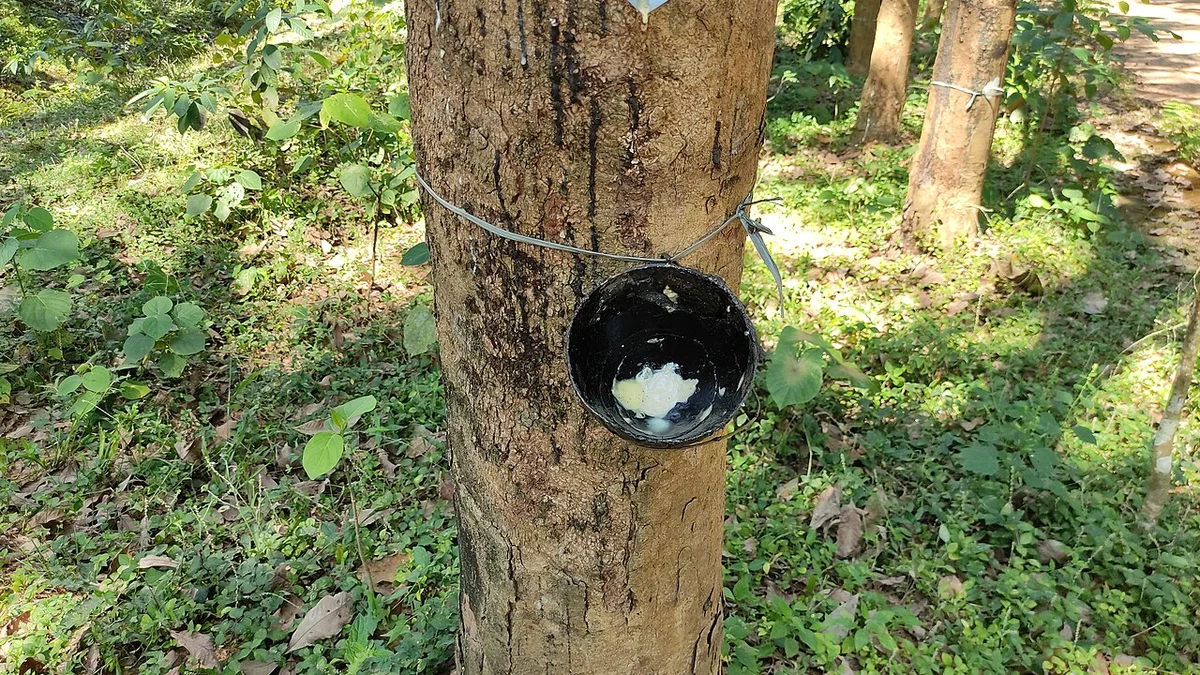
Key takeaways
- The all-India benchmark natural rubber price for Ribbed Smoked Sheet Grade 4 (RSS-4) hovers between ₹188 and ₹196 per kilogram across major trading hubs in Kerala, while non-traditional northeastern producing markets in Assam and Tripura trade between ₹178 and ₹188 per kg.
- Under the National Rubber Mission (NE-Mitra / North East Rubber Project), the Central Government and tyre manufacturers are expanding natural rubber plantations across 2,00,000 hectares in Assam and the Northeast, offering capital planting grants up to ₹50,000 per hectare.
- Dry Rubber Content (DRC) determination is the fundamental parameter for pricing field latex: standard factory offtake assumes a 100% DRC equivalent base rate (currently ₹184 to ₹190 per kg), tested using specialized laboratory hydrometers (Metrolac) and acid-coagulation sampling.
- Domestic natural rubber consumption exceeds 1.35 million metric tonnes annually—with automotive tyre manufacturing absorbing over 72% of supply—protected by a statutory 25% import duty (or ₹30/kg, whichever is lower) on compounded and raw rubber imports.
- Smallholders organized under Rubber Producers Societies (RPS) capture 5% to 8% higher net farmgate realizations by pooling RSS-4 sheets for direct supply contracts with major domestic tyre original equipment manufacturers (OEMs).
Natural rubber (Hevea brasiliensis) is an indispensable strategic industrial commodity that fuels the modern global transportation network, heavy industrial manufacturing, defense logistics, and healthcare production. In India, natural rubber cultivation covers approximately 8.5 lakh hectares, generating an annual harvest of over 7.5 to 8.2 lakh metric tonnes and providing vital economic sustenance to more than 1.3 million smallholders. Every business morning, growers, rubber dealers, processors, and tyre procurement executives closely evaluate the official rubber price benchmarks established across physical terminal exchanges and electronic auction platforms, cross-referenced against the rubber price today in Kottayam, daily mandi rates, and official Agmarknet commodity data.
While the lush southwestern coastal slopes of Kerala and Tamil Nadu’s Kanyakumari district historically accounted for over 85% of India’s domestic output, the geography of Indian rubber production is undergoing a massive transformation. Driven by the ambitious North East Rubber Project (NE-Mitra)—a joint initiative by the Rubber Board of India under the Department of Commerce and the Automotive Tyre Manufacturers’ Association (ATMA)—the rolling hill tracts of Assam (including Goalpara, Karbi Anglong, and Kamrup), Tripura, and Meghalaya have emerged as India’s vibrant secondary production powerhouse. Understanding commercial sheet grading, dry rubber content testing, and regional price spreads is essential for rubber growers seeking to secure maximum farmgate profitability, supported by specialized rubber crop insights.
Current rubber price matrix across Kerala, Assam & Northeast hubs
Natural rubber is marketed under multiple commercial classifications depending on whether the product is sold as fresh field latex, processed ribbed smoked sheets (RSS), technically specified block rubber (ISNR), or secondary cup lump scrap. Official farmgate and terminal market rates are surveyed daily by the Rubber Board of India across primary physical trade hubs including Kottayam, Kochi, Kozhikode, Agartala, and Guwahati.
| Commodity Grade / Form | Primary Trade Hubs | Modal Price (₹/Kg) | Indicative Range (₹/Kg) | Industrial Applications & End Users |
|---|---|---|---|---|
| RSS-4 (Ribbed Smoked Sheet 4) | Kottayam, Changanassery, Kochi | ₹191.50 | ₹188.00 – ₹196.00 | Radial truck & bus tyres, passenger car tyres, heavy conveyer belts |
| RSS-5 (Ribbed Smoked Sheet 5) | Kochi, Kozhikode, Palakkad | ₹185.00 | ₹182.00 – ₹188.00 | Two-wheeler tyres, agricultural tractor treads, footwear outsoles |
| Assam RSS-4 / Ungraded Sheets | Guwahati, Goalpara, Tinsukia | ₹182.50 | ₹178.00 – ₹186.00 | Tyre retreading plants, industrial rubber hoses, automotive bush rings |
| Tripura RSS-4 Standard | Agartala, Udaipur, Bishramganj | ₹184.00 | ₹180.00 – ₹188.00 | Direct OEM tyre contracts, molded industrial goods, rubber adhesives |
| ISNR-20 (Block Rubber / TSR) | Kochi, Ernakulam, Mangalore | ₹186.00 | ₹183.00 – ₹190.00 | Automated industrial tyre mixing lines, heavy rubber vibration dampers |
| Field Latex (100% DRC Equivalent) | Kottayam, Pathanamthitta, Kanjirappally | ₹187.00 | ₹184.00 – ₹191.00 | Concentrated latex plants, surgical gloves, foam mattresses, condoms |
| Cup Lump / Field Coagulum (Scrap) | Kottayam, Goalpara, Agartala | ₹112.00 | ₹105.00 – ₹118.00 | Reclaimed rubber, rubber floor tiles, automotive mudflaps, footwear heels |
As detailed in Table 1, RSS-4 remains the primary domestic reference standard. Historically, rubber produced in Assam and the Northeast traded at a steep discount of ₹15 to ₹25 per kg compared to Kottayam due to rudimentary smokehouse facilities and high inter-state road freight to southern tyre factories. However, with modern Rubber Producers Societies (RPS) establishing centralized smokehouses and testing labs across Assam and Tripura, the regional price gap has narrowed to just ₹5 to ₹9 per kg.
Assam & Northeast rubber market: the 2,00,000-hectare expansion
While rubber farming in Kerala faces escalating agricultural wage costs (often exceeding ₹850 to ₹1,000 per tapping shift) and land fragmentation, growers manage working capital with Kisan Credit Card (KCC) loans, institutional farmer credit services, and digital Farmer ID registration. The Northeast offers expansive contiguous hill tracts, favorable sub-tropical rainfall (2,000 mm to 3,500 mm annually), and lower establishment overheads. In states like Assam, smallholder rubber plantations have expanded rapidly across Goalpara, Kamrup Rural, Karbi Anglong, Goalpara, Kokrajhar, and Udalguri.
Under the landmark National Rubber Mission (NE-Mitra), the Automotive Tyre Manufacturers’ Association (ATMA)—representing industrial tyre giants including MRF, Apollo Tyres, CEAT, and JK Tyre—committed ₹1,100 crore in funding alongside the Rubber Board of India to cultivate 2,00,000 hectares of high-yielding clonal rubber plantations across the seven northeastern states over a 5-year timeline, alongside southern commercial crop diversifications like the cardamom price today, coffee price today, and fiber trends tracked under cotton market rates.
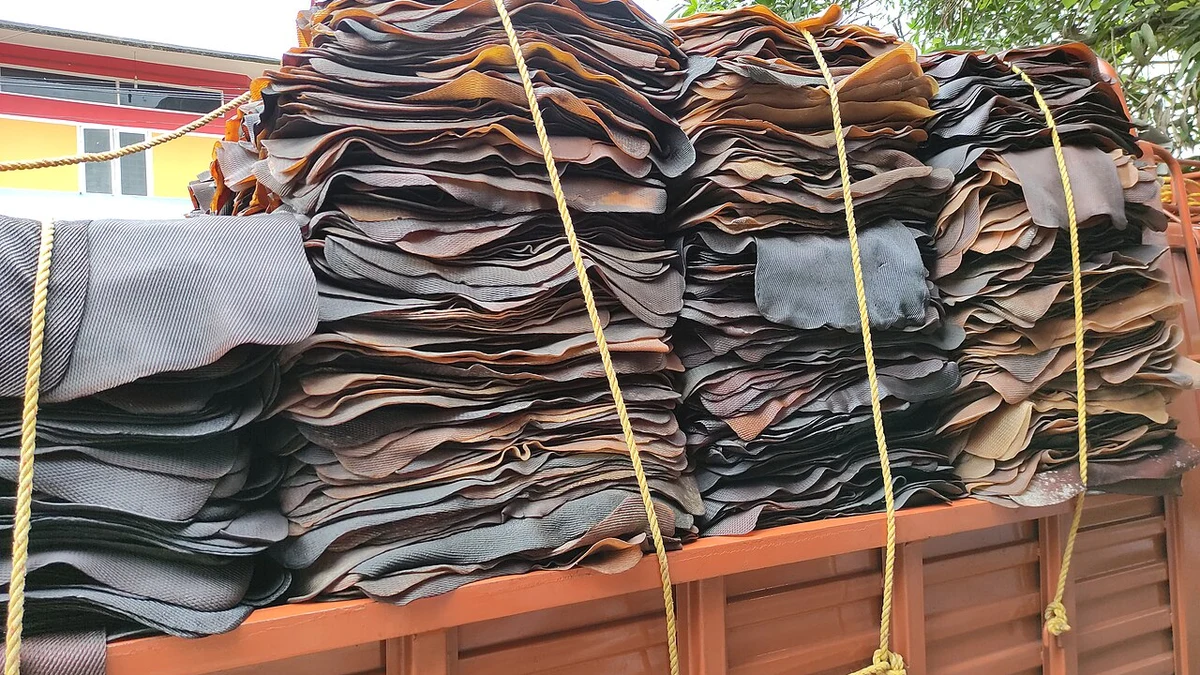
For an Assam rubber grower, the prevailing rubber price in assam today is determined largely by the level of local sheet processing. Growers who sell raw coagulum (wet cup lump) directly to intermediaries typically realize only ₹105 to ₹115 per kg. In contrast, progressive farmers who coagulate latex with 1% formic acid and cure sheets in community smokehouses to achieve RSS-4 grade standards command ₹178 to ₹186 per kg directly from purchasing agents representing Kolkata, Jalandhar, and Chennai industrial units.
Rubber Board of India grading system: RSS-1 to RSS-5 specifications
To ensure standardized domestic and export commerce, the Rubber Board of India categorizes Ribbed Smoked Sheets strictly according to the International Standards of Quality and Packing for Natural Rubber Grades (commonly referred to in commercial circles as the Green Book). Graders inspect sheets on back-lit sorting tables to evaluate translucency, color uniformity, bubble distribution, and foreign contamination.
| Quality Grade | Visual & Physical Criteria | Permissible Defects & Impurities | Price Realization Index |
|---|---|---|---|
| RSS-1 (Super Premium) | Clean, amber-translucent sheets, completely dry, uniform ribbing pattern | Zero blisters, zero sand particles, zero resin spots or mold growth | 103% of benchmark (Niche industrial engineering applications) |
| RSS-2 (Superior Grade) | Evenly smoked, dry, clean texture with slight variation in sheet thickness | Small pinpoint air bubbles permitted; completely free of bark and sand | 101% of benchmark (High-speed aircraft and premium racing tyres) |
| RSS-3 (Good Commercial) | Standard smoked sheets, firm texture, uniform dark golden color | Slight smoke spots and scattered pinhead bubbles permitted; zero tacky rubber | 99% to 100% of benchmark (Standard automotive passenger tyre treads) |
| RSS-4 (National Benchmark) | Sound, firm sheets, thoroughly smoked, consistent tensile elasticity | Moderate bubbles and slight non-translucent areas allowed; no virgin mold | 100% Baseline (The standard reference price across Indian commodity mandis) |
| RSS-5 (Lower Commercial) | Darker smoked sheets with slight unevenness in smoke curing | Scattered bark specks, resin streaks, and minor blemishes; no sticky decomposition | 94% to 96% of benchmark (Two-wheeler tyres, conveyor belts, footwear) |
Dry Rubber Content (DRC) chemistry & laboratory testing guide
When smallholders harvest latex from rubber trees (Hevea brasiliensis), the fluid is a colloidal milky suspension containing roughly 30% to 38% pure hydrocarbon rubber particles suspended in water alongside non-rubber constituents (proteins, resins, sugars, and mineral salts). Because the price of liquid latex is quoted on a 100% Dry Rubber Content (DRC) basis, accurately measuring DRC is critical to prevent underpayment.
There are two primary methods used in rural mandis and processing factories to determine DRC:
- The Metrolac Hydrometer Method (Field Density Test): A calibrated hydrometer (Metrolac) is immersed into a standardized 1:2 dilution of field latex and water. The device measures specific gravity and provides an instant DRC reading on a graduated stem within 3 minutes. While fast and convenient for daily collection centers, temperature variations and high mineral salt content can introduce a 1% to 2% margin of error.
- The Laboratory Oven Coagulation Method (Standard Reference): A precise 50-gram sample of field latex is weighed on a digital analytical balance, coagulated using 2 ml of 2% acetic or formic acid, rolled into a thin crepe strip, and dried in an electric laboratory oven at 70°C for 3 hours until reaching constant weight. The dry rubber film is re-weighed. If a 50g latex sample yields 17.5g of dry rubber film, the exact DRC is calculated as: (17.5 / 50) * 100 = 35.0% DRC.
- Pricing Payout Calculation Example: If the prevailing 100% DRC base rubber price is ₹188 per kg, and a farmer delivers 120 kg of field latex testing at 34% DRC, the payable weight is: 120 kg * 0.34 = 40.8 kg dry rubber. The gross payout is 40.8 kg * ₹188 = ₹7,670.40.
Automotive tyre industry demand & import tariff dynamics
The domestic Indian rubber economy is uniquely consumer-dominated: whereas global natural rubber production is primarily exported, India consumes almost its entire domestic crop plus substantial imports. Over 72% of all natural rubber consumed in India is absorbed by automotive tyre manufacturing plants located in Tamil Nadu, Gujarat, Maharashtra, Haryana, and Kerala.
The primary pricing tension in the Indian rubber market exists between agricultural smallholders advocating for high domestic farmgate prices and tyre manufacturing conglomerates seeking low raw material procurement costs. To balance these interests, the central government enforces a protective import tariff structure:
- Basic Customs Duty (BCD) on Natural Rubber: Imports of raw natural rubber (dry forms including RSS-4 and block rubber) are subject to a customs tariff of 25% ad valorem or ₹30 per kg, whichever is higher. This tariff prevents cheap overseas rubber from Southeast Asian surplus producers (Thailand, Indonesia, and Vietnam) from crashing Indian mandi prices.
- Port Restriction Mandate: To monitor import volumes rigorously, the Directorate General of Foreign Trade (DGFT) restricts all natural rubber imports exclusively through two designated seaports: Chennai and Jawaharlal Nehru Port (JNPT, Mumbai).
- Advance Authorization Scheme Utilization: Tyre manufacturers producing export tyres are permitted to import duty-free natural rubber under the Advance Authorization Scheme, subject to strict actual-user conditions and an export obligation window of 6 months.
Government subsidies, Kerala RPIS & Northeast planting assistance
Recognizing natural rubber as a vital multi-year commercial tree crop with a 7-year gestation period before initial tapping, both the central government and state administrations offer targeted financial assistance packages:
1. Kerala Rubber Production Incentive Scheme (RPIS): Under the RPIS, the Government of Kerala guarantees smallholders (holding up to 2 hectares) a minimum statutory floor price of ₹180 per kilogram for RSS-4 sheets. Whenever the open-market daily trading price drops below ₹180, the state government deposits the deficit difference directly into the farmer’s bank account via Direct Benefit Transfer (DBT).
2. Northeast Rubber Mission Planting Subsidies (Assam, Tripura, Meghalaya): Farmers establishing new plantations or undertaking scientific replanting qualify for capital planting subsidies of ₹50,000 per hectare distributed in phased tranches over the initial three years of vegetative establishment. Furthermore, the Rubber Board provides 100% subsidized high-yielding clonal budded saplings (primarily the RRII 105 and RRIM 600 clones, renowned for cold tolerance and high latex yield).
3. Community Smokehouse & Sheeting Roller Grants: Through Rubber Producers Societies (RPS), farmer producer groups in Assam and Kerala receive 50% capital grants to construct modern 500-sheet capacity community smokehouses and install motor-driven diamond-grooved sheeting battery rollers.
Scientific processing guide: producing premium RSS-4 sheets on the farm
- Clean Latex Collection & Straining: Collect tapped latex in clean plastic cups before 9:30 AM. Strain the field latex through a 40-mesh stainless steel sieve followed by a 60-mesh sieve to remove leaf debris, bark shavings, and coagulated scrap.
- Standardize Dilution to 12.5% DRC: Dilute the strained latex with clean, iron-free water until the DRC drops to approximately 12.5% (roughly 1 liter of latex to 1 liter of water); learn about organic soil preparation with DAP fertilizer and certified seeds. Standard dilution allows trapped air bubbles to escape freely, creating translucent, bubble-free sheets.
- Coagulate Strictly with Formic Acid: Use 1% commercial formic acid (approx. 30 ml of 1% acid per 1 kg of dry rubber). Avoid cheap sulfuric acid, which degrades polymer chains, turns sheets brittle, and results in automatic rejection at tyre factory testing labs.
- Gentle Sheeting & Ribbed Rollers: Allow coagulation in aluminum or food-grade plastic trays for 16-18 hours. Pass the coagulated coagulum through smooth rollers 3 times with running water, followed by a single pass through diamond-grooved ribbed rollers to imprint the standard water-drainage pattern.
- Scientific Smokehouse Curing: Hang drained wet sheets in the smokehouse at 48°C to 55°C for 4 to 5 days using hardwood firewood (rubber wood or tamarind wood). Avoid resinous pine or bamboo smoke, which stains sheets black and lowers the grade to RSS-5.
Frequently asked questions
- What is the current natural rubber price in India for RSS-4 grade?
- In 2026, indicative wholesale benchmark rates for RSS-4 (Ribbed Smoked Sheet Grade 4) natural rubber in Kottayam and Kochi mandis fluctuate between ₹185 and ₹240 per kg, reflecting domestic tire manufacturing demand and international SICOM rubber futures; track daily spot quotes via our rubber price today in Kottayam bulletin and the official Rubber Board of India portal.
- Where are the primary natural rubber trading markets in India?
- Kerala is the heartland of Indian rubber trading, with Kottayam, Kochi, Palakkad, Kozhikode, and Pathanamthitta serving as primary APMC and Rubber Board terminal markets; compare regional quotes on our Kerala mandi rates dashboard. In Northeast India, Agartala (Tripura) and Guwahati (Assam) handle rising production volumes.
- What is the difference between RSS-4, RSS-5, and ISNR-20 rubber grades?
- RSS-4 is premium ribbed smoked sheet with minimal bubbles and ash, used in radial tires. RSS-5 contains slightly higher blemish tolerances and trades at a ₹3 to ₹5/kg discount. ISNR-20 is Technically Specified Natural Rubber (block rubber) processed from coagulum, heavily consumed in automotive conveyor belts and commercial tires.
- How is field latex price determined based on DRC percentage?
- Field latex is priced strictly on its Dry Rubber Content (DRC percentage), measured using a metrolac or lab acid coagulation test. If raw latex tests at 35% DRC and the benchmark 100% dry rubber rate is ₹200/kg, the farmer receives ₹70 per kg of wet latex.
- Why do natural rubber prices fluctuate significantly in India?
- Rubber prices are driven by four forces: automotive tire production volume published by ATMA, international crude oil and synthetic polymer prices, import tariff structures, and seasonal monsoon latex tapping variations across Southeast Asian growing belts.
- What is the import duty on natural rubber in India?
- To safeguard domestic growers, the Indian government imposes a basic customs duty of 25% or ₹30 per kg (whichever is lower) on natural rubber imports under tariff heading 4001, subject to periodic Directorate General of Foreign Trade (DGFT) port restrictions.
- Does the Rubber Board of India provide subsidies for rubber replantation?
- Yes. Under the National Rubber Policy and Rubber Board financial assistance schemes, growers receive replanting subsidies ranging from ₹25,000 to ₹50,000 per hectare, alongside high-yielding clonal saplings (such as RRII 105 and RRII 414/430) and free soil testing.
- How many years does a rubber tree take to start yielding latex?
- Bud-grafted rubber trees reach tappable maturity (trunk girth of 50 cm at 125 cm height from the bud union) in 6 to 7 years after field planting. Once tapping commences, a healthy rubber plantation yields commercial latex continuously for 25 to 30 years.
- What is the Rubber Production Incentive Scheme (RPIS) in Kerala?
- The Kerala state government operates the Rubber Production Incentive Scheme (RPIS), guaranteeing smallholders a floor price (historically ₹170 to ₹180/kg). When open market RSS-4 rates fall below the benchmark, the price deficit is transferred directly into the grower's bank account via DBT.
- What causes sheet mold and downgrading during rubber smokehouse processing?
- Poor washing, inadequate coagulation acid control (using unapproved acids instead of 85% formic acid), excessive humidity, and unventilated smokehouses trigger fungal mold growth, degrading pristine RSS-4 sheets into lower-value RSS-5 or scrap grade.
- How can rubber growers track daily official prices in India?
- Growers can monitor verified daily prices published at 04:00 PM on the official Rubber Board portal, check central agricultural commodities on Agmarknet, and review comprehensive plantation advisory on our rubber crop guide.
- What are the main export destinations for Indian natural rubber?
- While India is primarily a net importer to feed its colossal domestic automotive tire sector, specialized Indian latex concentrates and crumb rubber are exported to Germany, the United States, Sri Lanka, Nepal, and the United Arab Emirates.
This article is for general information only and is not financial advice. Loan and scheme eligibility depends on partner and government criteria.