Bangalore Egg Rate Guide: NECC Tray, 100 & Peti Prices
Key takeaways
- Indicative wholesale Bangalore egg rates set under National Egg Coordination Committee (NECC) Bengaluru Zonal benchmarks in November 2026 range from Rs 5.45 to Rs 5.85 per 1 egg piece, translating to Rs 545 to Rs 585 per 100 eggs and Rs 163.50 to Rs 175.50 per 30-egg tray.
- A standard 210-egg commercial peti (7 trays) trades in Bengaluru wholesale depots (Yeshwanthpur, KR Market, Hoskote, and Kalasipalya) at Rs 1,144 to Rs 1,229 depending on grade, shell weight, and transport origin.
- Bengaluru consumes an estimated 1.15 to 1.30 crore table eggs per day, supplied jointly by local Karnataka poultry belts (Kolar, Chikkaballapur, Hoskote, Tumakuru, Ramanagara) and inter-state trucks arriving overnight from Namakkal and Hosur in Tamil Nadu.
- Retail 1 egg price across Bengaluru neighborhood kirana stores, supermarkets, and quick-commerce apps averages Rs 6.50 to Rs 7.50 for standard white eggs, Rs 10 to Rs 14 for brown eggs, and Rs 12 to Rs 18 for free-range country (nati) eggs.
- Layer feed (yellow maize and soybean meal) constitutes 70% to 74% of farm production expense; at November 2026 Karnataka feed prices of Rs 27 to Rs 31/kg, farm break-even cost stands around Rs 4.45 to Rs 4.80 per egg.
- All-India wholesale egg rates typically strengthen by Rs 0.45 to Rs 0.85 per egg from November through January due to winter protein intake and bakery demand before moderating in March–April.
Tracking the daily Bangalore egg rate is vital for Karnataka layer poultry farmers, feed millers, wholesale commission agents, bakery kitchens, institutional caterers, and household grocery buyers. As India’s third-largest urban egg consumption center, Greater Bengaluru absorbs more than 1.20 crore table eggs every single day across commercial hotels, tech-campus cafeterias, cloud kitchens, neighborhood kirana shops, and modern retail supermarkets. Whether you check egg rate in India for commercial trading or need to verify the 1 egg price and 30-egg tray quotation before placing a bulk order, understanding how farmgate NECC declarations convert into Bengaluru wholesale and retail prices prevents margin leaks.
Each evening, pricing committees coordinated by the National Egg Coordination Committee (NECC) publish benchmark wholesale guidelines across Indian poultry zones, guided structurally by supply chains monitored under the Department of Animal Husbandry and Dairying (DAHD) and the Karnataka Animal Husbandry and Veterinary Services Department. Readers who also follow day-to-day retail bulletins can compare this comprehensive commercial breakdown alongside our dedicated egg price today Bangalore report, the South Indian source hub at Namakkal egg rate today, the NECC egg rate today bulletin, and national trends on our today egg rate tracker.

1. Bangalore Egg Rate Today: Indicative Wholesale & Retail Pricing (1 Egg, Tray, 100 & Peti)
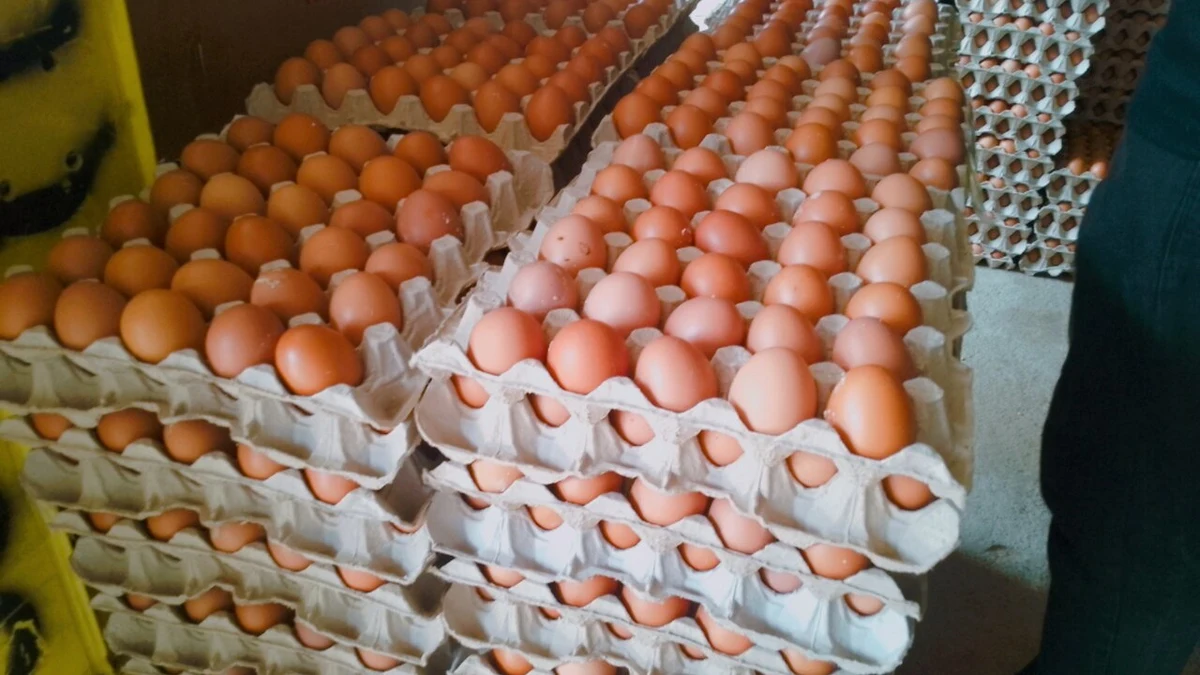
In wholesale trade parlance across Yeshwanthpur APMC, Kalasipalya, KR Market, and Hoskote egg depots, brokers quote the basic "egg ret" (market phonetic spelling for egg rate) per 100 pieces, while retail buyers purchase by the 30-egg paper pulp tray, dozen (12 eggs), 6-egg blister pack, or single egg piece. Large institutional bakeries and catering contractors buy in standard 210-egg master cartons known as a commercial peti (seven 30-egg trays stacked inside a corrugated carton).
| Commercial Unit / Pack Size | Egg Count | NECC Farmgate / Wholesale (Rs) | Bengaluru Semi-Wholesale (Rs) | Bengaluru Retail Price (Rs) |
|---|---|---|---|---|
| 1 Egg Piece (White Commercial) | 1 Egg | Rs 5.45 - Rs 5.85 | Rs 5.85 - Rs 6.25 | Rs 6.50 - Rs 7.50 |
| Half-Dozen Pack (6 Eggs) | 6 Eggs | Rs 32.70 - Rs 35.10 | Rs 35.10 - Rs 37.50 | Rs 40.00 - Rs 46.00 |
| One Dozen (12 Eggs) | 12 Eggs | Rs 65.40 - Rs 70.20 | Rs 70.20 - Rs 75.00 | Rs 78.00 - Rs 90.00 |
| Standard Pulp Tray (1 Tray) | 30 Eggs (5 × 6) | Rs 163.50 - Rs 175.50 | Rs 175.50 - Rs 187.50 | Rs 195.00 - Rs 225.00 |
| Wholesale Benchmark Lot | 100 Eggs | Rs 545.00 - Rs 585.00 | Rs 585.00 - Rs 625.00 | Rs 650.00 - Rs 750.00 |
| Small Commercial Box | 180 Eggs (6 Trays) | Rs 981.00 - Rs 1,053.00 | Rs 1,053.00 - Rs 1,125.00 | Rs 1,170.00 - Rs 1,350.00 |
| Standard Master Peti | 210 Eggs (7 Trays) | Rs 1,144.50 - Rs 1,228.50 | Rs 1,228.50 - Rs 1,312.50 | Rs 1,365.00 - Rs 1,575.00 |
| Brown / Enriched Egg (Retail Pack) | 1 Egg | Rs 8.20 - Rs 9.50 | Rs 9.20 - Rs 10.50 | Rs 10.50 - Rs 14.00 |
| Desi / Country (Nati) Egg | 1 Egg | Rs 9.50 - Rs 11.50 | Rs 10.50 - Rs 12.50 | Rs 12.00 - Rs 18.00 |
Source: Indicative wholesale ranges compiled from National Egg Coordination Committee (NECC) Bengaluru Zonal announcements, Karnataka Poultry Farmers and Breeders Association (KPFBA) trade circulars, and Agmarknet retail observations for November 2026. Actual daily cash billing varies by +/- Rs 0.15 to Rs 0.25 per egg based on egg size (pullet vs standard 52–58 g medium vs jumbo >60 g), shell strength, and buyer payment terms.
2. Bangalore Egg Rate vs Other Major Egg Rates in India (November 2026)
Comparing the egg price in Bangalore against production and consumption centers across India shows how freight distance, local layer bird density, and regional maize prices create distinct geographic price spreads. Because Bengaluru borders major surplus hubs in Kolar, Hosur, and Namakkal (just 250 km south via NH-44), its wholesale rate typically trades closely above the Namakkal base rate and often remains more affordable than distant metropolitan deficit hubs like Delhi egg price or Mumbai.
| City / Poultry Zone | Role in Indian Egg Trade | Indicative 100-Egg NECC Rate (Rs) | Per-Egg Wholesale (Rs) | Spread vs Namakkal Base |
|---|---|---|---|---|
| Namakkal (Tamil Nadu) | Asia’s largest layer production & export hub | Rs 525 - Rs 565 | Rs 5.25 - Rs 5.65 | Benchmark Base (Rs 0.00) |
| Hosapete / Bellary (Karnataka) | Major North Karnataka layer & maize belt | Rs 520 - Rs 555 | Rs 5.20 - Rs 5.55 | -Rs 0.10 to Rs 0.00 |
| Bengaluru (Karnataka) | Primary South metro consumption & Kolar belt hub | Rs 545 - Rs 585 | Rs 5.45 - Rs 5.85 | +Rs 0.20 to +Rs 0.30 |
| Hyderabad (Telangana) | Major Telangana layer production belt | Rs 530 - Rs 568 | Rs 5.30 - Rs 5.68 | +Rs 0.05 to +Rs 0.15 |
| Vijayawada / Chittoor (AP) | Leading Andhra Pradesh egg surplus clusters | Rs 525 - Rs 560 | Rs 5.25 - Rs 5.60 | -Rs 0.05 to +Rs 0.05 |
| Barwala (Haryana) | North India benchmark production center | Rs 540 - Rs 585 | Rs 5.40 - Rs 5.85 | +Rs 0.15 to +Rs 0.25 |
| Delhi / NCR (Ghazipur Mandi) | Largest North India consumer wholesale market | Rs 575 - Rs 625 | Rs 5.75 - Rs 6.25 | +Rs 0.45 to +Rs 0.65 |
| Mumbai / Pune (Maharashtra) | High-freight Western metro & processing hub | Rs 580 - Rs 630 | Rs 5.80 - Rs 6.30 | +Rs 0.50 to +Rs 0.70 |
Source: Cross-zonal indicative NECC wholesale ranges across major production and metro consumption hubs tracked in November 2026. For North Indian production dynamics and interstate rail/truck arbitrage, review our Barwala egg rate today analysis and broad national comparisons in our egg price today India hub.
3. Where Bengaluru’s Eggs Come From: Supply Corridors & Wholesale Hubs
Unlike cities wholly dependent on 1,000-km haulage, Bengaluru enjoys a uniquely resilient dual supply system comprising peri-urban Karnataka layer clusters and overnight express corridor arrivals from Tamil Nadu and Andhra Pradesh. Roughly 55% of Bengaluru’s daily table egg inflow originates within 120 kilometers of Kempegowda International Airport, while 45% arrives nightly via 12-wheel and 16-wheel tarpaulin-covered trucks along National Highway 44 (Hosur–Attibele corridor) and NH-75 (Kolar–Mulbagal highway).
- Kolar & Chikkaballapur Belt (Malur, Bangarapet, Gauribidanur): Supplies crisp white commercial eggs produced on automated California-cage sheds situated along Bengaluru’s eastern rural perimeter, ensuring same-morning freshness.
- Hoskote, Devanahalli & Doddaballapur Sheds: Peri-urban layer farms catering directly to Whitefield, Hebbal, Yelahanka, ITPL institutional kitchens, and airport flight caterers.
- Tumakuru, Ramanagara & Mandya Farms: Western and southern Karnataka poultry clusters feeding Vijayanagar, Kengeri, Mysuru Road, and Kanakapura Road sub-wholesalers.
- Hosur & Krishnagiri (Tamil Nadu Border): Positioned just 40 km south-east of Electronic City; major integrators ship millions of graded eggs into Bommasandra, Madiwala, and Koramangala daily.
- Namakkal & Erode Overnight Trucks: Long-haul trucks depart Namakkal at 8:00 PM after evening NECC billing and unload at Yeshwanthpur APMC, Kalasipalya, and KR Market by 4:30 AM.
- Chittoor & Madanapalle (Andhra Pradesh): Cross-border eastern arrivals stabilizing Bengaluru supplies whenever summer heatwaves depress flock lay percentage across Tamil Nadu.
4. Retail Egg Categories Sold in Bengaluru: White vs Brown vs Nati vs Omega-3
While wholesale markets primarily discover prices for standard commercial white table eggs (laid by White Leghorn strains like BV-300, Hy-Line W-36, and Lohmann LSL), Bengaluru’s affluent urban consumer base exhibits strong demand segmentation across specialty egg categories. Retailers mark up eggs according to packaging overhead, expiry coding, delivery radius, and cold-chain handling.
| Egg Category | Hen Strain / Production System | Avg Weight per Egg | Retail 1 Egg Price (Rs) | Key Consumer Appeal |
|---|---|---|---|---|
| Standard White Table Egg | White Leghorn (BV-300 / Bovans) caged or aviary | 52 - 58 g | Rs 6.50 - Rs 7.50 | Lowest cost per gram of protein; bakery & household staple |
| Brown-Shelled Commercial Egg | Hy-Line Brown / Rhode Island Red crosses | 56 - 62 g | Rs 10.50 - Rs 14.00 | Thicker shell; perceived richer yolk color in urban retail |
| Vitamin-D / Omega-3 Enriched | Flaxseed/algae-fortified balanced layer feed | 54 - 60 g | Rs 11.00 - Rs 15.00 | Branded 6-pack & 10-pack health-conscious urban buyers |
| Cage-Free / Free-Range Eggs | Barn-raised or pasture-access layer flocks | 54 - 60 g | Rs 14.00 - Rs 19.00 | Animal-welfare certified organic grocery channels |
| Desi / Nati Country Egg | Aseel / Kadaknath / Giriraja / Gramapriya backyard | 40 - 48 g | Rs 12.00 - Rs 18.00 | Traditional regional culinary & pediatric nutrition preference |
Source: Retail grocery market structure across Bengaluru supermarkets and state extension observations from Karnataka AHVS, November 2026. Note that from a pure nutritional biochemistry standpoint, standard white and brown commercial eggs deliver virtually identical protein (6.0 to 6.5 g per egg) and amino acid profiles; the price premium on brown and specialty eggs stems from higher feed consumption per bird (brown hens eat 115–125 g feed/day vs 105–112 g/day for white layers) and lower stocking densities.
5. Layer Poultry Economics: How Feed Costs Dictate the Bangalore Egg Rate
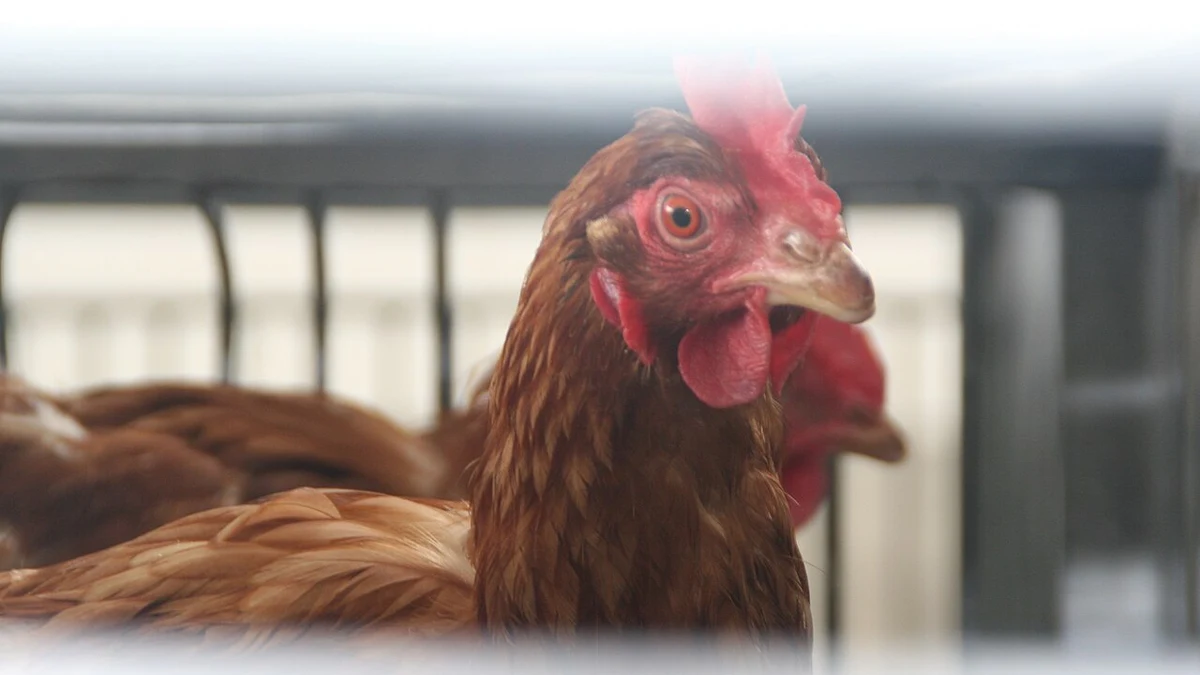
Behind every fluctuation in the Bangalore egg rate lies a tight biological and commodity equation inside Karnataka layer farms. Unlike short-cycle broiler chicken meat (which finishes in 38–42 days), table eggs come from commercial layer hens reared for 18 weeks before laying begins and kept in production until 72–80 weeks of age. Poultry farmers cannot simply "switch off" supply when egg prices dip, because birds must still eat roughly 110 grams of scientifically balanced ration every single day.
According to ICAR-Directorate of Poultry Research nutrition standards and state livestock cost benchmarks, layer feed accounts for 70% to 74% of recurring production costs. Karnataka is one of India’s premier yellow maize producers (Davanagere, Haveri, Belagavi, Koppal), giving local poultry farmers direct access to primary energy grain traded across Karnataka agricultural mandis and monitored via our mandi price watch system. However, ethanol diversion of maize and swings in soybean de-oiled cake (DOC) prices directly lift or squeeze layer profit margins.
| Cost Component | Share of Farm Cost | Typical Cost per Egg (Rs) | Primary Price Driver |
|---|---|---|---|
| Yellow Maize (55%–58% of Ration) | 38% - 41% | Rs 1.75 - Rs 1.95 | Kharif/Rabi maize harvest & ethanol distillery demand |
| Soybean Meal & Protein Concentrates | 23% - 26% | Rs 1.05 - Rs 1.25 | Madhya Pradesh/Maharashtra soya crop & global meal prices |
| Marble Grit, DCP, Vitamins & Amino Acids | 8% - 10% | Rs 0.35 - Rs 0.45 | Feed-grade lysine, methionine & mineral premix tariffs |
| Day-Old Chick & 18-Week Pullet Amortization | 11% - 13% | Rs 0.50 - Rs 0.60 | Pullet rearing feed + Marek’s/Newcastle vaccination cost |
| Farm Labor, Power, Water & Biosecurity | 9% - 11% | Rs 0.42 - Rs 0.50 | Shed electricity, drinker maintenance & litter management |
| Paper Pulp Trays, Mortality & Interest | 4% - 6% | Rs 0.18 - Rs 0.25 | Pulp tray cost (Rs 6–Rs 8/tray) & working capital credit |
| Total Break-Even Farmgate COP | 100% | Rs 4.25 - Rs 5.00 / Egg | Farm profitable when NECC bhav exceeds Rs 5.00/egg |
Source: Farm economics estimates synthesized from Karnataka Poultry Farmers Association inputs, DAHD livestock cost parameters, and ICAR poultry feed norms, November 2026. Farmers evaluating new layer or broiler shed investments should stress-test working capital and feed sensitivity using our interactive poultry profit calculator alongside technical housing guidance on our commercial poultry farming portal and complete poultry farm setup guide.
6. Seasonal Cycle of the Bangalore Egg Rate Across 12 Months
Egg demand in Bengaluru and across India follows predictable meteorological, religious, and school-calendar rhythms even though commercial layer flock output shifts more gradually:
- November to January (Peak Winter Surge): Cooler nights across Bengaluru and northern India trigger heightened consumer protein appetite, Christmas/New Year bakery demand for cakes and pastries rises sharply, and daily NECC rates hit annual highs of Rs 5.45 to Rs 6.10+ per egg.
- February to March (Spring Moderation): As ambient afternoon temperatures climb across Karnataka and school examination schedules shift household routines, wholesale bhavs gradually soften by Rs 0.40 to Rs 0.70 per egg.
- April to June (Early Summer Correction & Heat Dip): High temperatures reduce household egg consumption during peak heat, though severe heat stress in non-evaporative sheds drops hen lay rates by 3% to 6% and shrinks average egg weight, preventing extreme price collapses.
- July to August (Shravan / Monsoon Restraint): Traditional vegetarian fasting periods during Shravan and Ashada months dampen urban table demand while excess rain raises logistics breakage; rates often test seasonal lows near cost of production.
- September to October (School Midday Meals & Festive Rebound): Resumption of full-scale Karnataka school nutrition schemes (Ksheera Bhagya / mid-day egg supplements), institutional IT office reopening, and post-fasting recovery lift wholesale rates smoothly into November.
7. Practical Checklist for Egg Traders, Caterers & Layer Farmers in Bengaluru
Whether you operate a 25,000-bird automated shed near Chikkaballapur or procure 50 petis daily for a central Bengaluru cloud kitchen, applying disciplined quality grading and financial hedging protects annual profits:
- Verify Egg Weight Class Before Invoicing: Standard Grade-A commercial table eggs weigh 52–58 grams (roughly 11.2 to 12.1 kg net per 210-egg peti). Lighter pullet eggs (42–48 g) from newly laying 20-week flocks trade at a Rs 0.40–Rs 0.60/egg discount.
- Inspect Transport Breakage & Tray Quality: Require fresh dry 5×6 pulp trays with reinforced corner cushions during monsoon months to limit cracked-egg losses under 1.5% along the Hosur–Bengaluru or Kolar highways.
- Monitor Export Pull via APEDA: Fresh table egg container shipments to UAE, Oman, and Maldives tracked through the Agricultural & Processed Food Products Export Development Authority (APEDA) absorb millions of surplus Namakkal eggs weekly; whenever Gulf export vessels load heavily, Bengaluru rates tighten rapidly within 48 hours.
- Leverage Government Credit & Subsidy Schemes: Eligible Karnataka poultry entrepreneurs can reduce working capital interest using Kisan Credit Card (KCC) animal husbandry loans, calculate livestock infrastructure grants via our farm subsidy calculator, explore central Poultry Venture Capital Fund norms via government agricultural schemes, and check credit guidelines on NABARD. Keeping AgriStack Farmer ID enrollment and poultry shed registration updated also streamlines biosecurity and state compensation claims.
Frequently asked questions
- What is the Bangalore egg rate today for 1 egg, 30-egg tray, 100 eggs, and 1 peti?
- Under indicative NECC Bengaluru Zonal wholesale benchmarks in November 2026, 1 commercial white egg trades at Rs 5.45 to Rs 5.85 wholesale (Rs 6.50–Rs 7.50 retail), 100 eggs trade at Rs 545 to Rs 585, a 30-egg pulp tray wholesales at Rs 163.50 to Rs 175.50 (Rs 195–Rs 225 retail), and a 210-egg master peti trades at Rs 1,144.50 to Rs 1,228.50 wholesale.
- How many eggs are in 1 peti in Bangalore wholesale markets?
- A standard commercial peti (master carton) across Bengaluru, Yeshwanthpur, and Namakkal egg markets contains 210 eggs, packed as 7 stacked 30-egg paper pulp trays. Smaller local institutional boxes occasionally carry 180 eggs (6 trays), so always confirm tray count on invoice bills.
- Why is the egg price in Bangalore slightly higher than Namakkal egg rate?
- Bengaluru sits roughly 250 km north of Namakkal, India’s primary layer hub, requiring overnight truck freight, highway tolls, loading/unloading wages, and a 1.5%–2.0% transit breakage allowance. Consequently, the Bangalore wholesale bhav usually includes a Rs 0.20 to Rs 0.35 per egg freight spread over the Namakkal egg rate.
- What is the retail price of 1 egg in Bangalore supermarkets vs local shops?
- Local Bengaluru kirana shops typically retail single loose white table eggs at Rs 6.50 to Rs 7.50 each (Rs 78–Rs 90 per dozen), whereas modern supermarkets, packaged brands, and quick-commerce apps price graded, expiry-stamped 6-packs and 30-trays between Rs 7.50 and Rs 9.50 per egg due to branding, plastic/carton trays, and dark-store delivery costs.
- Which areas supply fresh eggs to Bangalore every morning?
- Around 55% of Bengaluru’s supply comes from nearby Karnataka poultry hubs in Kolar, Chikkaballapur, Hoskote, Devanahalli, Tumakuru, and Ramanagara, while the remaining 45% enters overnight via NH-44 from Hosur, Krishnagiri, Namakkal, and Chittoor (AP). Check daily arrivals via our Karnataka mandi rates hub.
- What is the price of brown and desi (nati) eggs in Bangalore?
- In Bengaluru retail channels, commercial brown-shelled eggs average Rs 10.50 to Rs 14.00 per egg, vitamin/omega-3 enriched branded eggs cost Rs 11.00 to Rs 15.00 each, and authentic backyard free-range desi (nati) country eggs sell for Rs 12.00 to Rs 18.00 per piece depending on sourcing.
- What is the farm production cost per egg for Karnataka poultry farmers?
- At prevailing yellow maize and soybean meal prices in Karnataka, commercial layer feed makes up roughly 72% of farm expenses, putting total break-even production cost at Rs 4.25 to Rs 5.00 per egg. Model bird capacity and feed conversions precisely with our poultry profit calculator.
- When do egg rates drop or rise the most during the year in India?
- Egg prices across India typically peak between November and January due to winter nutrition demand and festive baking, then soften gradually between March and August during peak summer heat and Shravan fasting periods before rebounding cleanly in September–October.
- At what time does NECC announce the daily Bangalore egg rate?
- NECC zonal committees coordinate market supply positions in the late afternoon and release updated suggested farmgate selling rates daily around 5:00 PM to 6:30 PM IST, setting wholesale clearing rates for evening loading and next-morning Bengaluru retail deliveries.
- Can poultry farmers in Karnataka get KCC loans or subsidies for layer farms?
- Yes. Under DAHD and RBI Animal Husbandry KCC norms, eligible Karnataka poultry farmers can avail subsidized Kisan Credit Card working capital for feed and chicks alongside NABARD-backed NLM capital subsidies. Calculate loan limits using our KCC loan calculator.
- How long do fresh white eggs remain good in Bangalore’s weather without a fridge?
- Bengaluru’s mild highland climate (20°C–29°C most months) lets unwashed Grade-A eggs stay fresh for 10 to 14 days in a cool, dark ventilated kitchen pantry, though storing eggs pointed-end down inside a refrigerator (4°C–7°C) preserves peak albumen thickness for 4 to 5 weeks.
- Why does Agmarknet show fewer egg arrivals compared to NECC daily prices?
- While Agmarknet tracks notified APMC agricultural mandis where fruits, vegetables, and grains auction, commercial eggs largely move directly from integrated layer farms to city wholesale depots under NECC zonal coordination, making NECC bulletins the primary price benchmark for poultry trade.
This article is for general information only and is not financial advice. Loan and scheme eligibility depends on partner and government criteria.