Anda Ka Rate Today in India: Wholesale Tray & Peti Prices
Key takeaways
- Checking anda ka rate today in India requires reading National Egg Coordination Committee (NECC) wholesale farm-gate quotes per 100 eggs alongside 30-egg tray and 210-egg peti (7-tray carton) conversions.
- Indicative wholesale bands hover near Rs 545–Rs 615 per 100 eggs in southern production centers like Namakkal (Rs 164–185/tray; ~Rs 1,145–1,290/peti) and Rs 590–Rs 685 per 100 eggs in North/East consumption hubs like Delhi, UP, Bihar, and Kolkata.
- Because poultry layer feed combines ~55% yellow maize and ~25% soybean DOC meal, summer vs winter egg rate spikes directly mirror maize/soya feed prices plus November–January north-Indian peak demand.
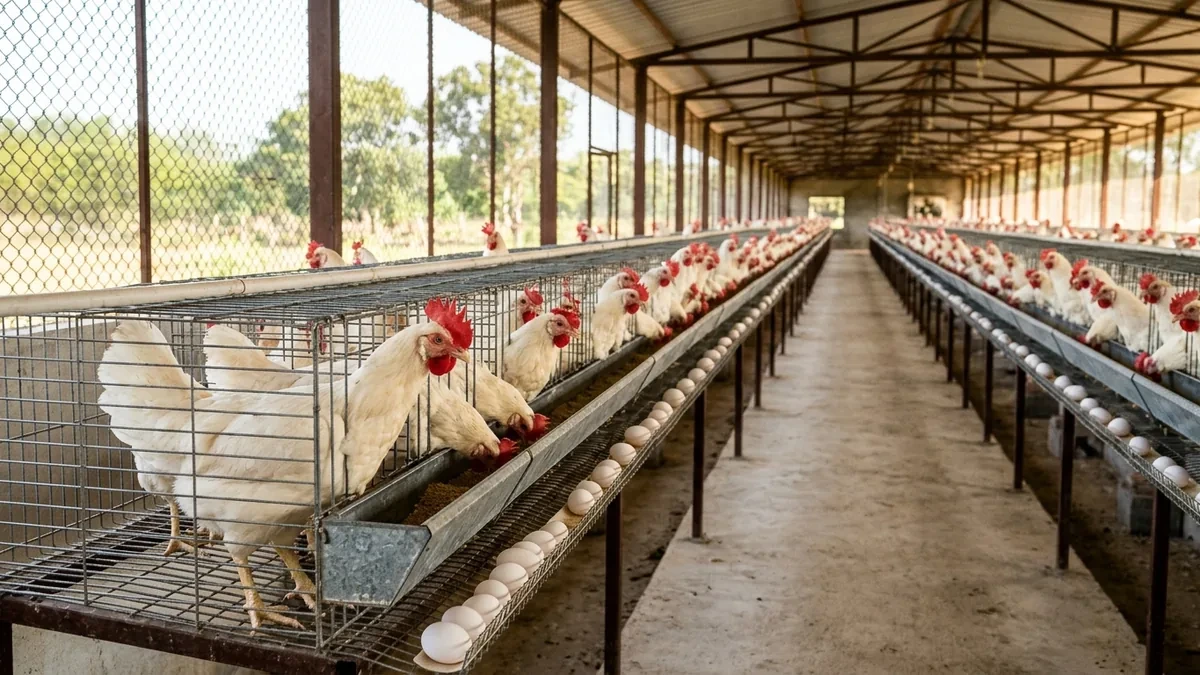
Searching anda ka rate (aaj ka anda ka bhav) every morning connects millions of Indian egg farmers, wholesale Kirana traders, bakery buyers, and street cart vendors to one central pricing rhythm: the National Egg Coordination Committee (NECC) daily wholesale rate board! Whether you are trading 210-egg peti boxes inside Delhi’s Ghazipur mandi, checking 30-egg karet trays across UP and Bihar mandis, or benchmarking truckloads leaving Namakkal (Tamil Nadu) and Barwala (Haryana), converting between 1 piece, 30-egg tray, 100 eggs, and 210-egg peti cleanly prevents margin leaks at local wholesale weighments.
Wait—why does one 30-egg tray cost Rs 180 in Andhra or Tamil Nadu production sheds while selling simultaneously for Rs 205–Rs 225 retail inside North Indian winter colonies? Diesel refrigerated freight, fragile shell breakage buffers, middlemen trader margins, and cool weather consumption booms explain the whole spread! Let us review regional NECC price bands (e2necc.com), layer farm profitability backed by Department of Animal Husbandry & Dairying (DAHD) data, and feed cost hedging clearly.
1. Aaj Ka Anda Ka Rate: Wholesale Tray (30) & Peti (210) Price Conversion Table
Note that NECC quotes base farm-gate wholesale rates per 100 eggs cleanly every trading evening—retail kirana shops and street carts add local packaging, paper pulp tray costs, and breakage margin (compare detailed metro hubs in Delhi, Chennai, Hyderabad & Kolkata):
| Regional Hub / Egg Zone | 100-Egg NECC Wholesale Band | 30-Egg Tray (Karet) Value | 210-Egg Peti (7 Trays) & Market Role |
|---|---|---|---|
| Namakkal (Tamil Nadu Hub) | Rs 545 – Rs 615 / 100 eggs | Rs 164 – Rs 185 / tray | Rs 1,145 – Rs 1,292 / peti — South India base farm export setter |
| Barwala / Ajmer (North Supply) | Rs 565 – Rs 640 / 100 eggs | Rs 170 – Rs 192 / tray | Rs 1,187 – Rs 1,344 / peti — Feeds Delhi NCR, Haryana, Punjab & Rajasthan |
| Hyderabad / Vijayawada (AP–TS) | Rs 555 – Rs 625 / 100 eggs | Rs 167 – Rs 188 / tray | Rs 1,165 – Rs 1,313 / peti — National core surplus layer cluster |
| Delhi Ghazipur / UP–Bihar Mandi | Rs 590 – Rs 665 / 100 eggs | Rs 177 – Rs 200 / tray | Rs 1,239 – Rs 1,397 / peti — Winter North consumption demand driver |
| Mumbai / Pune CC Wholesale | Rs 595 – Rs 675 / 100 eggs | Rs 179 – Rs 203 / tray | Rs 1,250 – Rs 1,418 / peti — Metro hospitality & western retail corridor |
| Kolkata / East Zone Wholesale | Rs 630 – Rs 685 / 100 eggs | Rs 189 – Rs 206 / tray | Rs 1,323 – Rs 1,439 / peti — Includes inter-state freight parity from AP/TS |
2. How to Calculate Tray vs Peti vs 1-Egg Retail Price Instantly
Small kirana shopkeepers, hostel contractors, and poultry unit supervisors simplify morning quotes cleanly using three crisp conversion numbers:
- 1 Egg Wholesale Base: Divide the 100-egg NECC price simply by 100 (e.g., if NECC declares Rs 600, single farm egg = Rs 6.00).
- 30-Egg Tray (Ek Karet = 30 Eggs): Multiply the 1-egg price by 30 and add ~Rs 6–Rs 12 for crisp grey paper pulp tray cost + local cycle transport (30 × Rs 6.00 = Rs 180 farm base, commonly retailing ~Rs 195–Rs 215/tray!).
- 210-Egg Peti (Ek Peti = 7 Trays × 30 Eggs = 210 Eggs): Multiply single-egg wholesale price cleanly by 210 (e.g., 210 × Rs 6.00 = Rs 1,260/peti) plus corrugated carton box cost!
3. Why Egg Prices Crash in April–June Yet Jump High in November–January
Unlike staple wheat grains safely stacked inside godowns (wheat storage norms), delicate raw eggs cannot sit idle 6 months waiting for rallies—meaning seasonal consumption surges dictate price swings sharply:
- Winter Peak (November to February): Cold mornings boost everyday Indian demand for boiled eggs, anda bhurji, omelette stalls, and cakes—while simultaneously Shravan fasting ends and school winter nutrition schedules run full blast, pushing rates smoothly upward.
- Summer Slump + Shravan/Navratri Fasting Dip: Blistering 42°C May heat depresses household kitchen appetite AND shortens warm shelf stability—though ironically fierce heatwaves simultaneously curb hen laying output by 6%–10% unless farms deploy evaporative cooling pads!
- Maize & Soybean DOC Feed Inflation Floor: Because layer hens consume ~110 grams daily feed comprised roughly 55% yellow maize + 25% soybean meal, whenever maize prices jump past Rs 2,500/qtl or soybean DOC rallies, layer farm breakeven cost climbs past Rs 4.80–Rs 5.10/egg, preventing prolonged price drops below farmer costs!

4. Commercial Layer Poultry Farming Cost, NLM Subsidy & Feed Math
Operating a clean 5,000-to-10,000 bird layer unit (ICAR-Central Avian Research Institute / CARI Izatnagar standards) transforms maize farmers and rural entrepreneurs into daily cash-flow generators! Commercial White Leghorn layers lay 305 to 315 eggs per hen across a 72-week cycle (~88% peak lay rate), provided farms control three levers cleanly: strict Ranikhet / Marek’s / IBD vaccination discipline, cool clean drinking water pipelines, and bulk harvest-season stocking of dry <14% moisture maize!
Simulate poultry unit unit margins cleanly on our poultry profit calculator and farm ROI calculator, check National Livestock Mission (NLM) / NABARD poultry shed & hatchery subsidies (DAHD schemes) via our agri subsidy calculator & central schemes hub, fund working corn/DOC feed purchases via our poultry KCC loan calculator, compare regional markets including Namakkal egg rates, Delhi rates, national egg market trends & Ghazipur market dynamics, review livestock protection via livestock insurance guides & dairy economics, check grain input prices on mandi rates, and complete Farmer ID enrollment cleanly.
5. White Eggs vs Brown Desi Eggs: Why Desi Kadaknath / Sonali Fetches Double
Look closely at urban quick-commerce shelves and rural weekly haats: while uniform commercial white eggs hold the staple Rs 6–Rs 7/egg wholesale market, free-range brown / Desi eggs from dual-purpose breeds like Kuroiler, Gramapriya, Vanaraja, Kadaknath, or Sonali command Rs 10 to Rs 18 per egg retail! Backed by ICAR-CARI & NABARD backyard rural poultry clusters, raising 200–500 hardy low-mortality backyard birds foraging green kitchen waste + broken millet alongside 30% balanced mash creates a resilient side-income loop immune to 10-lakh corporate cage price crushes.
6. Freshness Testing, Monsoon Mold Guarding & Shell Weight Norms
Even freshly laid clean eggs degrade quickly inside hot poorly ventilated wholesale backrooms! Store wholesale petis inside cool shaded ventilated spaces (<18°C–22°C, zero direct sunlight), stack max 6 corrugated boxes high preventing lower tray cracks, keep eggs cleanly unwashed BEFORE cold-chain dispatch (washing scrubs natural antibacterial cuticle bloom off porous shells unless promptly chilled and sanitized!), and source crisp uniform 54–58 gram Grade-A table lots verified cleanly across Agmarknet / APMC regulated wholesale stalls.
Looking closely at packaging hygiene across North Indian winter mandis reveals why veteran wholesale dealers now pay Rs 10 to Rs 18 extra per peti for fresh uniform virgin pulp trays wrapped cleanly inside dry ventilated cartons! Reusing damp, blood-stained, or dirty cracked second-hand pulp trays spreads bacterial Salmonella and fungal black blotches across clean eggs inside 72 hours while also risking deadly Newcastle / Avian Influenza farm biosecurity leaks back onto poultry vehicles. Keeping layer sheds sealed neatly behind disinfectant wheel-dip gates, feeding balanced calcium shell grit every afternoon between 4 PM and 6 PM when hens calcify next morning shells, and timing daily tray collection cleanly twice a morning delivers firm glossy eggs surviving 1,200-km highway transport intact cleanly. Smart layer integrators also monitor monthly maize-soybean mash formulation shifts right after Diwali harvests, buying sun-dried <13.5% moisture Kharif grain directly from FPO sheds cleanly during October–December troughs to lock predictable feed conversions (1.45–1.55 kg feed per dozen eggs) even when wholesale egg charts temporarily soften.
Frequently asked questions
- What is the wholesale anda ka rate (1 egg, tray, peti) in India today?
- Across wholesale poultry hubs anchored by NECC quotes, bulk egg prices indicatively range around Rs 545–Rs 685 per 100 eggs (Rs 5.45–Rs 6.85 per egg), translating roughly to Rs 164–Rs 206 per 30-egg tray and Rs 1,145–Rs 1,439 per 210-egg peti depending on city transport parity.
- How many eggs come in 1 peti and 1 tray (karet) in Indian markets?
- Standard wholesale packaging in India puts 30 eggs in 1 pulp tray (karet) and packs 7 trays cleanly inside 1 corrugated peti carton, totaling exactly 210 eggs per peti.
- Which city in India sets the national benchmark for daily egg prices?
- Namakkal (Tamil Nadu) and Barwala (Haryana) act alongside Hyderabad/Vijayawada as India’s key price-setting production belts published daily by NECC—compare city spreads via our Namakkal egg benchmark guide.
- Why does 1 tray retail price differ Rs 20–35 from farmer wholesale price?
- Pulp tray costs, inter-state insulated truck freight (especially AP/TN to North/East India), shell crack risk allowances, and urban retailer overheads add roughly Rs 0.60 to Rs 1.20 per egg onto base farm quotes.
- What makes winter egg prices higher than hot summer April–June months?
- Cool November–February temperatures trigger peak household, bakery, and street-stall demand nationwide, whereas hot May–June fasting festivals curb household buying—check seasonal cost buffers via our poultry profit calculator.
- Are bank loans and government subsidies available for layer egg farms?
- Yes! Both commercial poultry sheds and rural backyard hatcheries qualify for DAHD / National Livestock Mission support plus 4% working capital Kisan Credit Cards (KCC) (calculate livestock KCC terms).
- How many eggs does a commercial White Leghorn hen lay in one year?
- Under clean balanced ICAR-CARI mash formulations and strict lighting schedules, commercial hybrids average 305 to 315 clean eggs per laying hen over a standard 72-week laying cycle.
- Why do brown Desi eggs cost Rs 12–18 per piece compared to Rs 7 white eggs?
- Hardy backyard/free-range breeds (Sonali, Gramapriya, Kadaknath) lay roughly 140–210 eggs/year (far fewer than 310+ commercial White Leghorns) and eat higher organic greens—creating limited specialty supply commanding steep premiums.
- Does maize price directly affect daily wholesale egg rates?
- Yes! Maize makes up ~55% of commercial poultry mash alongside soybean DOC (~25%), so sudden jumps in national maize prices push layer production costs directly upward.
- How long do unrefrigerated fresh farm eggs remain safe at room temperature?
- Dry unwashed clean shells stored in shaded breathable trays (<24°C) stay crisp for 7 to 10 days comfortably, extending past 30–40 days safely inside chilled 4°C supermarket coolers.
- How can household shoppers quickly verify egg freshness without cracking?
- Perform a quick cold-water bowl float check: fresh firm eggs sink flat horizontally onto the bowl bottom, 1–2 week eggs tilt slightly upward cleanly, while old spoiled air-filled eggs float directly to the surface!
- Is there any difference in protein between white and brown chicken eggs?
- Chemically and nutritionally, white and standard cage-fed brown eggs pack virtually identical ~6–6.5 grams high-quality complete protein, vitamins, and amino acids—shell pigment stems strictly from hen breed genetics!
This article is for general information only and is not financial advice. Loan and scheme eligibility depends on partner and government criteria.