Gehun Ka Bhav 2026: Statutory Wheat MSP & Mandi Rates Guide
Key takeaways
- Official Government Wheat MSP: ₹2,585/quintal (RMS 2026–27) advancing cleanly to ₹2,610/quintal (RMS 2027–28) per PIB / CACP notifications.
- Varietal Price Ladder Matters: Premium golden MP Sharbati (Sehore/Vidisha/Ashoknagar) and bold clean Lokwan routinely draw private bids above common Dara FAQ grain.
- 12% Moisture & Clean Sieve Norm: Wet premature combine grain >13%–14% moisture or dusty un-winnowed heaps suffer automatic buyer deductions across both MSP centres and private mills.
- Verify State Bonus & e-Uparjan Windows: Register plots ahead of harvest deadlines inside MP e-Uparjan, UP FCS, or Rajasthan e-Mandi portals for guaranteed MSP safety nets.
- Check e-NAM & Agmarknet Before Dispatching: Inspect district arrivals and modal prices across three neighbouring yards before hiring tractor transport.
Checking accurate gehun ka bhav (gehu bhav today / gehu ka ret) across Madhya Pradesh, Uttar Pradesh, Rajasthan, Bihar, and Haryana starts cleanly with India’s statutory Minimum Support Price (MSP) floor alongside private varietal grading premiums. Per Cabinet decisions announced via PIB (pib.gov.in) and the Commission for Agricultural Costs and Prices (CACP), official wheat MSP stands at ₹2,585 per quintal for Rabi Marketing Season (RMS) 2026–27 and rises to ₹2,610 per quintal for RMS 2027–28. Meanwhile open-market APMC yards tracked on Agmarknet and e-NAM differentiate sharply between bold shiny MP Sharbati & Malavraj, clean milling Lokwan & GW-322, and common fair average quality (FAQ) Dara wheat lots.
Notice how private mandi bids jump or soften daily across Indore, Sehore, Vidisha, Kota, Baran, Kanpur, Hardoi, and Karnal based on millers’ extraction quality, 12% grain moisture compliance, and truck arrival congestion rather than flat headlines. Cross-check regional wheat rates simultaneously via KisanPe Live Mandi Rates, compare nearby yards with Best Mandi Near Me, and explore complementary guides in Gehu Ka Bhav, Punjab Wheat Rate, and Maida & Roller Flour Pricing.
Statutory CACP Wheat MSP (RMS 2026–28) vs MP, UP & Rajasthan open mandi grades
Farmers tracking gehun ka bhav across the Hindi heartland navigate two complementary marketing channels every March–May harvest window: guaranteed statutory MSP procurement operated by FCI and state civil supply corporations (MP State Civil Supplies, UP Food & Civil Supplies, Rajasthan Rajfed), alongside competitive private open APMC auctions feeding roller flour mills, biscuit factories, and wholesale chakki atta traders.
At ₹2,585/quintal (RMS 2026–27) stepping to ₹2,610/quintal (RMS 2027–28), central MSP puts a hard statutory floor underneath clean Fair Average Quality (FAQ) wheat (pib.gov.in). Above that baseline, specialized culinary grain grades command distinct private trader appetite—most notably Sehore / Vidisha GI Sharbati wheat, bold amber Lokwan & GW-322, and high-protein MP Tukda / Sujata harvested on dry black Vertisols versus irrigated soft alluvial Dara grades across western UP and Bihar. Compare state procurement specifics cleanly across Madhya Pradesh Mandis, Punjab Hubs, and KisanPe Wheat Portal.
| Wheat Classification / Procurement Channel | Price / MSP Structure | Defining Physical Quality Standards |
|---|---|---|
| Central Statutory MSP (RMS 2026–27 / 2027–28) | ₹2,585/qtl (2026–27) | ₹2,610/qtl (2027–28) | FAQ ≤12% moisture, ≤0.75% foreign matter, ≤2% broken/shriveled |
| MP Sharbati & Malavraj Premium Lots | Open Auction (typically above MSP floor) | Translucent golden bold lustre, sweet chapati flour & rain-fed dry aroma |
| Bold Lokwan, GW-322 & HI-1544 Milling Grades | Tracked Daily on Agmarknet / e-NAM | Uniform heavy hectolitre grain weight (>76–78 kg/hl) desired by mills |
| Dara / Standard Irrigated Alluvial FAQ | Moves tightly near MSP / roller mill parity | Clean bright golden grain with zero black tip or fungal mustiness |
How to read Agmarknet & e-NAM modal gehu mandi rate before booking transport
Checking mobile price alerts haphazardly often traps growers into chasing headline Maximum auction bids earned by tiny hand-sorted Sharbati seed heaps rather than genuine Modal (सामान्य/मॉडल) prices. Before paying ₹1,200–₹2,500 on trolley diesel, spend two minutes verifying Agmarknet (agmarknet.gov.in) and e-NAM arrival trends across your district plus two surrounding mandis (e.g. Indore vs Dewas vs Ujjain or Kanpur vs Unnao vs Hardoi).
Note closely how morning arrival volume moves auction psychology: when 30,000+ bags choke shed yards right before forecasted unseasonal April rain alerts (KisanPe Weather Advisory), local vyapari buyers shade bids down quickly; holding clean 11%–12% moisture bags safely under tarpaulins two extra days frequently restores modal parity! Use Mandi Intelligence and Best Mandi Near Me to weigh transport freight precisely against neighbouring mandi differentials.
- Run Dual-Fan Cleaning at Threshing: Separating chaff straw (bhusa) and shrivelled black-tip kernels smoothly using properly adjusted thresher blower screens regularly adds ₹80–₹150/qtl at auction!
- Target ≤11.5% Moisture Before Sealing Bags: Over-damp grain loses shine and attracts heating losses.
- Check State Registration Closing Dates Early: Upload Bhulekh Khasra records accurately inside state procurement portals (e-Uparjan, UP FCS, Meri Fasal) long before April cut-off bells.
Why combine harvesters, black-point rain damage & storage pests cut grain rates
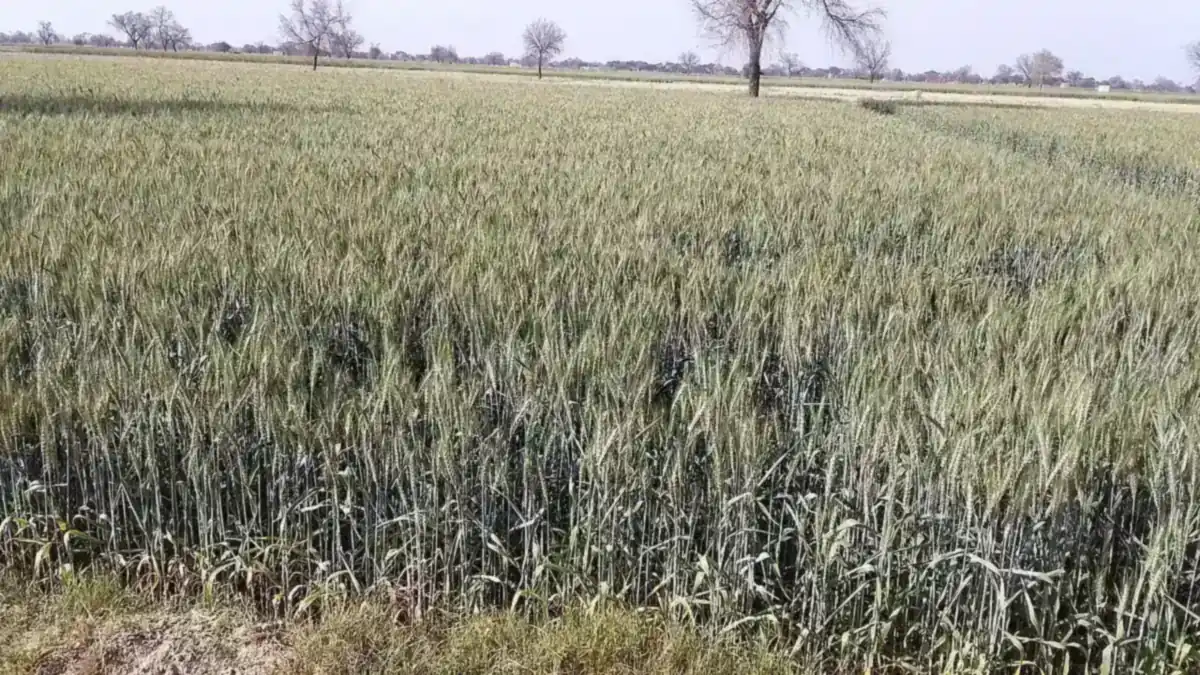
Three common physical defects force sharp discounts inside north and central Indian grain markets even during tight supply years: first, black-point fungal spotting & bleached white lustre loss triggered by unseasonal March/April showers hitting standing ripe wheat crops; second, excessive split & broken grain (>3%–4%) bruised inside high-RPM harvester combine drums running on overly brittle afternoon grain; and third, live storage weevil (ghun / khapra) damage inside humid poorly sealed monsoon sheds.
Safeguard high hectolitre grain weight across late March grain filling by guarding flag leaves from warm terminal stress (Quantis Heat Care) and leaf rusts (Rust of Wheat Management), store dry 10% moisture wheat cleanly off bare walls inside woven sacks, and explore WDRA e-NWR godown pledges rather than panic selling. Compare market economics with Crop Income Calculator and review allied wheat flour economics on Maida Price India Guide.
Calculating true net income across procurement bonus, bhusa fodder & KCC credit
Smart farmers balance clean wheat grain revenues alongside valuable dry dairy cattle bhusa straw recovered per acre via straw reapers, compare seasonal input payback cleanly against alternate Rabi crops like Mustard (Sarson) and Gram (Chana), fund smooth sowing operations via subsidized KCC Credit Limits, and safeguard harvests cleanly under PMFBY Crop Insurance. Always retain official printed APMC auction receipts and bank UTR settlement confirmations cleanly across every season.
Understanding FAQ moisture ceilings, lustre loss relaxation & MP Sharbati vs Lokwan premiums
Understanding exactly why two neighbouring farm trolleys inside Sehore, Indore, Kota, or Khanna grain mandis fetch ₹200 to ₹1,100 per quintal difference starts with FAQ procurement metrics governed by DFPD and state procurement boards alongside Agmarknet price dissemination. For Rabi Marketing Season (RMS) 2026–27 (MSP ₹2,585/qtl) and announced RMS 2027–28 (₹2,610/qtl verified via CACP), government centers require max 12% grain moisture, ≤0.75% foreign matter, ≤2% damaged grains, and ≤6% shrivelled/broken grains for clean zero-cut MSP settlement.
Whenever untimely March hailstorms bleach wheat skin lustre (lustre loss), state governments petition DFPD for controlled uniform specification relaxations—while private millers actively segregate bold Lokwan, translucent Tukdi, high-protein Durum (Malvi), and prized Sehore Sharbati (Sharbati Wheat Guide) far above base Mill-Quality (Dara) lots. Track nearby markets live inside Indore Mandi Guide, compare UP/Delhi arrivals on Najafgarh Anaj Mandi, and plan regional harvest returns via Wheat Rate in Punjab and Crop Income Calculator.
- Dry Wheat Naturally Before Bagging: Harvesting green-stem combine wheat above 14% moisture causes heating/weevil spoilage inside stored godowns.
- Segregate Clean Variety Heaps: Mixing bold Sharbati with shrivelled mill wheat lowers the entire trolley down to Dara auction parity.
- Track WDRA Pledge Godowns: Accredited warehouses let growers pledge graded wheat against low-cost institutional credit during peak April gluts.
How FPOs & e-NAM digital auctions lower middleman brokerage cuts across Hindi heartland
Farmers selling across MP, UP, Rajasthan, and Bihar should check nearby integrated e-NAM market yards alongside KisanPe AI Mandi Intelligence and Gehu Price Bihar/UP Guide cleanly before accepting premature village trader field offers (khet kharid). Even cleanly factoring ₹35–₹65/qtl tractor-trolley transport, open competitive APMC auction bidding paired with computerized weighbridge tickets and DBT bank settlement routinely outperforms roadside middlemen cleanly.
Across major MP, Rajasthan, and UP procurement cycles, keeping land Khasra-Khatauni crop sowing entries synced cleanly on state portal registries (Girdawari / Meri Fasal Mera Byora / e-Uparjan) weeks before harvest gates open guarantees smooth procurement slot SMS alerts without last-minute Patwari desk rejections. Growers holding bold varietal wheat lots like DBW-187, HI-1544, or HD-2967 clean above 78 kg/hl hectolitre weight should retain laboratory sample slips when targeting roller flour mill contracts directly.
Additionally, pay close attention to storage pest hygiene when holding excess wheat past June: sun-drying cleaned lots until grain temperature cools smoothly under 11.5% moisture and storing inside airtight PUSA bins or double-layered HDPE-lined jute sacks with neem or permitted aluminium phosphide supervision stops storage weevils (Sitophilus oryzae) and khapra beetle damage before festive September–December atta-suji mill demand tightens local supply spreads.
- Save J-Form & Digital Auction Receipts: Official mandi settlement slips establish formal turnover records helpful during institutional KCC limit enhancements.
- Plan Flour Mill Grade Splits Carefully: Evaluate retail maida & atta realizations via Maida Price India Guide before locking seasonal holding schedules.
- Check FCI Open Market Sale Scheme (OMSS) Windows: Periodic FCI reserve stock auctions rapidly cap off-season grain rally ceilings cleanly.
- Track State Procurement Cut-Off Dates: Never miss registration deadlines on e-Kharid, e-Uparjan, or UP Food Civil Supplies farmer portals cleanly ahead of April harvesting.
Regional procurement bonuses, weighbridge fairness & mill-quality wheat grading
Across major trading hubs including Indore, Sehore, Kota, Khanna, Kanpur, and Hapur, regional procurement bonuses, clean moisture meter reading, and segregated bold Sharbati or Lokwan grain grading swing grower realizations by ₹200–₹800 per quintal cleanly. Verifying electronic tare weights on regulated APMC weighbridges and saving official settlement slips lets farming households track real profit margins while unlocking formal institutional credit expansions on KisanPe KCC Calculator and checking seasonal flour demand via Maida Price Guide.
Keeping excess wheat stored in airtight PUSA bins below 11.5% grain moisture avoids late-monsoon insect damage cleanly while letting patient growers capture stronger autumn-winter chakki atta spreads ahead of festive months. Comparing FCI reserve auctions and roller mill buying appetite across adjacent tehsils keeps farmers confident when scheduling lorry loads calmly.
Frequently asked questions
- What is the official government wheat MSP (gehun ka bhav) for 2026-27 and 2027-28?
- Under Cabinet-approved CACP declarations via PIB (pib.gov.in), India’s statutory wheat MSP stands at ₹2,585 per quintal for RMS 2026–27 and rises to ₹2,610 per quintal for RMS 2027–28. Explore varietal rate guides cleanly via All-India Gehu Price Benchmarks.
- Where can farmers check reliable daily gehu mandi rate today online?
- Verify daily arrivals, Minimum, Maximum, and Modal quintal rates across 2,400+ APMCs directly on Agmarknet (agmarknet.gov.in), e-NAM (enam.gov.in), or KisanPe’s Mandi Rates Directory.
- Why does MP Sharbati wheat sell higher than ordinary irrigated Dara wheat?
- Sun-drenched black cotton soils across Sehore, Vidisha, and Ashoknagar grow low-moisture, golden translucent Sharbati wheat prized nationally for soft sweet chapatis—driving eager private mill demand above base Dara rates analyzed on Madhya Pradesh Mandi Hub.
- What moisture limit qualifies wheat for FCI/state MSP centres?
- Official FAQ procurement rules specify a strict maximum ceiling of 12% moisture along with ≤0.75% foreign matter and low damaged/shriveled tolerances. Check drying weather windows on KisanPe Weather Advisory before combining.
- How does gehu rate per kg relate cleanly to mandi quintal quotes?
- Because 1 quintal equals 100 kg, simply divide an APMC Modal quintal rate by 100 (for instance, ₹2,600/qtl equals ₹26.00/kg wholesale uncleaned farmgate grain before flour milling conversion reviewed in Maida Price Guide).
- Does J-Form or MP e-Uparjan slip protect farmers against middleman deductions?
- Yes—statutory portal sales issue verified receipts crediting full MSP directly into Aadhaar-NPCI seeded bank accounts with zero unauthorized broker deductions; check land seeding details in Bhulekh Khasra Guide.
- How much wheat bhusa straw does one acre typically produce alongside grain?
- Irrigated north/central Indian plots typically yield roughly equal dry straw biomass alongside clean grain weight when cut low cleanly—adding substantial dairy fodder income when baled or stored dry.
- Which thresher drum adjustment reduces split broken wheat kernels cleanly?
- Run medium-tight concave clearances paired smoothly with ~750–900 cylinder RPM on crisp dry afternoon wheat stalks detailed in Thresher Tuning Guide.
- When do farmers typically earn better off-season prices by holding dry wheat?
- When April–May harvest surges saturate local yards, storing 10% moisture weevil-free grain cleanly inside WDRA godowns until October–January winter demand often lifts net parity past carrying expenses.
- How does Punjab wheat procurement differ from UP or Rajasthan private auctions?
- Punjab and Haryana feature denser state-funded FCI/agency lifting via J-Forms (85%+ surplus coverage on Punjab Wheat Hub), whereas UP, Bihar, and parts of MP mix private miller auctions alongside state e-procurement registration.
This article is for general information only and is not financial advice. Loan and scheme eligibility depends on partner and government criteria.