Jeera Rate Per Kg: Unjha APMC Pricing, Grades & Conversion
Key takeaways
- Exact Unit Conversion: APMC Agmarknet quotes per 100 kg (divide by 100 for ₹/kg); Gujarat local Unjha auction slips often quote per 20 kg mann (divide by 20 for ₹/kg).
- Zero MSP Coverage: Cumin is a spice crop excluded from the 22 CACP MSP crops—grower margins move solely on Gujarat/Rajasthan harvest tonnage, cold-storage stocks, and export demand.
- Grade Spread Matters Most: Raw uncleaned farm lots (FAQ) trade lower than Bold, 98% Machine Cleaned (MC), 99% Singapore grade, or 99.5% Europe pesticide-compliant sortex cumin.
- Unjha Benchmark Hub: Auction arrivals across Mehsana, Patan, Banaskantha, and Barmer anchor wholesale spot and NCDEX delivery parity nationwide.
- Moisture & Foreign Matter Rule: Keeping moisture below 9% and zero earthen clods eliminates harsh lab weight deductions at Unjha commission agent platforms.
Tracking an accurate jeera rate per kg (jiru price in Gujarati) across Gujarat and Rajasthan starts cleanly with one core market reality: Indian cumin mandis quote auction lots per 20 kg (mann in Gujarat) or per 100 kg (quintal on Agmarknet), and cumin has no statutory government MSP. Benchmark price discovery happens daily at Asia’s largest cumin market, Unjha APMC (Mehsana district, Gujarat), alongside Rajasthan hubs like Jodhpur, Merta City, and Nagaur via Agmarknet (agmarknet.gov.in), e-NAM, and NCDEX JEERAUNJHA/JEERAMINI warehouses.
Converting wholesale APMC quintal quotes directly into ₹ per kg (₹/quintal ÷ 100, or ₹/20 kg mann ÷ 20) stops retail and broker pricing confusion immediately—yet real grower realisation also depends heavily on moisture limits (≤9%–10%), green/immature grain % cuts, and mechanical sortex cleaning charges (98% vs 99.5% Europe export spec). Track nearby APMC spreads on KisanPe Mandi Rates and explore exchange contract delivery specifications in our companion MCX vs NCDEX Jeera Futures explainer.
How to calculate jeera rate per kg accurately from Agmarknet quintal & Gujarat mann quotes
Farmers checking mobile alerts often misread mandi figures because different platforms display different unit weights. National portals like Agmarknet and e-NAM standardise every APMC trade strictly in ₹ per quintal (100 kg), whereas local traders inside Unjha, Gondal, Rajkot, and Halvad mandis call out auction bids per 20 kg Gujarati mann. Meanwhile grocery apps and kirana wholesalers quote cleaned, packaged 1 kg retail rates after adding cleaning, wastage, GST/transport, and packaging margins.
Always translate auction figures back to exact 1 kg farmgate parity using simple arithmetic: take an Agmarknet Modal quintal quote and move the decimal two places left (₹25,000/qtl = ₹250/kg), or divide a Gujarat 20 kg mann quote by 20 (₹5,000/20 kg = ₹250/kg). Check live Gujarat mandi trends via KisanPe Gujarat Markets Hub and compare nearby market yards with Best Mandi Near Me.
| Quotation System / Platform | Standard Quoted Unit | Formula for Exact Rs/Kg Parity | Key Deductions / Cost Layer |
|---|---|---|---|
| Agmarknet / e-NAM APMC Portal | Rs per Quintal (100 kg) | Divide quoted price by 100 | Uncleaned/FAQ farm lot; moisture & foreign-matter test applies |
| Local Unjha / Saurashtra Auction Slip | Rs per Mann (20 kg) | Divide quoted price by 20 | Mandi cess, hamali & arhatiya weighment charges on heap |
| NCDEX Futures (JEERAUNJHA / JEERAMINI) | Rs per Quintal (Ex-Unjha) | Divide futures price by 100 | Excludes GST; requires exchange-grade quality specs |
| Machine-Cleaned / Sortex Retail Wholesale | Rs per Kg (98%–99.5% clean) | Direct per-kg clean spice rate | Reflects 4%–8% cleaning refraction loss + processing + freight |
Why cumin has no government MSP and what drives Unjha seasonal price cycles
Unlike paddy, wheat, gram, and mustard—which fall under the Commission for Agricultural Costs and Prices (CACP) 22-crop statutory MSP procurement umbrella—cumin (Cuminum cyminum) has NO Minimum Support Price (MSP) in India. Consequently, no FCI or state civil supplies agency steps in to buy surplus jeera at a fixed floor when bumper harvests hit Unjha or Jodhpur simultaneously.
Instead, three supply-demand engines move today jeera price sharply between February harvest arrivals and October festival restocking: (1) Total sown acreage and frost/aphid weather spells across Kachchh, Patan, Surendranagar, Jalore, and Nagaur; (2) Export shipments to Bangladesh, the Middle East, Europe, and China through Mundra/Kandla ports; and (3) Cold-storage stockists balancing financing carrying costs against NCDEX futures spreads. Learn spice agronomy tricks that boost grain boldness in Cumin Seeds Guide and Jeera Kheti Hub.
Understanding jeera quality grades: FAQ vs Bold vs Machine-Cleaned Europe export spec
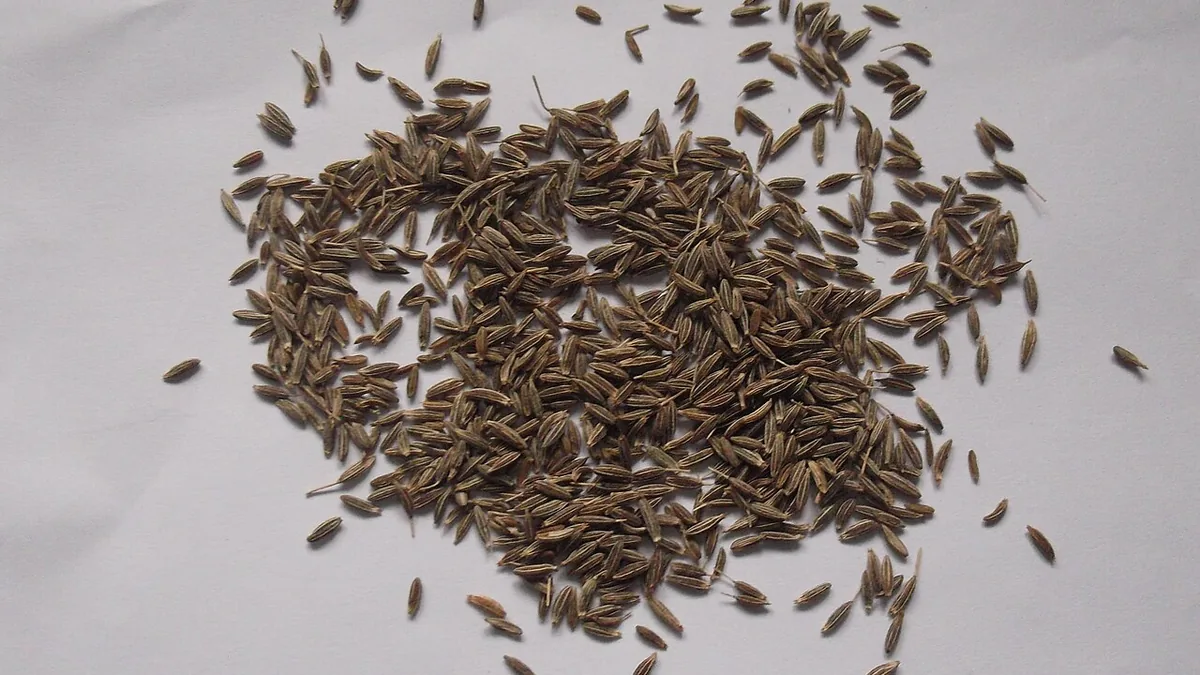
Two farmers arriving at Unjha gate on the very same morning routinely receive ₹35–₹60 per kg apart on identical weight lots purely due to visual seed boldness, chaff % (kचरा), and residue compliance. Standard auctions price heaps across crisp buyer bands: loose raw FAQ (Fair Average Quality) carrying 4%–6% chaff and tiny weed seeds sits at the base; bold plum-grey Eagle / No.1 Farm Quality fetches clean mid-premiums; 98%–99% Machine-Cleaned (MC) Singapore Grade commands commercial export bids; and 99.5% Sortex IPM / Low-Residue Europe Spec tops international buying.
Notice that banned synthetic pesticide residues automatically disqualify lots from European buyer pools, slapping sharp price discounts onto growers who spray unregistered mixes close to flowering! Always follow approved label pre-harvest intervals checked via AI Pesticide Label Reader and store dried threshed sacks cleanly off damp floors.
- Target ≤9% Harvest Moisture: Sun-cure cut jeera bundles cleanly on tarpaulin sheets rather than bare sandy dust, keeping threshing breakage & fungal dark-seed staining low.
- Zero Clay Clods During Harvesting: Cutting cleanly above root collars prevents mud balls matching seed size during gravity cleaning.
- Dual-Screen Pre-Cleaning on Farm: Passing farm heaps through a simple 2-screen blower fan raises net per-kg auction bids far beyond the minimal cleaning cost.
Checking real-time APMC arrivals & hedging storage decisions cleanly
Before booking truck hire from remote Barmer, Jalore, or Banaskantha villages to Unjha or Rajkot, verify live daily arrival bag counts and modal auction bands directly via KisanPe Mandi Intelligence and Mandi Price Trends. Heavy 25,000+ bag morning surges often depress spot cash bids temporarily during peak March–April threshing, whereas splitting sales across April and post-monsoon October—or keeping clean produce inside WDRA-accredited cold/dry godowns against low-interest KCC pledge receipts—lets growers ride out harvest glut dips. Run storage vs spot sale ROI neatly on Crop Income Calculator and review KCC Pledge & Credit Rules.
Warehouse Receipt (e-NWR) pledge finance, moisture preservation & multi-mandi price comparison
Rather than dumping freshly threshed March cumin straight onto congested Unjha APMC auction platforms at seasonal harvest lows, commercial growers across Mehsana, Patan, Banaskantha, and Barmer increasingly lock dried 9% moisture bags inside accredited WDRA godowns to unlock cheap working capital via electronic Negotiable Warehouse Receipts (e-NWR) and extended KCC agricultural pledge credit. Holding stocks smoothly for 4 to 6 months frequently offsets storage rent when monsoon or festive export demand tightens free-market availability.
Track inter-state price differentials across Gujarat vs Rajasthan yards before committing road transport on our Mandi Price Watch and Best Mandi Near Me calculators, compare harvest margins through the Crop Income Calculator, and examine export/exchange delivery quality specs inside Jeera Futures Guide.
- Bag Moisture Cap (<9%): Storing damp seed above 10% moisture triggers musty odour and dark discolouration that disqualifies lots from Singapore/Europe export grades.
- Clean Poly-Lined Woven Bags: Pack graded spice lots into neat new HDPE-lined sacks rather than torn burlap carrying dust or rodent hair.
- Monitor IMD Frost & Rain Warnings: February hail or unseasonal cloudy humidity around cumin flowering causes sudden Unjha volatility—watch KisanPe Weather Advisory closely.
Unjha vs Merta City vs Jodhpur APMC mandi parity & road freight math
For growers spread across Western Rajasthan (Nagaur, Barmer, Jalore, Jodhpur, Pali) and North Gujarat (Mehsana, Patan, Banaskantha), deciding whether to auction freshly threshed cumin locally at Merta City or haul bulk lots interstate into Unjha APMC hinges strictly on clean net-parity arithmetic rather than hearsay top auction quotes. Although Unjha routinely prints flagship daily headlines due to dense international export grading clusters and huge buyer liquidity, state mandi cess structures, highway diesel charges, unloading hamali, and transit weight shrinkage can trim ₹4–₹8 per kg off long-distance truck hauls.
Compare verified modal wholesale readings simultaneously across Gujarat and Rajasthan yards on agmarknet.gov.in, calculate true route economics via Best Mandi Near Me, and weigh regional crop storage timing cleanly using Mandi Price Watch before hiring commercial tempos.
- Check Cleaning & Sortex Margins Locally: Local Rajasthan cleaning plants can upgrade FAQ raw loads into 98% clean bags locally, letting you negotiate directly with Unjha traders on uniform clean weight.
- Beware Unverified Phone Brokers: Never send truckloads on verbal cash assurances without licensed APMC e-auction documentation.
- Review Export Weather Cycles: Watch Turkish, Syrian, and Iranian cumin crop harvest reports mid-summer on commodity trackers alongside Gujarat Market Trends.
Cumin seed quality grading parameters inside e-NAM assaying labs & pesticide compliance
Electronic trading platforms like e-NAM depend heavily on standardized rapid physical lot assaying so distant out-of-state buyers bid confidently without squeezing seed samples personally. Maintaining ≤9% moisture, minimal broken split seed, ≤1.5% foreign chaff, and crisp non-toxic pest intervals checked via our Pesticide Label Reader helps Unjha and Rajasthan cumin lots earn export-grade premium pricing smoothly.
Notice especially how EU, US, and Gulf spice buyers routinely test random export container samples at Mundra and Nhava Sheva ports for traces of prohibited persistent organophosphates or carbendazim metabolites: one contaminated 10-tonne warehouse mix pulls prices down across an entire mandi lot! Storing clean cumin lots in separate labelled grower stacks inside WDRA godowns, tracking winter frost/aphid advisories via KisanPe Weather Hub, and using Crop Income Calculator builds sustainable year-round spice income.
For broader financial, market, and crop-planning continuity alongside jeera rate per kg, farmers across India also consult KisanPe resources including Mandi Market Intelligence Services, Crop Insights Hub, All-India Mandi Bhav Guide, Anaj Mandi Arrival & Auction Guide, Gehu Ka Bhav Commodity Report, Indian Wheat Rate & MSP Guide, Sarso Ka Bhav Market Overview.
- Avoid Mixed Chemical Fumigation Errors: Consult licensed warehouse storage managers cleanly before tablet fumigation inside sealed spice rooms.
- Track International Crop Benchmarks: Late-July Mediterranean/Middle-Eastern export crop deficits typically tighten August–November Unjha festival pricing.
Frequently asked questions
- How do I convert Unjha mandi price into exact jeera rate per kg?
- On Agmarknet (agmarknet.gov.in) and e-NAM, divide the ₹/quintal rate by 100 (e.g., ₹24,000/qtl equals ₹240/kg). In local Unjha auction yards quoting per 20 kg mann, divide the figure by 20 to obtain your raw ₹/kg farm rate.
- Is there a government MSP (Minimum Support Price) for jeera in India?
- No. Cumin (jeera) is excluded from the Central Government’s 22-crop CACP MSP list, meaning farmers rely entirely on open APMC auctions (led by Unjha Gujarat and Jodhpur Rajasthan) and export demand. Track alternate mandi opportunities via KisanPe Mandi Rates.
- Why is retail 1 kg jeera significantly more expensive than Unjha APMC mandi rate?
- APMC farm heaps are raw FAQ spice carrying 4%–8% dust, stems, and shrivelled seed. Upgrading to 99% Machine-Cleaned or 99.5% Sortex retail quality removes weight refraction while adding spiral cleaning, packaging, transport, and GST costs. Compare spot vs futures basis in our Jeera Futures Guide.
- What is cumin called in Gujarati (cumin seeds in gujarati) on mandi slips?
- In Gujarat mandis including Unjha, Gondal, and Rajkot, cumin is officially listed as Jiru / Jeeru (જીરું) and trades commonly in 20 kg mann local lot slabs alongside metric quintal reporting on KisanPe Gujarat Agri Hub.
- Which pesticide practice protects my cumin lot from export rejection?
- Avoid late-stage unapproved sprays after umbel seed filling, respect waiting periods verified through Pesticide Label Reader, and follow clean blight fungicide dosing such as Score (Difenoconazole) strictly within label intervals.
- How can growers reduce post-harvest wastage before reaching Unjha APMC?
- Dry bundles on clean woven HDPE sheets, adjust thresher drum RPM gently to prevent split seeds, winnow light chaff, and maintain ≤9% seed moisture inside airtight bags—checking regional weather delays via KisanPe Weather Advisory.
- What lot size trades on NCDEX Unjha jeera contracts?
- Per NCDEX contract specs (ncdex.com), standard JEERAUNJHA trades in 3 Metric Tonne (MT) lots and JEERAMINI in 1 MT lots on an Ex-Warehouse Unjha basis exclusive of GST.
- Are Rajasthan mandis like Merta City and Jodhpur aligned with Unjha rates?
- Yes. Merta City, Jodhpur, and Nagaur act as major Rajasthan origin yards whose auction rates typically move tightly within regional transport & quality refraction parity relative to Unjha.
- What triggers sharp single-week volatility in today jeera price at Unjha APMC?
- Sudden unseasonal February–March hail or blight clouds in Gujarat/Rajasthan, abrupt Chinese or Middle Eastern festival export buying sprees, and rapid shifts in Unjha morning arrival bag counts drive crisp weekly swings visible on Agmarknet and Mandi Price Trends.
- What is the ideal harvest moisture percentage for highest per-kg jeera realisation?
- Delivering clean dry jeera at 8% to 9% moisture with minimal stalks and green kernels prevents buyer moisture weight cuts and earns crisp bold-grade premiums over damp field-threshed lots.
This article is for general information only and is not financial advice. Loan and scheme eligibility depends on partner and government criteria.