Tilt Fungicide (Propiconazole 25% EC): Uses, Dose & Rate
Key takeaways
- Tilt fungicide contains Propiconazole 25% EC (Emulsifiable Concentrate)—a broad-spectrum systemic FRAC Group 3 triazole fungicide offering preventive, curative, and eradicative disease action.
- Per official CIB&RC approved label claims regulated via ppqs.gov.in, the standard Indian field rate is 500 ml per hectare (~200 ml per acre) for wheat rusts/Karnal bunt, paddy sheath blight, groundnut leaf spots/rust, soybean rust, and cotton leaf spot.
- Notice tea plantations use a lighter 125–250 ml/ha spray window in 175–250 L water specifically to halt destructive Blister Blight across young tea shoots.
- Mandatory Pre-Harvest Intervals (PHI) strictly govern food-safety waiting periods after final Tilt sprays—typically ~30 days for wheat and paddy, and ~15 days for groundnut per approved label instructions.
- Indicative Indian agro-retail prices (November 2026) stand roughly near ₹220–₹295 (100 ml), ₹490–₹640 (250 ml), ₹920–₹1,220 (500 ml), and ₹1,780–₹2,300 per 1-litre pack depending on brand and state taxes.
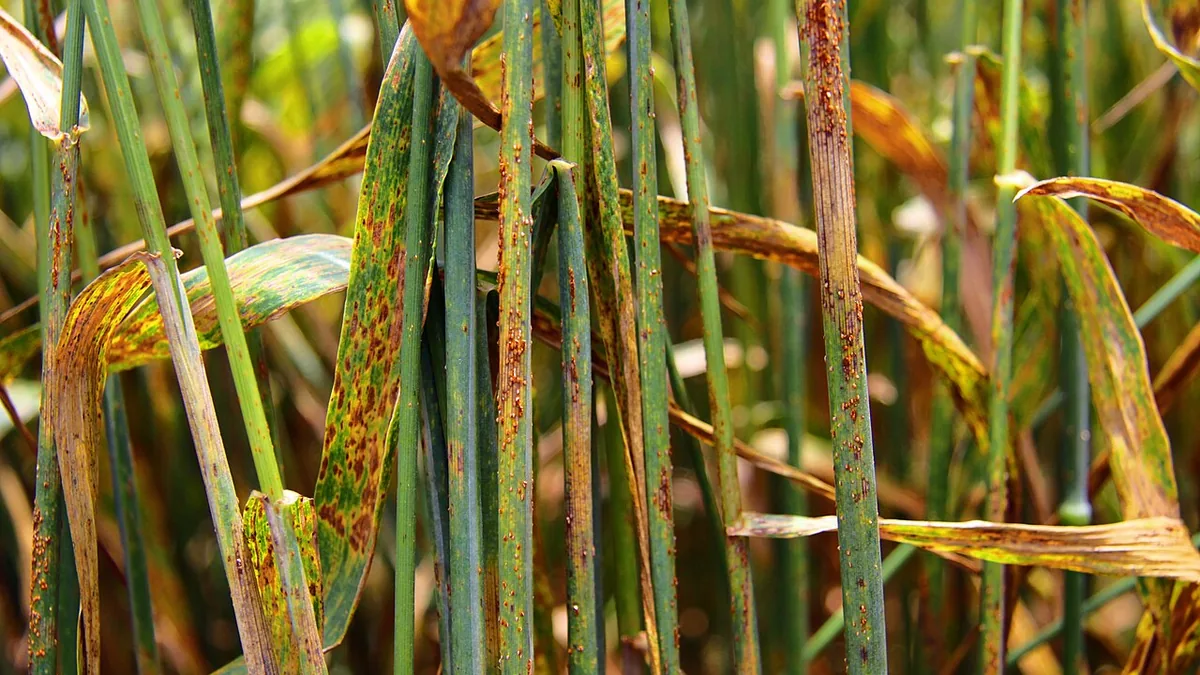
When bright yellow-orange stripe rust streaks suddenly race across irrigated Rabi wheat flag leaves in January or humid monsoon weeks drive brown-bordered sheath blight rapidly upward along Kharif rice stems, few farm-tested chemistries stop foliar devastation faster than Tilt fungicide! Chemically formulated around Propiconazole 25% EC (FRAC Group 3 DMI triazole), Tilt is prized across Indian cereal, oilseed, and tea belts for its rapid foliar penetration, upward xylem movement, and triple preventive + curative + eradicative action against stubborn rusts, smuts, bunts, and leaf spots. Before loading any backpack sprayer, verify exact central label claims, waiting periods, and resistance rotations regulated by India's CIB&RC and PPQS portals alongside KisanPe's wheat rust eradication manual, rice sheath blight & blast guide, systemic fungicide comparison, and live spray weather advisory. Verify related KisanPe comparisons and official portal references via paddy calendar, groundnut agronomy, cotton IPM.
1. Tilt Fungicide Content, CIB&RC Approved Crops & Per-Acre Dosage
Every authentic bottle carrying tilt fungicide content lists active Propiconazole 25% EC (125 g active ingredient inside every 500 ml liquid EC formulation). Once sprayed cleanly across leaf cuticles, active propiconazole inhibits fungal C-14 demethylase during sterol (ergosterol) cell-membrane synthesis—halting haustoria growth inside plant cells while shielding unfolding upper leaves cleanly upward through plant sap! Review exact statutory Indian PPQS / CIB&RC label registrations below:
| CIB&RC Approved Crop | Registered Target Disease(s) | Formulation Dose (Per Hectare) | Practical Acre Dose (Water Vol.) | Mandatory Pre-Harvest Interval (PHI) |
|---|---|---|---|---|
| Wheat (Gehu) | Yellow/Stripe Rust, Brown/Leaf Rust, Black Stem Rust & Karnal Bunt | 500 ml / ha (125 g a.i./ha) | ~200 ml / acre in 200–300 L water | ~30 days before harvest (rust alert guide) |
| Rice (Paddy) | Sheath Blight (Rhizoctonia solani) | 500 ml / ha (125 g a.i./ha) | ~200 ml / acre in 200–300 L water | ~30 days before harvest (paddy calendar) |
| Groundnut (Moongfali) | Early Leaf Spot (Tikka), Late Leaf Spot & Rust | 500 ml / ha (125 g a.i./ha) | ~200 ml / acre in 200–300 L water | ~15 days before digging (groundnut agronomy) |
| Soybean & Cotton | Soybean Rust (Phakopsora pachyrhizi); Cotton Leaf Spot | 500 ml / ha (125 g a.i./ha) | ~200 ml / acre in ~200 L water | Verify strict label PHI before picking (cotton IPM) |
| Tea Plantations | Blister Blight (Exobasidium vexans) | 125 – 250 ml / ha (31.25–62.5 g a.i.) | ~50–100 ml / acre in 70–100 L water | Strictly honor plucking round interval (Tea Board PPC norms) |
Crucially, remember that 200 ml per acre mixed thoroughly inside 200 litres of clean spray water (1.0 ml/litre, or 15 ml per standard 15 L knapsack pump) gives optimal rain-fast stem-sheath wetting without chemical scorching! For rice sheath blight especially, aim hollow-cone nozzles directly toward lower tiller bases near the waterline rather than spraying merely over high leaf tips where Rhizoctonia never originates! Inspect pump pressures cleanly via our spray machine guide, 12V battery sprayers, and knapsack nozzle calibration notes.

2. Why Tilt Works Against Wheat Rusts, Karnal Bunt & Rice Sheath Blight
Before ICAR-IIWBR (Karnal) introduced rust-resistant wheat varieties, outbreaks of Yellow (Stripe) Rust in cool misty sub-Himalayan foothills of Punjab, Haryana, Himachal, and Western UP routinely shaved 25%–50% off grain weight! When scouts catch initial yellow powdery stripes running linearly along wheat leaves during January–February cold spells, a single timely 200 ml/acre Propiconazole 25% EC mist halts spore spread cleanly for 14–21 days—preserving plump golden test weights that earn top prices at rabi wheat mandis and FCI procurement centers!
Similarly, targeted milk/heading-stage application per state KVK Karnal Bunt advisories helps seed producers eliminate black fish-smelling Karnal bunt teliospores on certified seed wheat crops (disease-tolerant wheat hybrids). In wet Kharif rice paddies where lush nitrogen excess encourages fungal hyphae bridging straight across adjacent tillers, timely Propiconazole sprays safeguard grain yield cleanly—though remember to monitor export MRL tolerance carefully before spraying late on export-bound Basmati blocks (paddy variety tolerances)!
3. Indicative Tilt Fungicide Price, Tank Mixing & Resistance Management
Across licensed agro-input dealers in India (November 2026), indicative retail Propiconazole 25% EC price tiers run approximately ₹220–₹295 for 100 ml, ₹490–₹640 for 250 ml, ₹920–₹1,220 for 500 ml (covering 2.5 full acres!), and ₹1,780–₹2,300 for 1-litre cans, varying across flagship brands (Syngenta/Crystal Tilt) vs registered generic CIB&RC brands. Always check intact induction seals, valid manufacture stamps, and CIR registration numbers before buying.
- Emulsifiable Concentrate (EC) Mixing Sequence: Always fill half your spray tank with clean water first, pre-mix the measured 200 ml Propiconazole thoroughly inside a small clean bucket (avoiding direct contact with copper/lime-sulfur sprays!), pour while agitating briskly until uniform milky emulsion forms, and top up clean water.
- Avoid Late Afternoon Heat & Cold Snap Stress: Because EC solvent formulations carry mild phytotoxic edge-burn risk on sensitive flower petals under blazing 38°C heat, spray cleanly during calm morning or cool evening intervals verified on KisanPe's spray advisory dashboard.
- Rotate FRAC Modes After 1–2 Sprays: Repeatedly applying standalone triazoles breeds insensitive fungal populations; rotate cleanly across strobilurin combinations (Amistar Top price & specs, Nativo, Custodia), benzimidazole blends (Bavistin / Saaf), or biological Trichoderma.
4. Mandatory Safety PPE, Pre-Harvest Interval & Crop Nutrition Synergy
Wear oil-resistant nitrile gloves, full sleeves, chemical splash goggles, and clean mask protection whenever opening EC concentrates, and wash exposed skin promptly after unloading tanks. Most critically, never harvest sprayed wheat or paddy inside the mandatory 30-day Pre-Harvest Interval (PHI) (or ~15 days on groundnut) so grain residues settle safely beneath FSSAI/Codex limits! Pair healthy plant disease defense cleanly with balanced soil nutrition calculated on KisanPe's Fertilizer Calculator—remember that excess top-dressed Urea creates overly succulent canopies vulnerable to rice sheath blight, whereas balanced potash and boron nutrition thicken plant cell walls naturally! Finance verified input purchases affordably via a Kisan Credit Card alongside state agricultural assistance.
5. Scouting Thresholds, Drone Spraying Rules & Storage Precautions
Timing every ml of Propiconazole 25% EC against actual disease economic thresholds saves unnecessary chemical spraying costs while delaying triazole resistance! Scout irrigated wheat fields weekly from late December onwards along windward field edges nearest hills: spray immediately the moment small pale-yellow linear rust stripes appear on 1%–5% of leaves BEFORE windblown urediniospores paint surrounding villages orange. Across irrigated rice paddies, begin spraying cleanly once first greenish-grey water-soaked sheath spots climb 2–3 cm above waterlines during active tillering to booting stages! Notice also that commercial agricultural drone sprayers (Kisan Drone guidelines) using low-volume 10–15 L/acre tanks require explicit CIB&RC drone-label SOP clearances and wind speeds under 8–10 km/h so fine EC mists never drift into residential wells or orchard blooms. Additionally, double-check local agricultural extension spray calendars before repeating any triazole fungicide across adjacent crop cycles—switching cleanly to non-triazole chemistries breaks overwintering fungal spore resistance across entire village clusters. Finally, store leftover original HDPE bottles tightly capped inside cool locked farm cupboards below 35°C—never transferring concentrates into unmarked beverage bottles or storing chemicals beside cattle feed or seed sacks!
Beyond chemical timing alone, lasting protection against wheat rusts and paddy sheath blight starts well before sowing through field sanitation and varietal rotation. Choosing rust-resistant regional wheat varieties certified by agricultural universities, destroying self-sown volunteer grasses along bunds that harbour summer fungal inoculum, and maintaining recommended row spacing via calibrated seeding rates dramatically lower humid leaf microclimates where spores germinate overnight! Whenever mixing Tilt in muddy canal or borewell water, always verify basic compatibility carefully via a clear glass jar test first, calibrate hollow-cone brass nozzles cleanly at steady walking pressure, and apply during cool morning or late afternoon breezes once morning dew dries slightly so droplets spread evenly over flag leaves and lower stems without scorching. Finally, dispose of triple-rinsed empty pesticide containers responsibly by puncturing and burying or returning via authorized collection points rather than washing pumps beside irrigation channels or livestock drinking ponds, safeguarding farm water quality while protecting profitable winter and kharif harvests. Checking valid CIB&RC batch manufacturing dates, intact tamper-proof aluminum induction seals, and GST retailer invoices prior to leaving local agri-input counters protects crop yields against degraded stocks and guarantees full legal product accountability through every spray cycle.
6. Frequently Asked Questions on Tilt Fungicide (Propiconazole 25% EC)
Find straightforward verified answers covering Tilt active composition, 200 ml/acre spray dose, Pre-Harvest Intervals, wheat vs paddy applications, and pack prices.
Frequently asked questions
- What is the chemical composition (content) of Tilt fungicide?
- Tilt fungicide contains Propiconazole 25% EC (Emulsifiable Concentrate)—a broad-spectrum systemic FRAC Group 3 triazole fungicide approved by CIB&RC for rusts, sheath blight, Karnal bunt, and leaf spots.
- What is the recommended dosage of Propiconazole 25% EC (Tilt) per acre?
- Per official PPQS label claims for wheat, rice, soybean, groundnut, and cotton, apply 500 ml per hectare (~200 ml per acre) dissolved cleanly at 1.0 ml per litre inside 200 litres of spray water (~15 ml per 15 L tank); check tea blight uses a lower 125–250 ml/ha dose.
- Which wheat and paddy diseases are best controlled by Tilt fungicide?
- Tilt excels at halting Yellow (Stripe) Rust, Brown Rust, Black Stem Rust, and Karnal Bunt in wheat (wheat rust guide) as well as Sheath Blight (Rhizoctonia solani) in irrigated paddy fields (paddy disease guide).
- How many days before harvest should farmers stop spraying Tilt fungicide?
- Honor the mandatory Pre-Harvest Interval (PHI) on approved labels—typically 30 days for wheat and paddy and 15 days for groundnut before cutting or digging crops so pesticide residue drops strictly within safety norms.
- What is the indicative price of Tilt fungicide 500 ml and 1 litre in India?
- Indicative retail prices as of November 2026 generally span ₹220–₹295 (100 ml), ₹490–₹640 (250 ml), ₹920–₹1,220 (500 ml), and ₹1,780–₹2,300 (1 litre) depending on OEM vs generic CIB&RC brands and state GST.
- How do farmers spray Tilt effectively against paddy sheath blight?
- Because Rhizoctonia sheath blight develops near waterline stems, adjust your knapsack hollow-cone nozzle downward straight into lower tiller bases using 200–300 L water/acre rather than spraying mist solely over upper leaf canopies.
- Can Tilt fungicide be mixed with Zinc, Urea, or foliar NPK 19-19-19?
- Avoid mixing raw acidic/alkaline salts or high-concentration urea blindly with EC formulations without a small jar compatibility check first—excess foliage urea actually worsens fungal sheath blight, whereas clean single-focus fungicide sprays checked on our spray advisory give superior control.
- How does Tilt compare against Amistar Top or Bavistin fungicide?
- Tilt (Propiconazole 25% EC) is a pure triazole king on cereal rusts and rice sheath blight, whereas Amistar Top (Azoxystrobin + Difenoconazole) combines two chemical groups ideal for high-value chillies/tomatoes, and Bavistin provides basic Carbendazim seed treatment.
This article is for general information only and is not financial advice. Loan and scheme eligibility depends on partner and government criteria.