Black Pepper Price in Kerala: Kochi MG-1, Idukki & Yields
Key takeaways
- Benchmark Kerala spot rates traded at the Kochi International Pepper Exchange hover indicatively between Rs 635 and Rs 715+ per kg for Garbled MG-1 grades and Rs 615–Rs 690 per kg for Ungarbled lots depending on export demand and Vietnamese/Sri Lankan import parity.
- Farm-gate prices paid inside Kattappana, Kumily (Idukki), Sulthan Bathery (Wayanad), and Kozhikode grower depots normally sit Rs 12–Rs 28 per kg below Kochi terminal parity reflecting drying (<11% moisture), destoning, and cooperative commission fees.
- ICAR-Indian Institute of Spices Research (IISR Kozhikode) high-yielding varieties (Panniyur-1, IISR Thevam, Sreekara) paired cleanly with pre-monsoon 1% Bordeaux quick-wilt prophylaxis sustain 2.5–4.5 kg dry black pepper per mature trailing vine.
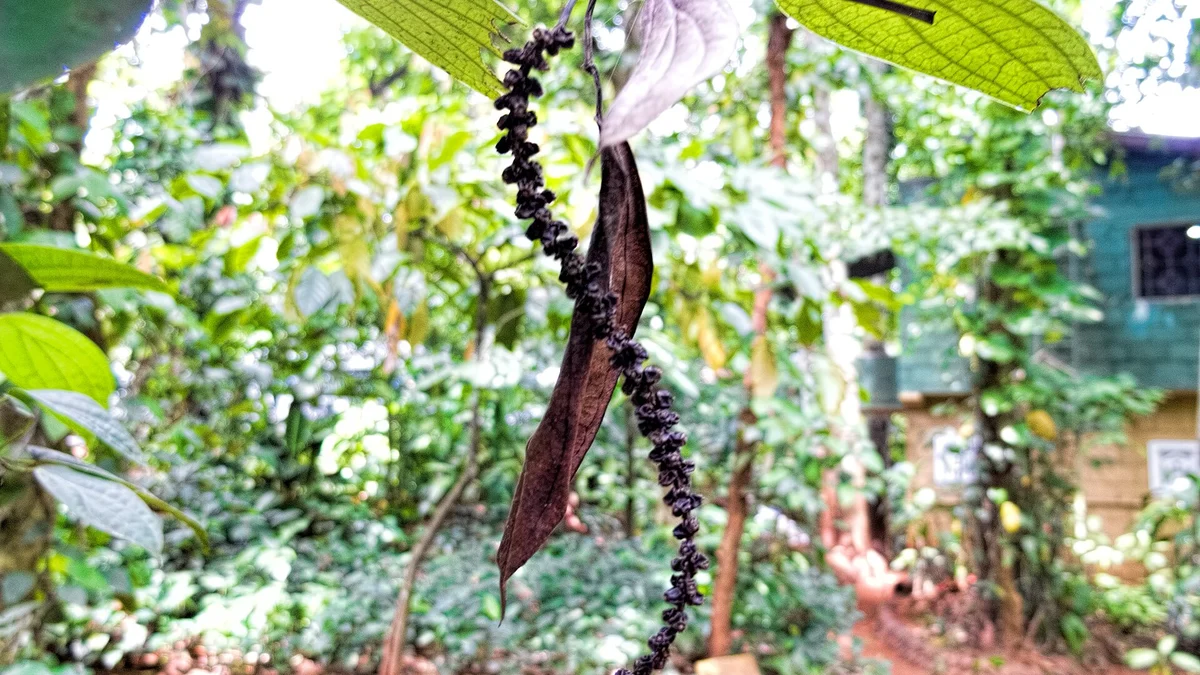
Tracking the black pepper price in Kerala anchors rural family prosperity across Idukki, Wayanad, Kottayam, Pathanamthitta, and Kannur spice hills! Often dubbed "Black Gold" (Kurumulaku) ever since ancient Malabar maritime spice routes, Kerala continues to command benchmark price discovery nationwide via the Kochi Terminal Market—publishing daily reference grades across Malabar Garbled 1 (MG-1) and Ungarbled (UG) spot bands monitored alongside Spices Board of India and Agmarknet (also compare national all-India spice benchmarks on our India Black Pepper Price hub).
Notice why Kattappana spice depots frequently quote Rs 20/kg below newspaper Kochi MG-1 headlines—and how simple hot-water blanching (<60 seconds) plus uniform <11% drying lifts village smallholder vines from discounted light grades straight toward high-bulk-density 570+ g/L export MG-1 premiums backed cleanly by ICAR-IISR (Kozhikode) agronomy.
1. Black Pepper Price in Kerala: Kochi MG-1, Idukki & Wayanad Spot Bands
Indian Piper nigrum valuations follow liter-weight density (measured accurately in grams per liter — GL), moisture (<11% FAQ ceiling), and foreign dust cleanliness (check multi-commodity market rates):
| Kerala Grade / Hub | Bulk Density & Spec Norm | Indicative Wholesale Price Band | Primary Market & Buyer Use |
|---|---|---|---|
| Kochi Garbled MG-1 (Spot Benchmark) | ~570+ g/L Bold Clean Jet-Black, <11% Water | Rs 635 – Rs 715+ / kg (Rs 63,500–71,500/qtl) | National export benchmark & high-end US/EU/North Indian masala grinders |
| Kochi Ungarbled (UG) | Standard Farm-Dried Un-Sieved FAQ Mix | Rs 615 – Rs 690 / kg | Bulk regional traders & oleoresin extraction plants prior to spiral cleaning |
| Idukki (Kattappana / Kumily / Nedumkandam) | Farm-Gate Dry High-Range Berries | Rs 605 – Rs 685 / kg | Dense bold Malabar mountains harvest prized for rich sharp piperine heat |
| Wayanad & Kozhikode Hill Belts | Sulthan Bathery / Kalpetta Grower Lots | Rs 600 – Rs 675 / kg | Shade-grown Panniyur & estate pepper trailing coffee silver-oak standards |
| Tellicherry Garbled Extra Bold (TGEB) | Massive >4.25–4.75 mm Sieved Bold Berries | Rs 720 – Rs 860+ / kg | Gourmet whole steakhouse grinder mills in Europe, Japan & Americas |
| Light / Pinhead / Hollow Rejects | <450 g/L Chaffy Undersized Berry Screening | Rs 260 – Rs 380 / kg | Industrial steam-distilled black pepper volatile oil extraction only |
2. What Drives Kerala Black Pepper Rates: MIP, Imports & Monsoon Health
- 1. Central Minimum Import Price (MIP Rs 500/kg Guardrail): To stop cheap third-country Vietnam/Indonesian lots disguised via neighboring tariff tunnels from flooding Kochi, Government of India fixes strict Minimum Import Price (MIP Rs 500/kg CIF) curbs—keeping domestic Kerala farm floors sheltered (Spices Board alerts)!
- 2. Idukki & Kodagu Monsoon Moisture Waves: Heavy erratic June–August downpours spreading Quick Wilt (Phytophthora capsici) OR scorching dry February–April summers aborting tender floral spikes cut marketable harvest output sharply the very next winter.
- 3. Festival & Export Dollar Parity: Deep autumn festival stocking across North India paired with steady North American/Gulf foodservice imports (APEDA spice trends) absorbs dry MG-1 lots swiftly.
3. ICAR-IISR High-Yield Vines, 60-Second Blanching & Quick Wilt Defense
Trailing healthy pepper vines up living standards (Silver Oak / Murikku Erythrina / Arecanut / Coconut Palm trunks) multiplies coastal Kerala farm income per acre cleanly without clearing forests (ICAR-IISR Kozhikode advisories):
- 1. Choose Proven Hybrids & Resistant Lines: Panniyur-1 remains Kerala’s sunshine yield champion hitting 3–5 kg dry/vine; shaded Wayanad coffee tracts favor hardy Panniyur-5, IISR Thevam (Quick Wilt tolerant!), Sreekara, and Subhakara.
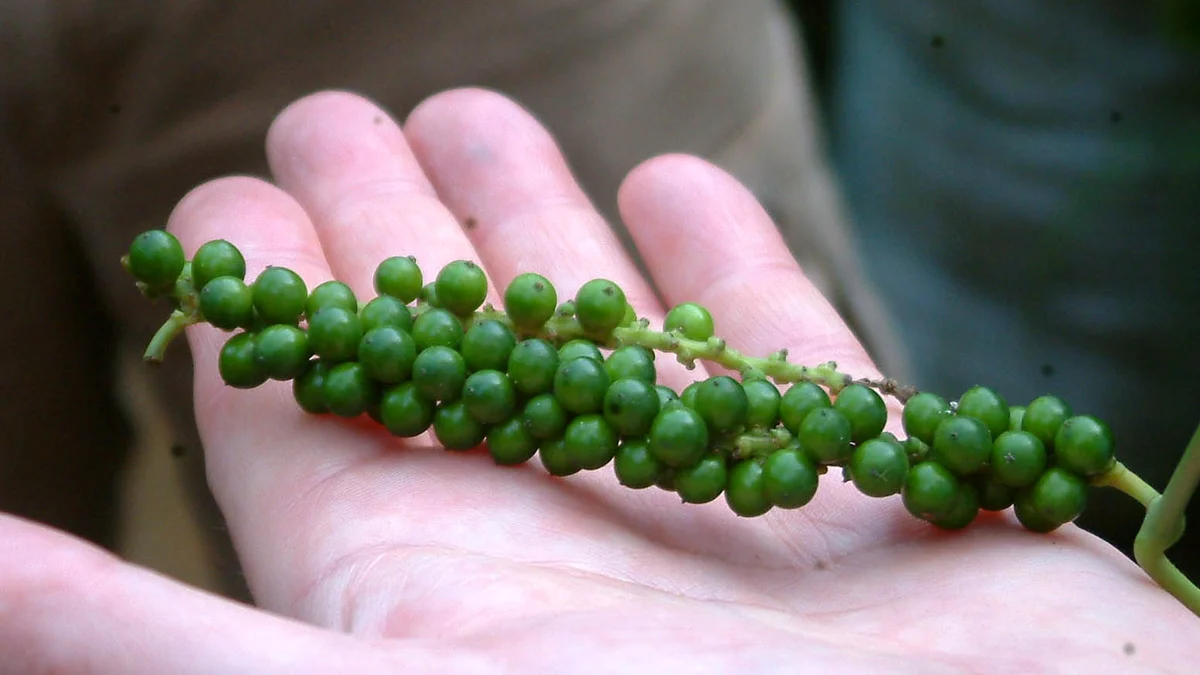
- 2. The 1-Minute Boiling Blanching Trick: Instead of spreading freshly threshed green spikes sluggishly onto muddy courtyards for 10 cloudy days (inviting white fungal spots!), plunge wire baskets packed with clean ripe berries (when 1–2 berries turn bright red per spike!) into clean boiling water for strictly 60 seconds before sun-drying! Blanching strips dust spores instantly, halves drying days down cleanly to 3–4 sunny mornings, and locks in deep uniform shiny black MG-1 skin color!
- 3. Mandatory Pre-Monsoon 1% Bordeaux Paste + Trichoderma: Deadly Phytophthora Quick Wilt strips 20-year productive vines black overnight during July downpours unless growers apply clean 1% Bordeaux foliar sprays & copper root drenches in late May + enriched Trichoderma neem cake!
4. Kerala Spice Estate ROI, Spices Board Replanting Grants & Credit Planning
Intercropping 300–450 mature trailing pepper vines neatly across an acre of coconut, arecanut (arecanut intercrop guide), or coffee estate generates 600 to 1,200+ kg crisp dry black pepper/acre yearly—earning Rs 3.90 Lakh to Rs 8.00+ Lakh supplementary cash on existing trunks once vines cross Year 4! Compute long-term intercrop profitability via our farm ROI calculator and crop income calculator.
Unlock Spices Board & MIDH Horticulture pepper rejuvenation, bush-pepper nursery, bamboo trellis & solar dryer grants via our agri subsidy calculator & central schemes hub, fund seasonal maintenance working budgets via our 4% KCC loan calculator, insure plantation yields against aberrant drought/hail under RWBCIS / PMFBY weather cover (claim checker), track pre-monsoon Bordeaux timing ahead of southwest rains via our IMD weather portal guide, verify fungal doses safely on our pesticide calculator & NPK splits on our fertilizer tool, compare complementary Kerala crops like Kottayam natural rubber rates, turmeric & cashew rates, and ensure clean Farmer ID enrollment.
5. Bush Pepper Gardens & Safe <11% Airtight Warehouse Holding
Farmers holding tight hillside labor shortages increasingly plant high-density Panniyur-1 Bush Pepper (cutting lateral fruiting shoots onto short neat 1-meter bushes without climbing dangerous 25-foot ladders!), harvesting safely by hand at chest height starting Year 2! Meanwhile, properly blanched <10.5% dry black peppercorns packed securely inside multi-layer poly-lined woven jute bags store peacefully inside clean godowns or WDRA warehouses for 18–36 months cleanly without losing essential oil sharpness—enabling Kerala families to sell calmly into festival spikes instead of panic harvest dumping!
6. Tellicherry Bold Grading (TGEB/TGSEB), Pollination Care & Compost Mulching
Understanding Malabar vs Tellicherry Extra Bold (TGEB / TGSEB) grading separates ordinary bulk pepper consignments from export gold across Cochin auctions (Spices Board grading standards)! Both grades harvest directly off the exact same healthy well-fed Panniyur or Karimunda vines—yet passing clean cured peppercorns across vibrating 4.25 mm and 4.75 mm mechanical screens separates the heaviest largest top ~15%–20% Extra Bold pearls (TGSEB) earning Rs 720–Rs 860+/kg export buyer bids! Feeding rich shaded Kerala vine basins cleanly with 10 kg well-rotted cattle manure + neem cake + clean dry leaf mulch around trunk bases before monsoon onset sustains heavy continuous flower-spike pollination (rain-splash spore dispersion), while pruning excess tangled top shade trees cleanly in May opens gentle filtered sunshine raising filled berries per spike noticeably across Wayanad and Idukki hills! Additionally, small growers forming registered spice FPO aggregation hubs in Idukki, Kozhikode, and Kodagu pool standardized <11% dry Garbled lots directly toward Kochi exporters—bypassing tiered village commission cuts while capturing verifiable geographic origin premiums across international specialty culinary contracts. Comparing global arrival cycles—especially April–May Vietnam crop arrivals, August Indonesia Lampung harvest, and Kerala December–February peak picking—helps progressive Malnad estate owners judge cleanly when holding dried spice inside airtight sacks fetches Rs 50–Rs 80/kg higher dry season realizations. Check bulk density carefully using calibrated litre-weight cups before final mandi weighment (~570+ g/liter counts as prime Garbled export density, whereas shriveled hollow light berries pull entire ungraded farm lots down toward pinhead discount brackets across Kattappana and Nedumkandam auction sheds cleanly). Keeping moisture reliably under 10.5% inside double poly-lined gunny bags on dry raised dunnage frames prevents aflatoxin mould spikes during humid monsoon off-seasons.
Frequently asked questions
- What is the black pepper price per kg in Kerala mandis today?
- Across wholesale spice boards monitored alongside Spices Board India and Agmarknet, Kochi benchmark Garbled MG-1 indicatively spans Rs 635 to Rs 715+ per kg and Ungarbled (UG) sits near Rs 615–Rs 690/kg, with Idukki/Wayanad farm-gate prices averaging Rs 12–28/kg lower.
- What is the difference between MG-1 (Garbled) and Ungarbled pepper in Kochi?
- MG-1 (Malabar Garbled Grade 1) passes mechanical spiral cleaners & grading sieves yielding clean uniform heavy (>570 g/L) dust-free berries for export and premium masala packers; Ungarbled (UG) carries mixed un-sieved light berries and stem bits.
- How does Kerala black pepper price compare across our national spice markets?
- Compare coastal wholesale differentials alongside interstate North/South spice markets cleanly inside our national Black Pepper Price in India overview.
- Which black pepper variety yields maximum harvest across Kerala farms?
- Approved by ICAR-IISR Kozhikode & KAU trials, sunny open gardens favor Panniyur-1 (~3–5 kg dry/vine), while humid shaded Wayanad/Idukki tracts excel with Quick-Wilt tolerant IISR Thevam, Sreekara, and Panniyur-5.
- What does hot-water blanching do to harvested fresh green peppercorns?
- Dipping cleanly threshed green berries inside clean boiling water for strictly 60 seconds prior to sun-drying kills surface molds, cuts drying time down to ~4 sunny days, and delivers uniform dark jet-black MG-1 skin luster.
- How can Kerala farmers protect pepper vines from monsoon Quick Wilt?
- Prevent deadly Phytophthora vine collapse via pre-monsoon late-May 1% Bordeaux mixture sprays + copper stem root drenches (Bordeaux mixing ratios guide), ensuring crisp raised root drainage and Trichoderma enriched neem cake.
- Does the government offer subsidies for black pepper replanting in Kerala?
- Yes! Through Spices Board India and MIDH Horticulture schemes, Kerala growers access targeted subsidies for pepper nursery rejuvenation, organic compliance, and clean solar drying racks (estimate grant amounts).
- How does the Rs 500/kg Minimum Import Price (MIP) safeguard Kerala farmers?
- Government MIP bans cheaper low-cost raw pepper imports from undercutting Rs 500/kg CIF at ports—protecting genuine high-piperine Kerala grower margins against dumped overseas surplus.
- What is the dry conversion recovery ratio from fresh green pepper berries?
- Roughly 3.0 to 3.3 kg of freshly harvested mature green pepper sun-cures down (~30%–33% weight retention) into 1 kg of dry wrinkled black pepper below 11% moisture.
- Can pepper farmers pledge stored dry MG-1 sacks for short-term farm cash?
- Yes! Properly <11% dried black peppercorns hold aroma safely 2+ years inside dry godowns, allowing families to draw working liquidity cleanly via KCC or warehouse pledge receipts without forced February selling.
- Why do growers pick berries when 1 or 2 red fruits appear on each spike?
- Waiting until 1–2 ripe berries turn bright red/orange per green spike guarantees maximum essential oil and piperine accumulation—picking overly young pale spikes collapses dried density down into cheap hollow pinheads!
- Can urban or retired farmers grow compact Bush Pepper without climbing tall trees?
- Yes! Propagating fruiting lateral branches cleanly creates compact 1-meter Bush Pepper plants bearing ripe spikes safely at waist height in gardens or shaded coconut inter-alleys.
This article is for general information only and is not financial advice. Loan and scheme eligibility depends on partner and government criteria.