Black Pepper Price in India: Kali Mirch & MG-1 Kochi Rate
Key takeaways
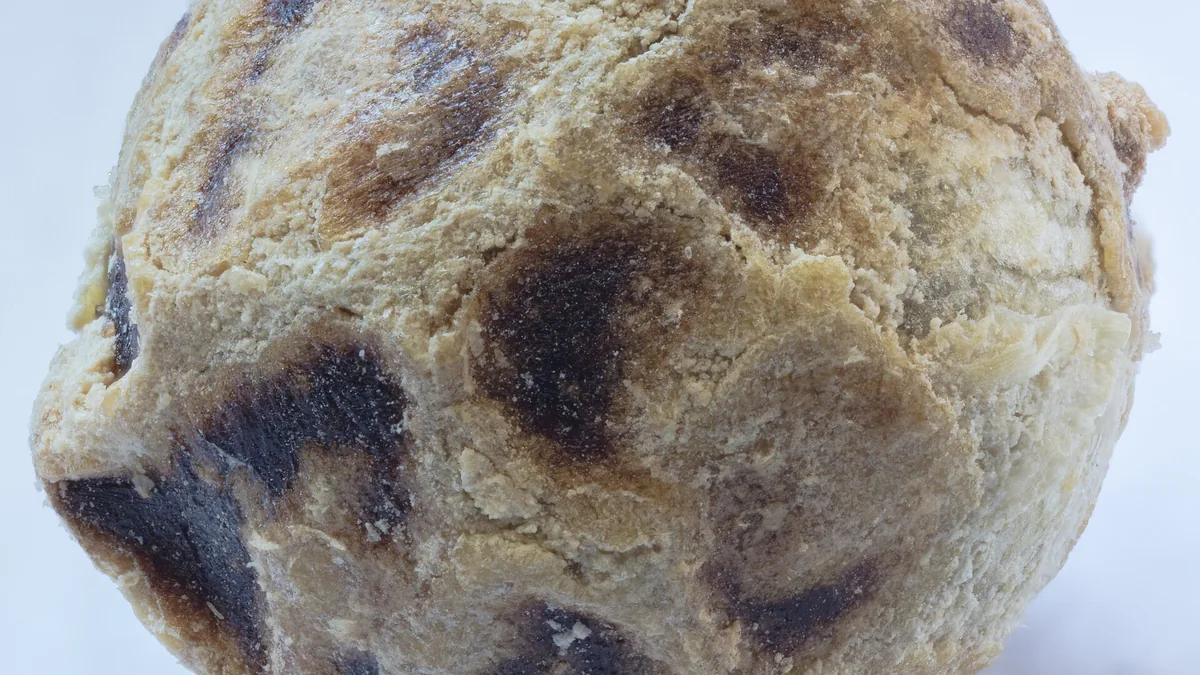
- Indian Malabar Garbled (MG-1) black pepper trades indicatively at Rs 63,500 to Rs 72,000 per quintal (Rs 635 to Rs 720 per kg) across Kochi IPSTA and Wayanad/Idukki primary auctions (November 2026), while ungarbled field grade trades Rs 2,000–Rs 3,000 lower.
- Because black pepper is a high-value plantation spice managed under the Spices Board of India, it does NOT carry an annual central MSP—prices move directly by Malabar bulk density (g/liter) & Vietnam/Brazil import parity.
- Growing black pepper vines vertically up live coconut palms, arecanut trunks, or Silver Oak shade trees yields 2.5 to 4.5 kg dry pepper per vine (~500–900 kg/acre high-density intercropping) with cultivars like Panniyur-1 & IISR Sreekara.
- Controlling monsoon Quick Wilt (Phytophthora) with two timely 1.0% Bordeaux mixture drench/spray cycles plus clean solar drying below 11% moisture preserves full MG-1 exporter premiums.
Tracking the black pepper price (Kali Mirch / Kurumulaku / Kare Menasu / Milagu) across Indian spice exchanges starts straight in Kochi, Kerala, where India’s globally famous GI Malabar Garbled (MG-1) wholesale spot rate governs farmgate settlements across Idukki, Wayanad, Kodagu (Coorg), Chikkamagaluru, and Shivamogga! In November 2026 indicative physical auctions compiled from Spices Board of India daily trade bulletins and Agmarknet primary markets, cleaned MG-1 black pepper wholesales around Rs 63,500 to Rs 72,000 per quintal (Rs 635 to Rs 720 per kg), while field Ungarbled dry berries clear around Rs 61,500 to Rs 69,500/qtl.
Unlike annual grain staples covered by central CCEA MSP support, black pepper pricing rides closely on domestic harvest tightness across Kerala’s high ranges, festive North Indian garam masala restocking, global Vietnam/Indonesia harvest cycles, and strict Minimum Import Price (MIP) border rules protecting smallholder planters from under-invoiced third-country imports. Estate growers in Kerala can also cross-reference regional auctions in our dedicated Kerala black pepper price guide plus earlier benchmarks on national pepper rate movements and spotted mandi rates.
1. Black Pepper Price Today: MG-1, Ungarbled, Pinhead & Bulk Density Grades (Nov 2026)
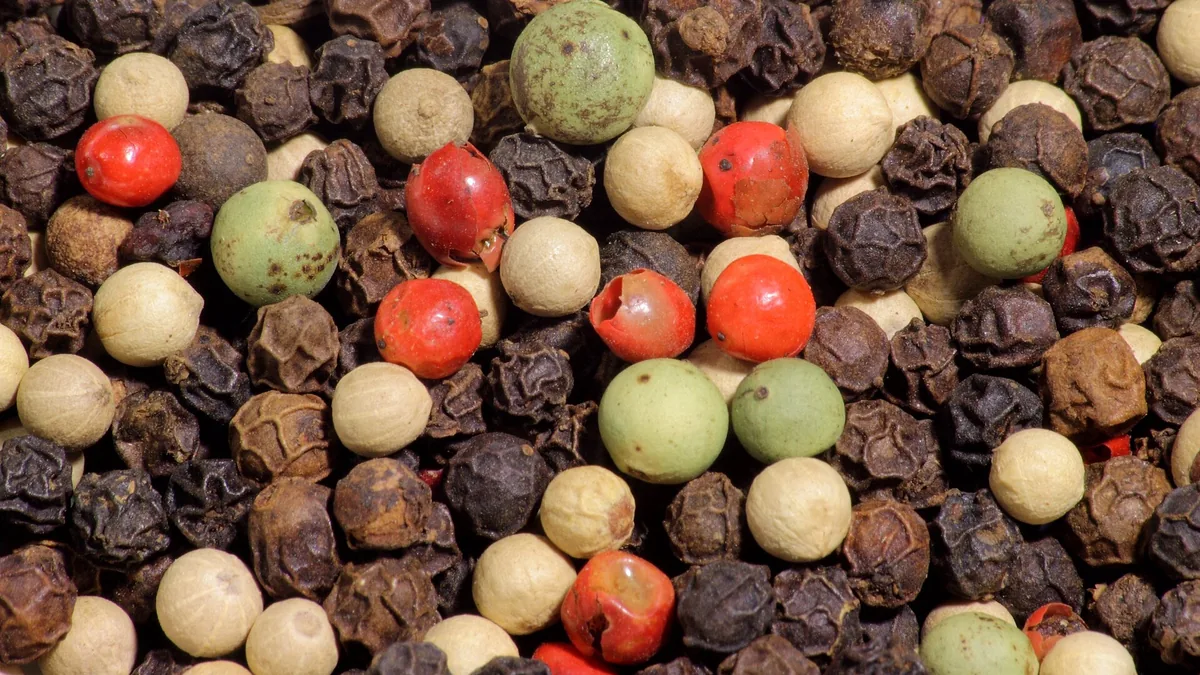
Why do two pepper growers from neighboring Kodagu or Idukki estates receive Rs 45/kg different bids on the very same morning? Pepper buyers grade every gunny sack instantly by Bulk Density (grams per 1-liter graduated cylinder), moisture % (<11%), and pinhead chaff percentage!
| Black Pepper Trade Grade | Benchmark Market Hub | Indicative Rate Band (Nov 2026) | Key Physical Grade & Bulk Density Rule |
|---|---|---|---|
| Malabar Garbled Grade-1 (MG-1) | Kochi IPSTA / Nedumkandam / Kalpetta | Rs 63,500 – Rs 72,000 / quintal | Cleaned dark heavy 550–580+ g/L whole bold berries (<11% moist) |
| Tellicherry Garbled Extra Bold (TGSEB) | Kannur, Wayanad & Kochi Export Houses | Rs 68,000 – Rs 78,500 / quintal | Sieve >4.75 mm king-size aromatic berries prized in EU/US |
| Ungarbled Malabar (Field Uncleaned) | Idukki, Kattappana & Sultan Bathery | Rs 61,500 – Rs 69,500 / quintal | Direct farmer thresh-dried lot holding ~2%–4% light pinheads/dust |
| Karnataka Coorg / Malnad Bulk | Kushalnagar, Gonikoppal, Siddapura & Shimoga | Rs 60,500 – Rs 68,500 / quintal | Multi-tier intercropped under silver oak coffee & arecanut estates |
| Delhi Khari Baoli / Wholesale Masala | Delhi NCR / Mumbai APMC / Unjha | Rs 670 – Rs 780 / kg (Loose Sack) | Cleaned domestic spice distributor packs (graded ~520–560 g/L) |
| Light Pepper & Pinheads (Oil/Oleoresin) | Ernakulam & Industrial Extraction Mills | Rs 280 – Rs 420 / kg | Floater immature chaff pressed for piperine oleoresin extracts |
2. Understanding Garbled vs Ungarbled, High Liter Weight & MIP Border Rules
Three hidden trade mechanics dictate whether smallholder estates capture high MG-1/TGSEB prices or get downgraded by estate aggregators:
- Liter Weight (Gram Weight Per Liter) Premium: Harvesting spikes too early while immature berries look small leaves light wrinkled skin weighing barely 450–480 g/L—buyers pay steeply discounted extractor rates! Harvesting right as one or two berries per spike turn bright cherry-red produces dense heavy 560–590 g/L bold corns commanding instant MG-1 premiums.
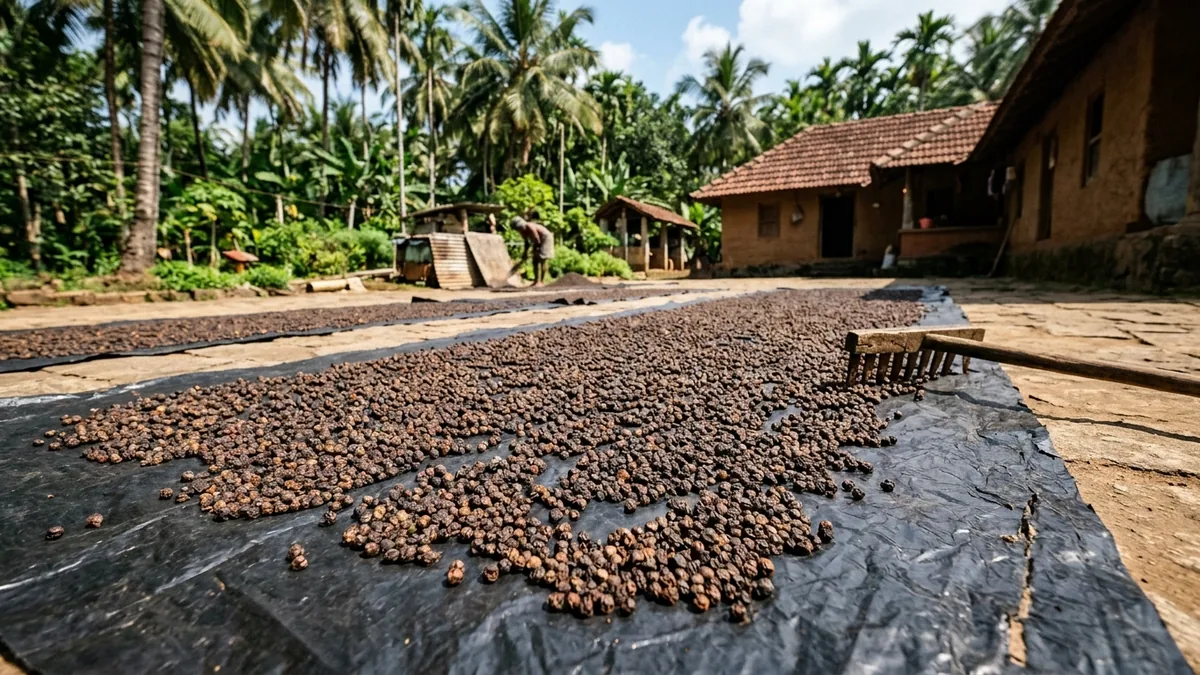
- Garbling, Blanching & Cleaning Discipline: Putting sun-dried threshed berries inside hot clean water (80°C for 60 seconds boiling-blanch dip) kills microbial surface mold, seals rich uniform jet-black coat luster, and accelerates solar drying from 7 days down to 3–4 days cleanly below 10.5% moisture!
- Minimum Import Price (MIP) Shield: India’s Ministry of Commerce regulates low-priced import infiltration through strict origin certificates and MIP rules (APEDA / Spices Board norms), reinforcing steady domestic farm prices for high-piperine aromatic Malabar lots.
3. High-Yield Pepper Varieties & Vertical Coconut/Arecanut Intercropping
Modern pepper planters rarely devote open monocrop fields to pepper—instead trailing sturdy perennial vines straight up tall Silver Oak coffee shade trees, coconut palms, or arecanut palms (Shimoga arecanut cultivation), turning vertical tree trunks into high-margin spice columns validated by ICAR-IISR Kozhikode!
- Top Recommended ICAR / KAU Cultivars: Panniyur-1 (famous high-yielding long spikes suited to open shade), IISR Sreekara & Subhakara (bold heavy-density berries, ~6% piperine + 4%–5% volatile oil), and IISR Thevam / Panchami (shade tolerance across coffee plantations).
- Expected Harvest Yield per Vine & Intercropped Acre: Established 5-year+ vines trained cleanly up 150 to 250 standards/palm trunks per intercropped acre average 2.0 to 3.8 kg of cured dry black pepper per vine, delivering 350 to 800+ kg of dry pepper per acre cleanly ABOVE primary coffee, coconut, or supari tree earnings!
- Stopping Quick Wilt (Phytophthora capsici) Before Monsoon Floods: Foot Rot (Quick Wilt) wipes out mature fruiting vines within weeks during heavy July rains unless farmers apply two timely high-volume 1.0% Bordeaux mixture sprays + basin soil drenches (Bordeaux recipe manual) paired with Trichoderma harzianum neem-cake root enrichment calculated cleanly via our pesticide dosage calculator.
4. Pepper Farm Profit Economics, Spices Board Grants & Warehouse Credit
Once established past Year 4, maintaining ~200 pepper vines alongside existing coconut or turmeric plots costs roughly Rs 35,000–Rs 50,000 annually in organic compost, shade-lopping, Bordeaux fungicide protection, and ladder picking labor. Even a moderate 400 kg/acre cured pepper yield at Rs 640/kg brings Rs 2.56 lakh extra gross spice revenue per acre—lifting net estate return dramatically! Remember that pure dry <10.5% moisture MG-1 black pepper stores safely inside airtight poly-lined sacks for 2 to 4+ years without aromatic decay—letting growers use low-interest KCC/pledge credit instead of rushed harvest dumping.
Build multi-crop cashflows via our crop income calculator and farm ROI calculator, estimate 50% Spices Board / MIDH nursery & drip grants via our farm subsidy calculator & central schemes directory, tap 4% working funds via our KCC loan calculator, refine vine potash-nitrogen doses with our fertilizer dosage tool & Soil Health Card plan, protect estates under PMFBY / WBCIS weather insurance (claim status checker), check dry spice spreads across Unjha jeera & Mysore ginger, and verify Farmer ID enrollment cleanly.
5. Quick Threshing, Soil Hygiene & Pollu Beetle Pest Prevention
Preventing hollow lightweight Pollu chaff berries and soil-borne Bacillus/Salmonella microbial rejections inside European export inspections relies heavily on clean threshing discipline:
- Use Rotary Mechanical Spike Threshers Rather Than Foot Trampling: Never stamp wet freshly picked spikes on bare muddy courtyard earth—cheap rotary electric pepper threshers strip intact round berries cleanly off rachis stems onto hygienic plastic sheets in minutes.
- Monitor Monsoon Berry Drop (Pollu Beetle — Longitarsus nigripennis): Tiny black jumping flea beetles boring hollow holes into tender July–September peppercorns cause 20%–35% silent spike shrinkage unless controlled safely with ICAR-IISR scheduled sprays at strict pre-harvest intervals.
- Store Dried Bags Elevated on Clean Cedar/Plastic Pallets: Keeping 50 kg double-lined polypropylene gunny bags 15 cm off damp cement walls shields high-value aroma cleanly past two monsoon cycles until Kochi spot prices hit favorable festive peaks.
Estate managers replanting aging unproductive pepper stands above 15–20 years old should also transition progressively toward clean disease-free nursery cuttings multiplied via the Serpentine Layering or Bamboo Split-Method rather than planting wild root-knot infected forest runner suckers! Treating nursery potting soil with Trichoderma viride + Pochonia chlamydosporia bio-agents and maintaining well-managed Dadap (Erythrina indica) or Silver Oak shade regulation (~50% filtered crown light via May pre-monsoon lopping) keeps new vines fruiting strongly from Year 3 onward.
Finally, FPO collectives across Wayanad, Idukki, Coorg, and Chikkamagaluru partnering straight with export spice-cleaning houses in Kochi and Bengaluru capture an extra Rs 35 to Rs 65 per kg over uncleaned village doorstep rates simply by pooling lots above 1 tonne, running clean spiral density sieves to separate TGSEB Bold, MG-1, and Light Pinheads, and securing verified batch MRL laboratory certificates ahead of buyer tenders.
Comparing Malabar black pepper economics alongside other value-dense Indian plantation cash crops demonstrates why shade-adapted vertical pepper trailing remains virtually unmatched in capital efficiency per square meter: unlike clearing whole hillsides for monocrop orchards requiring massive leveling investments, adding 200 to 250 vigorous IISR Sreekara or Panniyur-1 columns onto pre-existing coconut palm or shade trunks leverages existing organic mulches and overhead irrigation passes! Maintaining clean soil organic matter above 1.5%, spacing yearly lime pH corrections smoothly in acidic Western Ghat loams (pH 5.5–6.2), and checking seasonal Spices Board global arrival advisories before committing stored inventory turns pepper into resilient generational farm wealth.
Frequently asked questions
- What is the black pepper price per kg and per quintal in India today?
- Indicative November 2026 physical spot prices at Kochi and Karnataka primary markets range between Rs 63,500 and Rs 72,000 per quintal (Rs 635 to Rs 720 per kg) for cleaned Malabar Garbled (MG-1) black pepper and Rs 61,500 to Rs 69,500/qtl for ungarbled lots per Spices Board trade records.
- What is the difference between Malabar Garbled (MG-1) and Ungarbled black pepper?
- Ungarbled is raw farmer sun-dried pepper still carrying light hollow berries, dust, and short stems, whereas MG-1 (Malabar Garbled Grade 1) passes mechanical spiral density-grading and air-cleaning to deliver uniform heavy dark berries (>=550–580 g/liter bulk density) ready for export.
- Does black pepper have a Government of India MSP like wheat or copra?
- No! Spices including black pepper, cardamom, and turmeric are not covered under the central CCEA Minimum Support Price (MSP) procurement list—prices move freely by harvest balance, export demand, bulk liter weight, and central Minimum Import Price (MIP) rules.
- Which state produces the highest quality Malabar black pepper in India?
- Karnataka (Kodagu, Chikkamagaluru, Hassan, Shivamogga) currently supplies over half of India’s national tonnage alongside Kerala (Idukki, Wayanad, Kannur) whose Kochi auction sets the world-renowned GI Malabar Pepper reference rate. Explore regional market spreads in our Kerala pepper price guide.
- How much black pepper is harvested from 1 vine and 1 acre in intercropping?
- Under balanced shade, pruning, and ICAR-IISR Quick-Wilt hygiene, established Panniyur-1 or IISR Sreekara vines produce 2.0 to 4.0+ kg dry black pepper per vine annually—adding 350 to 800 kg/acre safely on top of existing coconut or arecanut tree yields.
- Why does liter weight (500 g/L vs 580 g/L) affect black pepper selling price?
- Exporters fill a strict 1-liter brass cup with clean sample peppercorns: light shriveled early-harvested berries weigh under 500 g/L and hold less starch/piperine oil, whereas mature ripe-picked dense berries hit 560–590 g/L—earning top MG-1/TGSEB auction premiums.
- What is the ideal harvest stage for black pepper berries?
- Begin clipping mature green pepper spikes ONLY when at least 1 or 2 berries on an average spike turn bright crimson orange-red—clipping bright immature green bunches prematurely ruins cured bulk density and turns pepper brittle.
- How do farmers prevent Quick Wilt (Foot Rot) dying vines during monsoon?
- Spray foliage thoroughly AND drench vine root collars before intense May–June monsoons (and again in July) with freshly neutralized 1.0% Bordeaux mixture (Bordeaux mixing guide) paired with Trichoderma neem cake application.
- How does hot water blanching improve cured black pepper color and price?
- Placing freshly stripped green berries inside a clean mesh basket dipped into 80°C boiling water for exactly 60 seconds washes fungal surface spores off, turns skins evenly jet-black instead of brownish gray, and cuts courtyard sun-drying time virtually in half!
- Can black pepper vines climb coconut or arecanut palms safely without hurting yields?
- Yes! Widely spaced coconut and arecanut palm trunks act as ideal living vertical climbing standards—providing free tree stakes while pepper roots occupy mostly outer 60 cm upper organic soil mulch.
- Are Spices Board subsidies available for pepper replanting and processing?
- Yes! Smallholder growers (up to 4 ha) qualify for planting material/replanting assistance, rotary spike threshers, and solar curing yard grants via Spices Board and MIDH—calculate project subsidy mixes with our subsidy calculator.
- How long can clean dried black pepper be held inside farm storage safely?
- Dried cleanly below 10%–10.5% moisture inside double-lined airtight poly-gunny bags resting on dry wooden pallets, MG-1 black pepper holds full fragrance and weight cleanly for 24 to 48+ months, enabling smart off-season marketing via KCC credit.
This article is for general information only and is not financial advice. Loan and scheme eligibility depends on partner and government criteria.