Rubber Board Price Today: Kottayam RSS-4 & ISNR-20 Rates
Key takeaways
- Official Rubber Board of India (Kottayam) spot benchmarks track Indian RSS-4 (Ribbed Smoked Sheets Grade-4) broadly around Rs 180 to Rs 270+ per kg depending on seasonal monsoon supply tightness and Bangkok/SICOM global tyre-maker parity.
- ISNR-20 (Indian Standard Natural Rubber block rubber) typically trades Rs 10 to Rs 18 per kg below dry clean RSS-4 sheets, while 60%-DRC concentrated latex rates fluctuate dynamically with medical glove and foam demand.
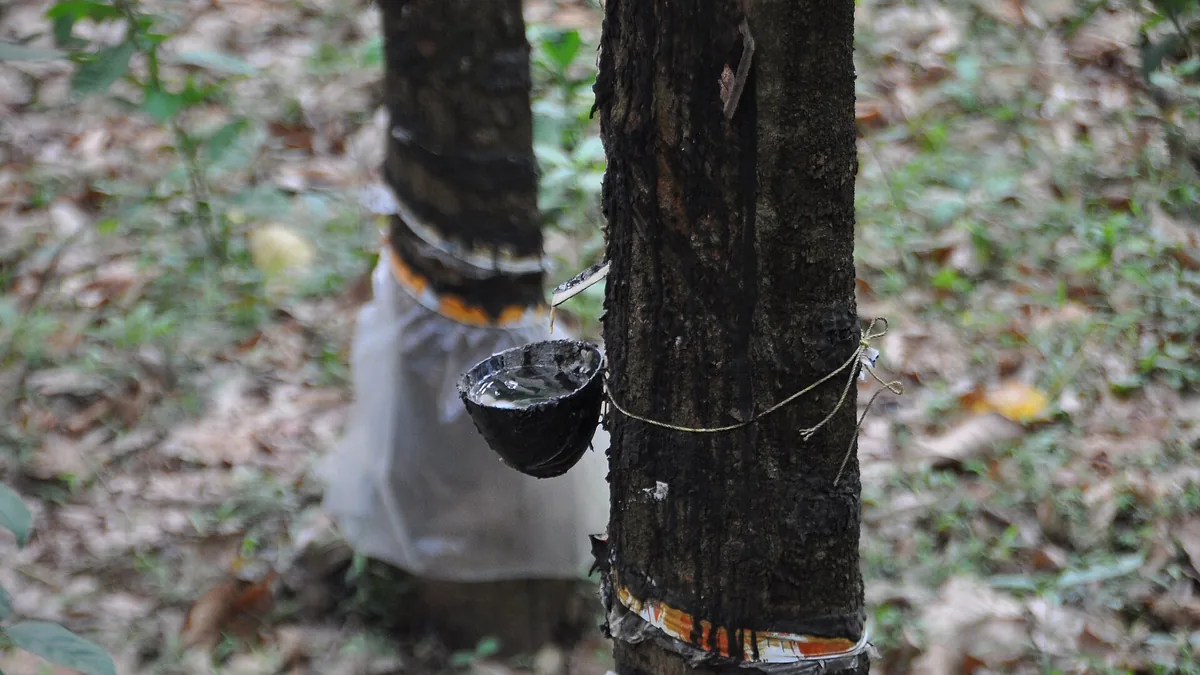
- Adopting RRII-414 & RRII-430 high-yielding clones with rain-guard polythene skirts and S/2 d3 3-day tapping intervals cuts bark consumption and lifts mature smallholder Kerala/Northeast plantations toward 2,000–2,400 kg dry rubber per hectare yearly.
Monitoring the official daily Rubber Board price published from Kottayam (Kerala) steers selling confidence for over 1.3 million smallholder growers across Kerala, Tripura, Assam, Tamil Nadu (Kanyakumari), and Karnataka! Unlike fragmented local vegetable yards, India’s natural rubber trade anchors daily transparency directly around The Rubber Board of India statutory market quotations—most famously benchmarked via clean honey-amber RSS-4 (Ribbed Smoked Sheets Grade 4) and crumb-grade ISNR-20!
Notice how Kottayam daily quotes respond simultaneously to domestic tyre factory replenishment (MRF, Apollo, CEAT, JK Tyre), Bangkok RSS-3 / Singapore SICOM TSR-20 international import parity, and South Kerala tapping days lost to heavy June–September southwest monsoon rain! In this complete guide, inspect RSS-4 vs. RSS-5 vs. ISNR-20 vs. Scrap Rubber grade pricing alongside Rubber Research Institute of India (RRII) RRII-414 / 430 clonal yields, dry-rubber-content (DRC%) coagulation testing, rain-guarding ROI, and Rubber Board replanting subsidies.
1. Rubber Board Price Benchmarks: Kottayam RSS-4, RSS-5 & ISNR-20 Grades
Before taking sheet bundles or field coagulum lumps to local Rubber Producers’ Society (RPS) dealers, weigh clean dry sheets against Rubber Board quality classifications (note domestic physical sheets often trade slight dealer spreads relative to Kottayam benchmark settlements; compare national commodity context on overall natural rubber market trends):
| Natural Rubber Grade | Benchmark Hub | Indicative Price Range | Key Quality & Processing Spec |
|---|---|---|---|
| RSS-4 (Ribbed Smoked Sheets) | Kottayam / Kochi Exchange | Rs 185 – Rs 272 / kg | Standard Indian tyre benchmark; clear amber uniform ribbed smoke sheet free of mold |
| RSS-5 (Lower Smoked Sheet) | Kottayam / Thrissur / Agartala | Rs 178 – Rs 262 / kg | Slight dark smoke specks or uneven edge trim (~Rs 6–10 discount under RSS-4) |
| ISNR-20 (Block / Crumb Rubber) | Kottayam Industrial Benchmark | Rs 172 – Rs 260 / kg | Technically Specified Block Rubber milled from field cup lump for heavy radial tyres |
| 60% DRC Concentrated Latex | Kottayam / Coimbatore Glove Trade | Rs 145 – Rs 215 / kg | Centrifuged ammonia-preserved liquid latex measured strictly on dry rubber solids |
| Field Cup Lump / Scrap Rubber | Village RPS Aggregation Depots | Rs 105 – Rs 155 / kg (Wet–Dry) | Air-dried bark scrap & bowl coagulum sold directly to crumb rubber factories |
| Northeast RPS Grade (Tripura/Assam) | Agartala / Guwahati RPS Yards | Rs 170 – Rs 248 / kg | Discounted ~Rs 10–18 below Kerala Kottayam freight parity toward tyre factories |
2. Why Kottayam Rates Move: Bangkok Import Parity, Monsoon Days & Tyre Demand
- 1. International Bangkok/SICOM Freight Parity: Domestic manufacturers import TSR-20/RSS-3 under 25% customs duty (or capped Rs 30/kg specific duty ceiling on ribbed sheets) whenever local Kottayam prices climb dramatically above Southeast Asian FOB plus port insurance & ocean freight.
- 2. Rainy Season Tapping Shutdowns: Heavy June–August monsoons in Kottayam, Idukki, Pathanamthitta, and Kozhikode wash out 40–60 morning tapping days unless trees wear polythene rain-guards—creating tight domestic lean-season supplies pushing Kottayam spot rates upward every autumn!
- 3. Kerala Chief Minister’s Price Support Floor (RPS Scheme): Kerala smallholders registered up to 2 hectares receive direct DBT buffer transfers bridging certified RPS invoice shortfalls toward guaranteed state support thresholds!
3. How to Grade Clean RSS-4 Sheets & Maximize Dry Rubber Content (DRC%)
Thousands of tonnes slip unnecessarily from lucrative RSS-4 down to lower RSS-5 / Lot grade because growers take shortcuts during coagulation or smoke-house drying! Follow Rubber Research Institute of India (RRII) village RPS rules cleanly:
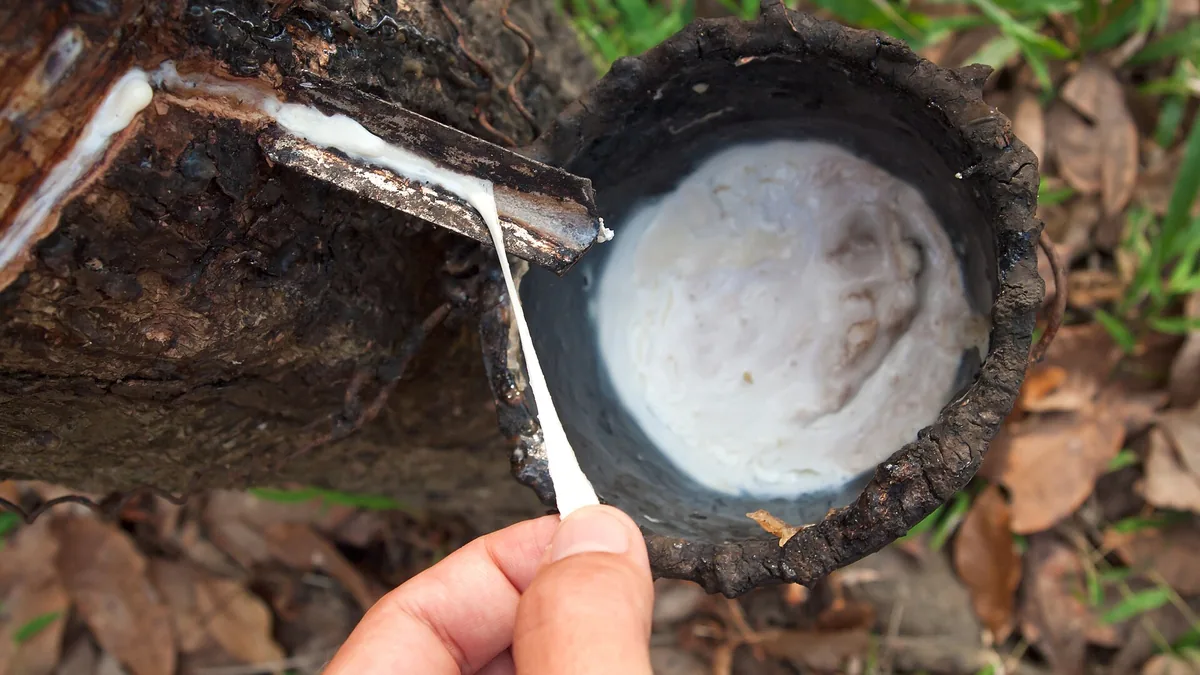
- 1. Clean Pre-Dawn Tapping + Nylon Mesh Straining: Start tapping gently at 5:30 AM–6:30 AM when plant turgor pressure flows fastest; pour white cup latex strictly through double stainless/nylon mesh strainers removing bark flecks, ants, and dry skin lumps cleanly before pouring into flat aluminum pans.
- 2. Exact Acid Dosage + Water Dilution: Dilute pure 32%–35% DRC latex with clean water to ~12.5%–15% DRC inside spotless coagulation trays, stir in exact diluted Formic Acid (never cheap industrial sulfuric acid that weakens tensile strength and lowers ISNR grades!), skim white air bubbles off smoothly, and remove milky foam cleanly for flawless uniform sheets!
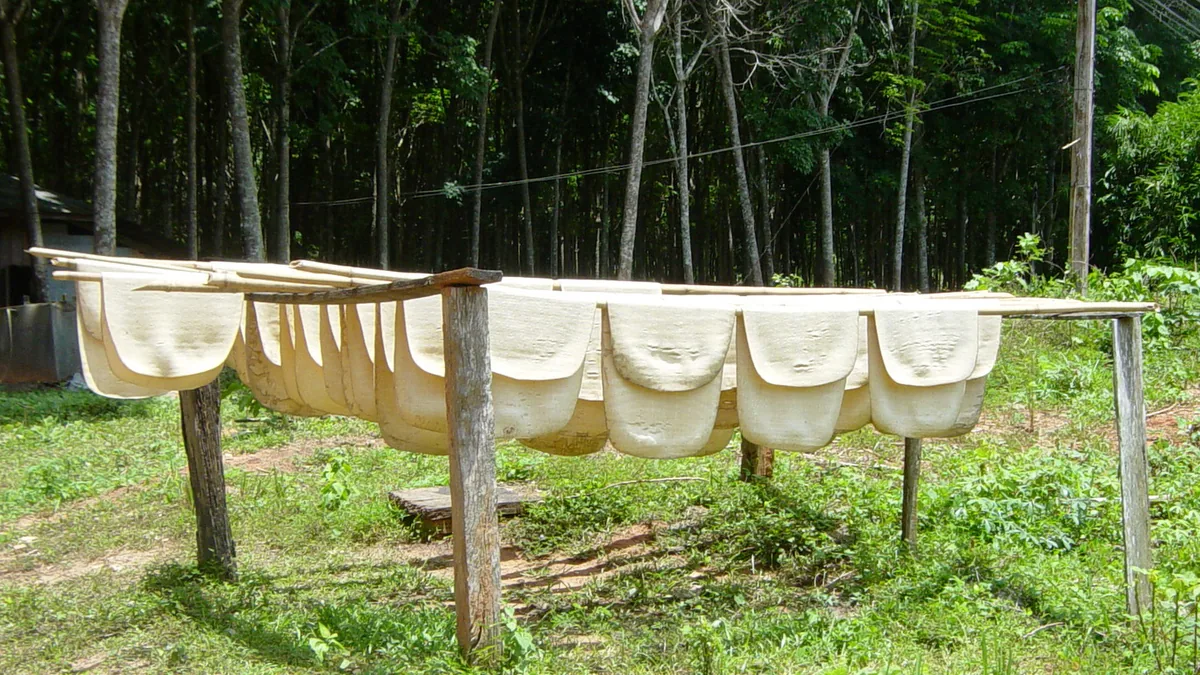
- 3. Gentle Grooved Rolling & 4–5 Day Smokehouse Cure: Pass soft wet slabs cleanly 3–4 times through smooth rollers followed by a ribbed finishing roller (creating crisp ridges helping dry moisture escape faster!), then hang sheets over glowing mild wood smoke at 48°C–58°C for 4–5 days until crisp clear amber with ZERO opaque white moist center spots!
4. Rubber Plantation Economics: RRII-414/430 Clones, Subsidies & Bark Life
Replacing aging seedling gardens with high-yielding polybag-budded stumps from authorized nurseries dramatically elevates lifetime plantation cashflow. High-yielding RRII-414, RRII-430, RRII-105, and Northeast cold-tolerant RRIM-600 reach tappable 50 cm girth in Year 7 cleanly, averaging 1,800 to 2,300+ kg dry rubber/hectare/year (~750–950 kg/acre!) over 20–25 productive years—especially under modern d3 (every 3rd day) tapping + controlled ethephon stimulation preserving scarce skilled tappers’ bark reserves cleanly!
Model long-term estate returns cleanly on our farm ROI calculator and crop profit calculator, check Rubber Board INROAD Northeast expansion & Kerala replanting grants via our agri subsidy calculator & central schemes hub, borrow affordable maintenance working capital via our KCC loan calculator, insure estate harvests or rain-shelter infrastructure via central crop insurance links (claim checker), verify foliar fungicide Phytophthora abnormal-leaf-fall protection safely with our pesticide calculator, optimize cover-crop fertilizers via our fertilizer tool & Soil Health Card guidelines, plan shade-tolerant young intercrops like black pepper prices, ginger, and turmeric during Years 1–3, compare regional coconut prices, and confirm Farmer ID enrollment cleanly.
5. Protecting Tapping Panels from Phytophthora Leaf Fall & Pink Disease
Unprotected trees hit by heavy June southwest storms suffer devastating Abnormal Leaf Fall (Phytophthora palmivora) dropping green leaves across July–August and cutting annual rubber yield by 30%–45%! Following Rubber Board pre-monsoon 1% Bordeaux mixture spraying (or approved copper fungicide panel pastes protecting delicate newly tapped wet bark against Bark Rot!), fixing waterproof polythene rain-guards securely with sealant above tapping panels in late May adds 45 to 60 profitable monsoon tapping days every season—often paying back rain-guard plastic and labour expenses ten times over!
6. Earning Bonus Income: Rubber Honey, Intercrops & Mature Timber Sale
Beyond daily white latex cups, smart rubber plantations harvest three overlooked income streams! First, rubber leaf extrafloral nectaries secrete abundant sweet clear sap from February through April, allowing Rubber Producers’ Societies (RPS) placing 10–15 Apis cerana / Apis mellifera bee boxes/hectare to harvest pure golden Rubber Honey (~25–40 kg/box in peak Kanyakumari & Kottayam springs!) without harming latex yield! Second, intercropping shade-loving Amorphophallus (elephant foot yam), banana, pineapple, and fodder grass across sunlit Years 1–3 pays establishment upkeep smoothly. Third, after 25–28 years of productive tapping, felled seasoned rubber wood (Rubberwood) sells profitably to treated furniture sawmills (~Rs 2.5 to Rs 4+ lakh/acre stump value!) financing full new replanting comfortably.
Plan long-term nursery replanting timing carefully around central Ministry of Commerce & Industry import-tariff notifications, ICAR-KVK soil moisture conservation bench-terracing advisories across sloping Western Ghats or Garo/Tripura hills, and Agmarknet regional spice/intercrop trading windows! Forming clean member Rubber Producers’ Societies (RPS) with shared hydraulic powered sheet rollers, clean smoke chambers, and calibrated Dry Rubber Content (DRC) lactometers lets 50-tree marginal smallholders consistently achieve crisp export-grade RSS-4 yellow sheets instead of forfeiting Rs 10–15/kg silently at village scrap counters. Tracking seasonal Northeast India monsoon arrivals alongside ASEAN ANRPC global futures in Thailand, Indonesia, and Vietnam helps progressive Kerala and Tripura estate cooperatives decide smoothly when field-cured RSS smoked sheets deserve holding briefly inside clean dry airy godowns ahead of autumn domestic automotive tire restocking cycles.
Frequently asked questions
- Where can farmers check the official Rubber Board price today in India?
- The official daily Indian benchmark market report (Kottayam & Kochi RSS-4, RSS-5, ISNR-20, and Latex 60%) is published every trading afternoon directly by The Rubber Board of India and mirrored alongside regional natural rubber rate updates.
- What is the current Kottayam RSS-4 vs ISNR-20 rubber rate per kg?
- Under recent tight domestic supply cycles reported on Rubber Board Kottayam bulletins, Grade RSS-4 ribbed smoked sheets trade indicatively between Rs 185 and Rs 272 per kg, while ISNR-20 block rubber hovers roughly Rs 10 to Rs 18 lower (~Rs 172–Rs 260/kg).
- Why do local village rubber dealers pay less than Kottayam RSS-4 quoted prices?
- Village dealers purchase mixed moist ungraded lots (often equivalent to RSS-5 or Lot quality) and subtract transport freight, moisture loss, and dealer brokerage margins; selling cleanly graded dry sheets through member Rubber Producers’ Societies (RPS) closes most of this gap!
- How much natural rubber does 1 acre of plantation yield per year in Kerala?
- Under RRII recommended clones like RRII-414 and RRII-430, mature tapped gardens (~180–200 trees/acre) harvest roughly 750 to 950 kg dry rubber per acre per year (~1,850 to 2,350 kg/hectare) when paired with monsoon rain-guards.
- What acid should farmers use to coagulate clean RSS-4 rubber sheets?
- Always use diluted pure Formic Acid (never cheap battery/sulfuric acid or alum) inside clean aluminum trays after straining latex cleanly; pure formic acid produces soft bright translucent amber sheets commanding top RSS-4 prices.
- How does the Kerala government Rubber Production Incentive (RPS) support scheme work?
- Eligible registered Kerala smallholders owning up to 2 hectares receive direct bank DBT transfers bridging certified village RPS sale prices whenever market spot rates dip below the Kerala state support floor—check state schemes via our government subsidy overview.
- When should farmers fix monsoon rain-guards onto rubber tree trunks?
- Install clean polythene rain-guard skirts in mid-to-late May right before southwest monsoon rains begin, keeping newly scraped tapping cuts dry so growers gain 45–60 extra rainy tapping days cleanly.
- Which high-yielding rubber varieties grow best in Northeast India (Tripura & Assam)?
- Because Northeast winters turn cool below 10°C, Rubber Board trials promote hardy cold-tolerant RRIM-600, RRII-429, and RRII-208 clones backed by INROAD plantation grants (check subsidy options).
- Can young rubber gardens be intercropped to earn money during Years 1 to 3?
- Yes! Widely spaced young rows easily grow sunlit pineapple, banana, tapioca, elephant foot yam, or spices like ginger (ginger farming & prices) cleanly before dark rubber shade closes by Year 4.
- Is rubber plantation renovation eligible for KCC farm credit?
- Yes, plantation growers hold valid land records eligible for low-interest Kisan Credit Card (KCC) maintenance working capital and drip/input financing—calculate seasonal EMIs via our KCC loan calculator.
- Why does smoky dampness or dark soot spots reduce sheet rubber value?
- High smokehouse temperature (>60°C), wet firewood smoke, or incomplete drying leaves damp white pockets and dark blistered skins that grade downward immediately from crisp honey-amber RSS-4 into discounted RSS-5 or Lot quality!
- What does d3 tapping frequency mean for rubber tree longevity?
- Under modern S/2 d3 tapping, each tree is tapped across a half-spiral bark groove once every 3 days instead of daily—letting delicate latex vessels replenish smoothly while extending productive bark life cleanly past 25+ years!
This article is for general information only and is not financial advice. Loan and scheme eligibility depends on partner and government criteria.