Murga Mandi Rate Today Guide: Broiler Daily vs Dressed Math
Key takeaways
- Live Farm-Gate vs Retail Dressed Math: Dressing live broilers loses ~28%–32% feathers, blood & offal—explaining clean 1.4x–1.5x gap between Murga Mandi live per kg & butcher dressed per kg!
- 65%–70% Maize + Soybean Feed Backbone: Every harvest swing in domestic Kharif yellow corn & Soybean meal (DOC) drives poultry production floor costs immediately within weeks.
- Two Core Mandi Weight Classes: Hotels pay crisp bids for smaller 1.3–1.6 kg Tandoori batches (28–32 days), whereas Sunday family mandis clear heavy 2.0–2.4 kg Curry/Cut birds (36–42 days).
- Biological Shrink & Summer Mortality Risk: Uncontrolled 42°C north Indian May sheds collapse weight gain & spike feed conversion costs unless fogging/cooling fans run cleanly (Check FCR ROI).
Checking murga mandi (murga mandi rate today, chicken ka rate kya hai, and wholesale lifting prices across Delhi Ghazipur Murga Mandi, Barwala, Nashik, Pune, Bengaluru, and Namakkal) means separating live farm-gate bird auction rates from neighborhood retail dressed meat counter tags! Because live broiler lifting prices swing sharply every single morning on warm-weather feed intake, Shravan/Navratri fasting dips, and 65%–70% Maize + Soybean DOC feed costs (ICAR Directorate of Poultry Research & dahd.nic.in), remember the ironclad ~68%–72% skinless dressed conversion rule (explaining why clean retail skinless chicken naturally sits ~1.4x–1.5x live mandi rate!). Compute realistic batch ROI using Poultry Profit Tool alongside Barwala Hub & Bengal Poultry Rates.
Since KisanPe never publishes made-up fake daily per-kg prices, master exact 1.55–1.65 FCR (Feed Conversion Ratio) farm math, Ghazipur vs regional tandoori (1.4–1.6 kg) vs curry (2.0–2.3 kg) bird size tiers, cold-chain transport shrink, and ₹2 Lakh Poultry KCC credit!
Live Murga Mandi weight grades vs Dressed Butcher Counter prices (68%–72% conversion)
Walk past Delhi’s famous Ghazipur Murga Mandi at 4:00 AM or watch refrigerated wire crates load directly off Barwala, Malegaon, and Palladam sheds hearing "aaj ka murga ka rate kya hai" (live bird weight basis), and immediately spot why families misread wholesale vs local market tags! Inside live wholesale poultry yards (dahd.nic.in), integrators and independent poultry growers weigh live squawking flocks strictly by bird weight class (Tandoori small vs Medium vs Jumbo Cut), while urban consumers walking into hygienic cold retail outlets buy cleaned skinless dressed chicken (~68%–72% edible carcass recovery) or boneless breast cuts!
Simple transparent arithmetic clears confusion instantly: 100 kg live healthy broiler birds dressed clean yield roughly 68 to 72 kg skinless chicken meat! Therefore, before adding retail shop chiller electricity, municipal stall rent, ice crushed transit shrink (2%–4%), and butcher labour, mathematically the pure cost of meat alone automatically equals live murga mandi rate ÷ 0.70 (~1.43x)! Check integrated economics cleanly across KisanPe Poultry Calculator alongside layer trends on Barwala Market and Delhi Poultry Trade.
| Broiler / Poultry Weight Segment | Typical Grow-Out Age & Farm Role | Primary Buyer Market & Processing Channel |
|---|---|---|
| Small / Tandoori Broiler (1.2–1.6 kg) | 26–32 Days (Peak FCR efficiency ~1.45–1.52) | Dhabas, roasted tandoor restaurants & catering grills wanting whole tender birds |
| Standard Mandi Curry (1.8–2.2 kg) | 35–40 Days (Standard FCR ~1.58–1.65) | Ghazipur, Pune & Bengaluru retail wet/cold counters (~70% dressed cut yield) |
| Heavy / Jumbo Processing (2.3–2.6+ kg) | 42–46 Days (Slower feed efficiency >1.72) | Boneless breast fillet food factories, marriage caterers & frozen Nugget plants |
| Desi / Kroiler / Backyard Coloured | 70–100+ Days Free-Range Heritage | Rural Sunday haats fetching distinct niche household flavor premiums cleanly |
Feed Conversion Ratio (FCR), Maize-Soybean DOC surges & integrator vs independent growers
Want to forecast murga mandi rate swings six weeks ahead of harvest batches without waiting on hearsay? Watch three verified commodity benchmarks every Tuesday: 1) Kharif/Rabi yellow Maize mandi arrivals, 2) Indore Soybean Meal (DOC de-oiled cake), and 3) Day-Old Chick (DOC hatchery placement prices) (pdonpoultry.org)! Because balanced broiler starter/finisher feed accounts for 65%–70% of total live-kg farm production cost, any tight spike in feed corn pushes independent growers to place fewer day-old chicks temporarily (cutting national supply cleanly ~40 days later causing crisp mandi recovery!).
Conversely, during India’s deep seasonal consumption troughs—especially peak hot May (above 43°C) and Shravan/Navratri vegetarian festival weeks—even healthy sheds carrying 2.1 kg flocks struggle unless growers track strict FCR 1.55–1.62 feed hygiene (stopping wet littered hopper spills!) and verify integrator contract growing terms vs independent hatch-buy risk cleanly (Poultry KCC Working Loan Up To ₹2 Lakh & Compare Feed Pulse Grains).
- Cool Evaporative Pad Cooling Saves Summer Weight: Installing clean pad-fan or mist foggers + reflective insulated shed roofs drops May afternoon shed heat cleanly by 6–8°C, halting heat-stroke mortality that crushes batch returns!
- Strict All-In All-Out Biosecurity (Newcastle / Gumboro Shield): Never mix younger incoming 1-day chicks inside the same farm shed beside older 35-day flocks (zero outside buyer truck wheels inside shed doors!); disinfect cleanly with glutaraldehyde & lime wash during 10-day rest intervals (Poultry Disease Control).
- Convert Dry Deep-Litter Poultry Manure Into Farm Cash: Nitrogen-phosphorus rich aged broiler litter fetches cheerful regional income from sugarcane, onion, and vegetable farmers (Soil Health Nutrition)!
Understanding Ghazipur Murga Mandi & regional Haryana-Maharashtra-South transport shrinkage
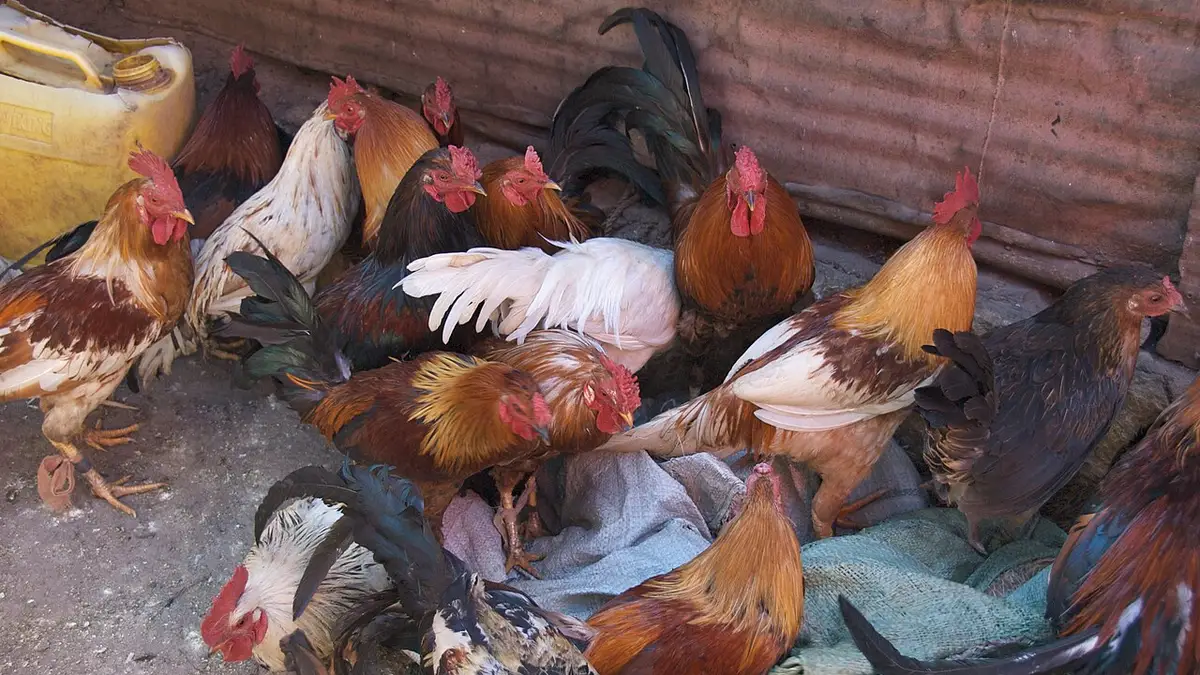
Why can Barwala (Haryana), Malegaon (Maharashtra), or Palladam (Tamil Nadu) shed lifting quotes sit visibly below Delhi Ghazipur or Mumbai wholesale auction screens even on clear traffic days? Trucking live broilers 200 to 400 kilometres overnight across warm expressways inside open plastic ventilated crates costs both high-speed diesel crate hire AND 4% to 6% unavoidable live transit weight shrinkage (moisture loss & gut clearance) (not counting hot-weather transport casualty risk)! Calculating accurate net gate realization vs hauled market bids prevents farmers taking unnecessary expressway risks (compare local FPO chiller dressing centres too) (Ghazipur Market Operations).
Using Poultry KCC (₹2 Lakh Working Credit) & backyard free-range diversification safely
Under RBI/PIB extended Kisan Credit Card (KCC) guidelines for Animal Husbandry & Fisheries (pib.gov.in), registered broiler growers and rural backyard egg units qualify for concessional working-capital loans up to ₹2 Lakh (collateral-free base tiers) enjoying prompt-repayment Interest Subvention (slashing costly informal feed-dealer credit margins!) (Check KCC Poultry Eligibility & Backyard Poultry Hub). Keeping clean flock vaccination logs, hatcheries bills, and shed sanitation records simplifies bank renewal dramatically cleanly.
Seasonal price swings at Ghazipur & regional broiler mandis (Summer heat vs Winter weddings)
Understanding seasonal demand-supply waves across Delhi Ghazipur Murga Mandi (Ghazipur Market Hub), Haryana Barwala, UP, Maharashtra, and Karnataka stops independent poultry sheds from placing oversized batches into classic price crashes! Every predictable Shravan (July–August), Navratri (April / October), and Pitru Paksha (September) cuts retail Urban non-vegetarian consumption sharply for 10–30 days (creating abrupt heavy bird backups hitting live lifting gates!). Conversely, brisk October–February cold weddings, New Year, and Christmas boost both farm-gate 2.2 kg Curry and restaurant 1.5 kg Tandoori lifting margins steadily (Check Poultry ROI)!
- Never Hold Overweight >2.5 kg Birds Waiting Blindly Past Day 42: Heavy birds gobble terrible daily feed ratios (FCR >1.90!) while crashing under heat fatigue—sell on time smoothly keeping rotation batches steady!
- Inspect Accurate Farm Weighing Balances At 2:00 AM Loading: Confirm clean crate tare weights personally when lifting contractor trucks load birds cleanly in dim farm lights.
Evaluating Contract Integrator Models vs Independent Farmer Risk in Indian Broiler Sheds
Across Coimbatore, Namakkal, Pune, and West Bengal sheds, growers routinely weigh two business setups (pdonpoultry.org): Contract Integrator Growing (earning stable fixed Rs/kg management rearing charges while integrator absorbs maize-soy feed & Day-Old-Chick market swings) versus Independent Farm Production (buying DOC chicks & feed directly chasing top Murga Mandi windfalls—yet wearing brutal downturn losses directly!)! New smallholders lacking 6–12 months working-capital reserves safeguard family finances dramatically cleaner starting cleanly on verified Contract Rearing + EC cooling upgrades paired with concessional Poultry KCC Loans (Biosecurity Protection).
Converting broiler deep-litter manure cleanly into profitable farm income & organic compost
Smart broiler operators turn litter cleanup right between all-in/all-out batch rests into crisp steady bonus income cleanly covering electricity & lime bills! Well-composted dry rice-husk broiler deep litter rich in organic Nitrogen, Calcium, and available Phosphorus cures cleanly away from open ponds for 30 days into dark crumble poultry manure prized eagerly by regional Sugarcane, banana, onion, and Garlic Estates (avoid spreading fresh un-composted scorching ammonia litter straight onto tender seedlings!).
Setting up ventilated deep-litter broiler sheds & summer heat-stress safeguards in rural clusters
Building profitable small-to-medium poultry broiler units supplying Delhi Ghazipur, Haryana Barwala, or western India lifting contractors begins strictly with shed orientation (East-West ridge alignment minimizing harsh direct afternoon sun glare cleanly into open side curtains!)! Elevated wire-mesh plinths (3 feet brick dwarf walls preventing flooded rainwater dampness & snake/rodent intrusion), white reflective cool rooftop coatings paired cleanly with high-pressure water foggers + circulation fans (cutting scorching May interior temperatures down cleanly from 44°C below 33°C), clean rice-husk dry litter depth (2–3 inches fluffy aerated bedding), and strict 10-day All-In/All-Out caustic soda + formalin rest cycles eliminate costly 35-day heat-stroke collapses.
Measuring fresh daily water intake (normally ~1.8x–2.0x dry feed kilos eaten) alerts careful farmers instantly 24 hours before respiratory CRD or Coccidiosis enters flocks, allowing timely veterinary dosing while keeping clean FCR conversions tight (1.55–1.65) and live Murga Mandi batch returns profitable sustainably across changing seasons.
Tracking local maize-soya feed index costs alongside regional Murga Mandi festive calendars keeps rural broiler rearing financially resilient through changing monsoon and summer peaks cleanly. Checking incoming water chillers and electric back-up fans ahead of May waves keeps FCR numbers crisp across every commercial grow-out batch without costly late mortality spikes or transport distress.
For broader financial, market, and crop-planning continuity alongside murga mandi, farmers across India also consult KisanPe resources including KisanPe Mandi Rates Directory, KisanPe Mandi Price Trends, Mandi Price Watch, Best Mandi Near Me Finder, AI Mandi Intelligence Tool, Mandi Market Intelligence Services, Crop Insights Hub, Crop Income Calculator, All-India Mandi Bhav Guide.
Frequently asked questions
- Why are retail chicken meat shop prices roughly 1.4x–1.5x higher than live Murga Mandi rates?
- Live farm-gate broilers yield ~68%–72% clean skinless dressed meat (losing ~30% feathers, blood & offal)—so dressed meat base cost automatically scales cleanly by ~1.43x live mandi rates before adding retail chilling & cutting (Check Poultry ROI).
- How many days does a standard Indian broiler flock take to hit marketable 2.0–2.2 kg weight?
- Under good ventilation, clean starter/finisher maize-soy diets (FCR ~1.58–1.65), and strict vaccination schedules (ICAR-DPR), healthy flocks reach 2.0–2.2 kg live cleanly around 35 to 40 days.
- Why does Ghazipur Murga Mandi in Delhi set northern broiler price sentiment daily?
- Ghazipur receives massive live overnight broiler arrivals from Haryana (Barwala/Jind), UP & Punjab, broadcasting transparent morning clearance sentiment watched across all north Indian poultry districts (Compare Barwala Market).
- What proportion of poultry farming production cost goes into Maize and Soybean DOC feed?
- Approximately 65% to 70% of total live broiler production cost derives directly from energy feed (Yellow Maize) and protein (Soybean Meal DOC) (dahd.nic.in)—making grain crop harvests decisive for poultry margins!
- What causes sudden drops in Murga Mandi demand across northern and western India?
- Predictable seasonal religious vegetarian months (Shravan / Navratri / Pitru Paksha) and blistering 43°C+ May–June heat waves slow domestic household consumption temporarily—wise growers align smaller May chick placements cleanly (Compare Egg Cycles).
- Can small poultry growers access subsidised ₹2 Lakh KCC bank loans like crop farmers?
- Yes—central PIB / RBI Animal Husbandry KCC norms extend prompt-repayment Interest Subvention working capital (up to ₹2 Lakh base tier) directly to verified poultry sheds (Poultry KCC Rules).
- What weight bracket brings best margins when hot summer stresses birds rapidly?
- Clearing smaller 1.4–1.6 kg Tandoori batches around day 28–31 trims steep high-FCR final week feed waste AND reduces late summer heat-stroke casualties sharply (Disease Prevention).
- What key biosecurity habit protects poultry batches cleanly from deadly Ranikhet (Newcastle)?
- Practice all-in/all-out batching with 10–14 day limewash rest periods, isolate sheds cleanly from wild sparrows/visiting trader trucks, and complete strict eye-drop F1/Lasota & IBD vaccination calendars.
- Why is holding broilers past Day 42 (>2.5 kg) risky for small independent farmers?
- Heavy birds deteriorate rapidly in feed conversion efficiency (FCR >1.9) while becoming intensely vulnerable to heat stroke & festival demand lulls (Check Batch Breakeven).
- Should new poultry shed entrepreneurs start with Contract Integrators or open independent flocks?
- Beginners lacking heavy cash buffers reduce exposure to volatile feed/mandi crashes dramatically starting cleanly under transparent Contract Rearing Agreements (pdonpoultry.org; Poultry KCC).
This article is for general information only and is not financial advice. Loan and scheme eligibility depends on partner and government criteria.