Sunflower Seeds in Hindi: Surajmukhi MSP, Yield & Benefits
Key takeaways
- The exact Hindi translation for Sunflower Seeds is सूरजमुखी के बीज (Surajmukhi ke beej) (from Helianthus annuus).
- Government of India CCEA/PIB increased official Sunflower Seed MSP sharply by +Rs 622/quintal—jumping from Rs 7,721/qtl (2025–26) to Rs 8,343/quintal (2026–27)!
- In November 2026 APMC wholesale trade, raw black oil-crushing seed across Raichur, Gadag (Karnataka), Ambala, and Kurukshetra (Haryana) trades indicatively at Rs 5,600–Rs 7,850/qtl alongside state Bhavantar/NAFED support.
- Irrigated spring/Rabi hybrids (KBSH-44, DRSH-1) yield 8 to 10+ quintals/acre cleanly in just 90 to 105 days (~40%–42% edible oil content) fitted ideally between potato harvest and monsoon paddy!
Searching sunflower seeds in Hindi helps both health-conscious households looking up the Hindi kitchen name—सूरजमुखी के बीज (Surajmukhi ke beej / सूरजमुखी बीज)—and commercial farmers evaluating one of India’s quickest, highest-MSP edible oilseed cash crops! Backed by the Cabinet Committee on Economic Affairs (CCEA) and published via PIB (pib.gov.in) under the central National Mission on Edible Oils (NMEO-Oilseeds), official Government of India Sunflower Seed MSP jumped dramatically by +Rs 622/quintal—rising from Rs 7,721/quintal (Kharif 2025–26) to Rs 8,343/quintal (Kharif 2026–27) to boost domestic heart-healthy edible oil self-reliance.
Whether grown across black cotton soils in Karnataka’s Raichur, Bagalkot, and Gadag districts (~40%–50% of national acreage) or cultivated in crisp 95-day Spring/Zaid windows following potato or toria harvests in Haryana (Kurukshetra, Ambala, Shahabad) and Punjab, modern single-cross hybrids (KBSH-44, DRSH-1) yield 8 to 10+ quintals per acre containing 38% to 44% pale golden oil tracked across Agmarknet and ICAR-IIOR (Hyderabad).
1. Sunflower Seeds Meaning in Hindi, Culinary Forms & Botanical Overview
Across North Indian markets, nutrition shops, and APMC mandi ledgers, buyers use distinct regional names depending on whether purchasing hull-on oilseed lots for solvent mills or clean raw shelled kernels for snacks and bakeries:
- Exact Hindi Name: सूरजमुखी के बीज (Surajmukhi ke beej) — literally "sun-facing flower seeds" because young open floral discs exhibit heliotropism turning east-to-west across sunny days.
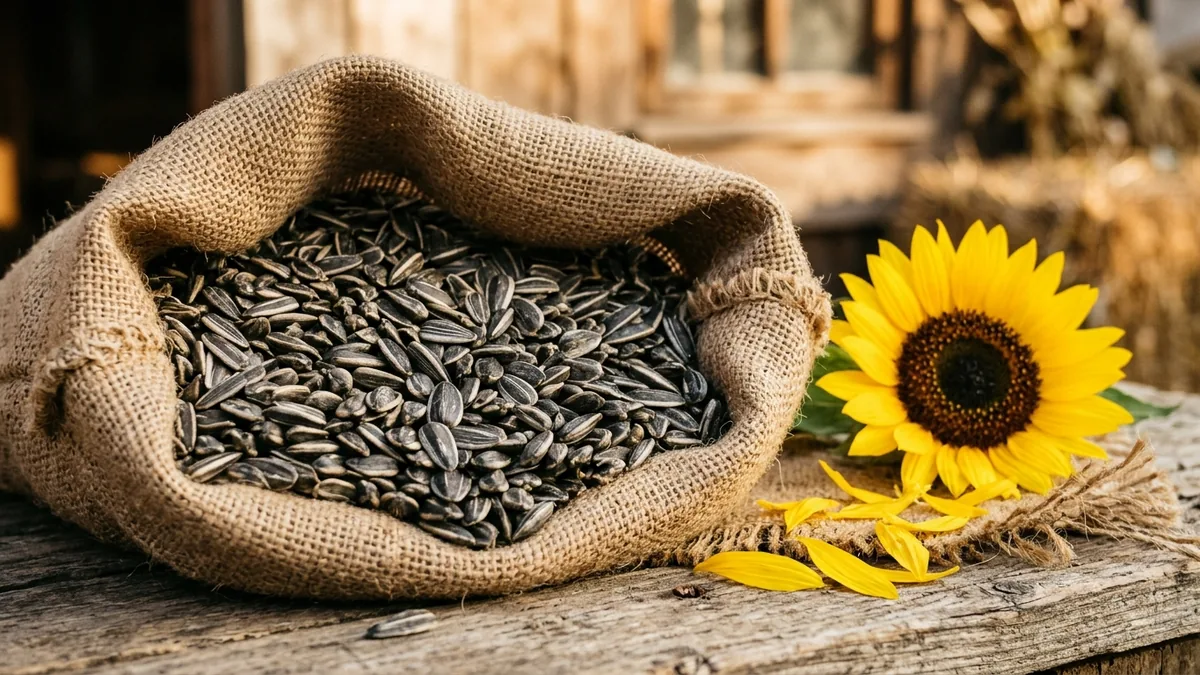
- Two Commercial Forms: (1) Black Oilseed Varieties (thin dark jet-black husks holding 38%–44% edible oil sold in grain mandis to oil expellers), and (2) Grey/Black-Striped Confectionery Seeds (larger low-oil bold kernels dehulled into salted roasted Surajmukhi giri / Magaj for granola mixes, laddoos, and bakeries).
- Nutritional Value of Edible Shelled Kernels (Magaj): Packed per 100 g with ~20–21 g plant protein, rich Vitamin E (tocopherols), Vitamin B6, Magnesium, Selenium, and clean heart-friendly polyunsaturated/monounsaturated fats (linoleic & oleic acid) alongside pumpkin/chia/flax seeds (magaj/melon seeds & amaranth nutrition guide).
2. Sunflower Seed MSP 2026 & Karnataka / Haryana Mandi Price Matrix
Unlike staple wheat or paddy, open APMC spot bids for black oilseed sunflower frequently trade slightly below statutory MSP during peak harvest gluts due to cheaper global imported sunflower oil parity—making state Bhavantar price-deficiency compensation (notably active across Haryana’s Meri Fasal Mera Byora portal!) and central NAFED PSS procurement crucial revenue protections for farmers.
| Market / Scheme Grade | Primary Production / Auction Belt | Indicative Rate Band (Nov 2026) | Key Quality & Oil % Criterion |
|---|---|---|---|
| Central Govt MSP (2025–26 Season) | All-India (NAFED / HAFED / State Agencies) | Rs 7,721 / quintal | FAQ <=9.0% moisture, <2% foreign matter |
| Central Govt MSP (2026–27 Season) | All-India (+Rs 622 Absolute Hike via PIB) | Rs 8,343 / quintal | Highest oilseed MSP boost supporting NMEO targets |
| Haryana Open Mandi Spot (Ambala / Shahabad) | Spring Harvested May–June Hybrid Lots | Rs 6,200 – Rs 7,850 / quintal | Bold 40%+ oil dry spring seed + state Bhavantar top-up |
| Karnataka Open APMC Spot (Raichur / Gadag) | Kharif & Rabi Rainfed / Irrigated Lots | Rs 5,600 – Rs 7,150 / quintal | Dry sound FAQ black seed tracked daily on Agmarknet |
| Cold-Pressed Surajmukhi Edible Oil | Domestic Mill & Retail Bottlers | Rs 145 – Rs 215 / liter | Light clean polyunsaturated heart cooking oil |
| Hulled Edible Bakery Seeds (Surajmukhi Giri) | Delhi Khari Baoli / Metro Dry Fruit Markets | Rs 280 – Rs 480 / kg retail | Clean sorted white shelled kernel (zero shells) |
3. High-Yield Surajmukhi Farming: 95-Day Hybrids, Honeybee Pollination & Boron Care
According to ICAR-Indian Institute of Oilseeds Research (IIOR Hyderabad), two simple agronomic tweaks separate weak 4-quintal dryland harvests with hollow "chaffy centers" from full 10-quintal irrigated commercial harvests:
- 1. Top ICAR Hybrid Picks: KBSH-44 (Karnataka’s high-oil star hitting 8–10 qtl/acre irrigated vs 3.5–5 qtl rainfed), DRSH-1 (ICAR bred 42% oil content), and spring-fast PSH-1962 / PSH-2080 thriving smoothly in Haryana & Punjab.
- 2. Honeybee & Hand Pollination Magic (Critical!): Empty seeds inside dead center rings of big yellow flowers come directly from failed bee pollination! Placing 2–3 honeybee hive boxes/acre right along sunflower borders during mid-bloom—AND gently avoiding toxic broad-spectrum sprays during sunny mid-day bee foraging hours—boosts filled grain seed-set by 20%–35% while harvesting pure bonus honey!
- 3. Seed Rate, Sulfur & Boron Split Application: Drill just 2 to 2.5 kg/acre treated hybrid seed at 60 cm × 30 cm spacing. Mix basal 20 kg Sulfur + 1 kg/acre Borax alongside DAP/MOP computed cleanly via our fertilizer dosage calculator & Soil Health Card guidelines, and irrigate carefully at star-bud, flowering, and milky seed stages using our irrigation planner.
- 4. Bird Scarers & Moisture Guarding: Flock-feeding rose-ringed parakeets raid ripening yellow flower backs greedily in the final 15 days; eco-friendly reflective ribbon tapes and timely sickle harvesting once disc backs turn lemon-yellow prevent catastrophic bird damage.
4. One-Acre Spring Sunflower Economics, Meri Fasal Byora & KCC Credit
Because Spring Surajmukhi planted in mid-February matures briskly within just 95 days ahead of June paddy transplanting, North Indian farmers squeeze an entire high-value cash harvest out of fallow spring intervals without sacrificing primary wheat or basmati harvests! Spending ~Rs 14,000–Rs 19,000/acre (hybrid seed, light furrow irrigation, honeybee/sulfur inputs, mechanical thresher hire) while harvesting 9 quintals/acre backed by Haryana’s MSP-anchored procurement/Bhavantar model (~Rs 7,500–Rs 8,343/qtl effective parity) generates Rs 67,500 to Rs 75,000+ gross return/acre in just three short months!
Estimate clear per-acre spring margins via our crop income calculator and farm ROI calculator, check subsidized oilseed minikits & sprinkler grants under NMSA / NMEO-Oilseeds via our subsidy calculator & central schemes hub, access 4% working funds on our KCC loan calculator, insure plots under PMFBY (status tracker), verify pest control doses with our pesticide calculator, check state portal links on Meri Fasal Mera Byora Haryana, compare neighboring mustard rate spreads & groundnut markets, and update Farmer ID enrollment cleanly.
5. Threshing, <9% Storage Moisture & Cold-Pressed Extraction Value
Freshly combined heads hold wet spongy pulp backing that heats up inside heap piles within hours, spoiling seed oil color and raising Acid Value (FFA rancidity). Harvest discs once rear bracts turn brown-yellow, cure flower heads 3–4 days upside down on tarpaulins before threshing at moderate drum RPM, sieve light empty chaff off using clean blower fans, and dry glossy black oilseeds strictly below 8.5%–9.0% moisture before hauling to APMC weighbridges (e-NAM) or pressing pure artisanal wood-pressed (Kachi Ghani) sunflower oil cleanly for local urban customers!
6. Oilseed Meal (Khali), Alternaria Blight Control & Seasonal Rotation Calendar
Unlike bulky staple grains whose value drops sharply during regional surpluses, clean Surajmukhi farming fits smoothly across three distinct regional seasons in India—Kharif (June–July rainfed South), Rabi (October–November coastal/southern), and Spring/Zaid (late January–February irrigated North)—while generating dual value from cold-pressed cooking oil plus nutritious cattle protein meal! Following targeted pest/nutrition timings from ICAR-IIOR maximizes edible seed oil density:
- Sunflower Oil Cake (Surajmukhi Khali) Value for Dairy Cattle: Cold/expeller pressing 100 kg of clean black oilseed leaves roughly 58–62 kg of decorticated/undecorticated oilcake holding ~28%–35% crude protein—a valuable high-fiber summer supplement for lactating buffaloes and cows tracked in our dairy profit calculator.
- Alternaria Blight & Sclerotinia Head Rot Defense: Warm humid autumn clouds in Karnataka and Maharashtra spread dark concentric Alternaria leaf spots rapidly downward from lower mature leaves unless prevented early by clean seed dressing, balanced potash fertilization, and CIB&RC recommended foliar care computed cleanly with our pesticide calculator.
- Capitulum Borer & Tobacco Caterpillar (Spodoptera): Monitor undersides of broad hairy leaves carefully right at star-bud formation (35–45 DAS) when tiny larvae begin skeletonizing green leaves—early selective biorational management preserves 100% bee safety during upcoming yellow pollination weeks!
- 3-Year Sclerotinia Crop Rotation Rule: Never sow consecutive back-to-back spring sunflower plots in Ambala, Kurukshetra, or Yamunanagar; rotate cleanly across wheat, basmati paddy, spring maize, and chickpea so soil-borne white stem-rot sclerotia starves naturally.
At the household table, consuming shelled edible Surajmukhi ke beej takes minimal prep: toast raw dehulled grey-white kernels dry in a thick cast-iron pan over low flame for 3–4 minutes until nutty aroma lifts without charring oil fats, sprinkle gently over morning oats, salads, roasted nut mixes (chivda / mukhwas), or homemade pinni sweets alongside flax, sesame (til/sesame guide), and chia seeds. Keep unused raw shelled bags sealed tightly inside airtight glass jars inside cool kitchen shelves so delicate unsaturated Vitamin-E fats stay crisp and fresh for 6+ months cleanly without turning stale.
Evaluating the broader edible-oil economy explains why Indian central planners lifted official Sunflower Seed MSP past Rs 8,343 per quintal for 2026–27 under the National Mission on Edible Oils (NMEO–Oilseeds): India still imports roughly 55%–60% of domestic edible cooking oils—mostly palm, crude soybean, and crude sunflower oil from Russia, Ukraine, and Argentina! Every quintal of high-oil KBSH-44, DRSH-1, or PSH-1962 sunflower grown profitably across Raichur, Koppal, Bagalkot, Kurukshetra, Shahabad, and Western UP shrinks national edible import dependence while giving district oil expellers crisp fresh raw seed rather than refined tank freight.
Smallholder growers harvesting spring crops in May–June face one final harvest hygiene challenge across Haryana and Punjab: sudden hot pre-monsoon thunderstorm squalls! Rather than letting fully ripe nodding flower heads absorb sudden afternoon rain while standing upright, cut mature heads cleanly once back florets turn lemon-yellow (leaves 30%–35% green moisture), pile discs thinly in shaded breathable sheds or raised tarpaulins with spare drying sheets nearby, run gentle mechanical sunflower threshers (tuned cleanly to low ~450–500 drum RPM so brittle black seed coats do NOT crack open exposing oil fats to oxidation!), and winnow dust cleanly before hauling crisp <9% dry seed bags straight onto APMC platforms.
Whether checking daily Surajmukhi prices across Karnataka APMCs, registering spring acreage on state price-support portals, or learning balanced roasted kitchen benefits of Surajmukhi ke beej, combining certified hybrid seeds, pollinator bee safety, sulfur-boron nutrition, and clean dry threshing protects yield tonnage and market grade parity across every harvest cycle.
Farmers comparing spring Surajmukhi returns directly against irrigated summer moong or spring maize also note strong input resilience on light sandy loams: sunflower develops a deep branching taproot penetrating 1.2 to 1.5 meters downward—extracting residual Rabi phosphate and deep soil moisture more reliably during hot April weeks than shallow-rooted summer pulses! Pairing raised-furrow drainage lines, timely 2.5 kg/acre clean seed drilling, and dry hermetic seed bagging ensures clean Grade-A yellow/black harvest lots ready for immediate APMC sale or cold-pressed Kachi Ghani oil pressing.
For smallholders selling directly across Karnataka, Haryana, and Maharashtra mandis, remembering three simple post-harvest grading steps locks in clean price realizations every season: keep foreign stalk chaff below 1.5% by double-winnowing lightly after threshing; verify clean natural oil-fill seed weight (~38%–42% oil content measured via clean plump black achenes) rather than light hollow outer-ring bracts from incomplete pollination; and check official daily Agmarknet arrivals alongside NAFED state cooperative procurement circulars so spring or Kharif oilseed lots clear clean weighbridges without distressed local middleman haircuts.
In Haryana districts including Ambala, Kurukshetra, Shahabad, Karnal, and Yamunanagar, growers registering their spring sunflower acres in advance on the Meri Fasal Mera Byora portal qualify smoothly for state cooperative procurement through HAFED or Bhavantar Bharpayee Yojana deficit compensation whenever peak May–June open auction bids soften temporarily below announced MSP benchmarks! Keeping dry clean moisture below 9%, verified clean land mutation records linked neatly with Parivar Pehchan Patra / Farmer ID, and intact bank NPCI mapping speeds direct benefit settlements straight into farmer accounts within days after APMC gate auction weighing.
Even after completing seasonal spring harvests, farmers storing small edible homegrown batches of clean Surajmukhi kernels for family cold-pressed oil or nutritional kitchen snacks should remember one golden post-harvest tip: avoid leaving unshelled hulls pressed damp inside unventilated plastic drums during humid July rains! Spreading crisp well-winnowed black seeds over clean breathable floors once every month keeps delicate Vitamin-E tocopherols intact while preventing subtle stale rancidity—making spring oilseeds both a resilient cash earner and an everyday nutritional cornerstone across rural Indian households.
Frequently asked questions
- What is "sunflower seeds" called in Hindi?
- In Hindi, sunflower seeds are called सूरजमुखी के बीज (Surajmukhi ke beej / Surajmukhi beej), while peeled white edible snack kernels used in nutrition and sweets are sold in spice markets as Surajmukhi Giri or Magaj.
- What is the official Government MSP of Sunflower Seed in 2026?
- Approved by the Cabinet Committee on Economic Affairs (CCEA) and published via PIB, the official Government of India Sunflower Seed MSP stands at Rs 7,721 per quintal (2025–26) and jumps by +Rs 622 to Rs 8,343 per quintal for the 2026–27 marketing season.
- What is the mandi price of sunflower seeds in Karnataka and Haryana today?
- Open physical APMC auction bids tracked on Agmarknet indicatively trade between Rs 5,600 and Rs 7,150/quintal in Karnataka (Raichur/Gadag) and Rs 6,200 to Rs 7,850/quintal in Haryana (Ambala/Kurukshetra) supplemented by state MSP/Bhavantar support mechanisms.
- How many quintals of sunflower seed are harvested from 1 acre in India?
- In rainfed Karnataka black soils, yields average 3.5 to 5 quintals/acre, whereas well-irrigated hybrid fields in Haryana and Karnataka (KBSH-44) routinely achieve 8 to 10+ quintals per acre (~2,100–2,600 kg/ha) in just 95–105 days.
- How much seed is required to sow 1 acre of hybrid sunflower?
- Plant 2.0 to 2.5 kg per acre (5–6 kg/ha) of certified high-oil hybrid seed spaced cleanly at 60 cm between rows and 30 cm between plants so wide heads fill cleanly without crowding stalks.
- Why do empty hollow seeds form inside the middle of my sunflower flower head?
- Hollow chaff centers develop due to poor insect/honeybee pollination and Boron/water stress during peak yellow flowering—keeping 2 honeybee hive boxes/acre nearby, adding 1 kg/acre Borax, and stopping mid-day insecticide spraying restores dense center grain fill.
- Which state produces the largest quantity of sunflower in India?
- Karnataka ranks as India’s #1 producer (led by Raichur, Bagalkot, Koppal, and Gadag), followed strongly by high-productivity spring sunflower belts in Haryana (Kurukshetra, Ambala), Punjab, Odisha, and Maharashtra.
- How much edible oil comes out of 100 kg of black sunflower seeds?
- Improved ICAR-IIOR commercial oil hybrids yield 38% to 44% oil by weight (roughly 32–36 liters pure cold/expeller oil per 100 kg clean dry black seeds plus protein-rich cattle cake meal Khali).
- What are the health benefits of eating soaked or roasted Surajmukhi seeds daily?
- Consuming 1 to 2 tablespoons (15–30 g) daily of roasted unsalted Surajmukhi kernels supplies rich antioxidant Vitamin E, heart-supportive unsaturated fats, magnesium, selenium, and ~6 g plant protein assisting cellular skin immunity and sustained energy.
- Which crop season gives maximum sunflower profit without hurting wheat?
- In northern irrigated states, Spring / Zaid sowing (early-to-mid February after potato, pea, or mustard harvest) yields 8 to 10+ quintals/acre under cool sunny spring weather and clears fields cleanly by early June ahead of monsoon paddy!
- Can Haryana farmers register sunflower on Meri Fasal Mera Byora for MSP/Bhavantar?
- Yes! Registering planted Khasra acreage cleanly during the seasonal window on Haryana’s official portal (Meri Fasal Mera Byora guide) enables state procurement and Bhavantar price-gap payouts direct to linked banks.
- How dry must sunflower seeds be before bagging or selling at e-NAM?
- Dry threshed black oilseeds strictly down below 9.0% moisture (e-NAM FAQ limit)—damp high-moisture bags heat up within 48 hours, turning seed kernels bitter brown and slashing oil value.
This article is for general information only and is not financial advice. Loan and scheme eligibility depends on partner and government criteria.